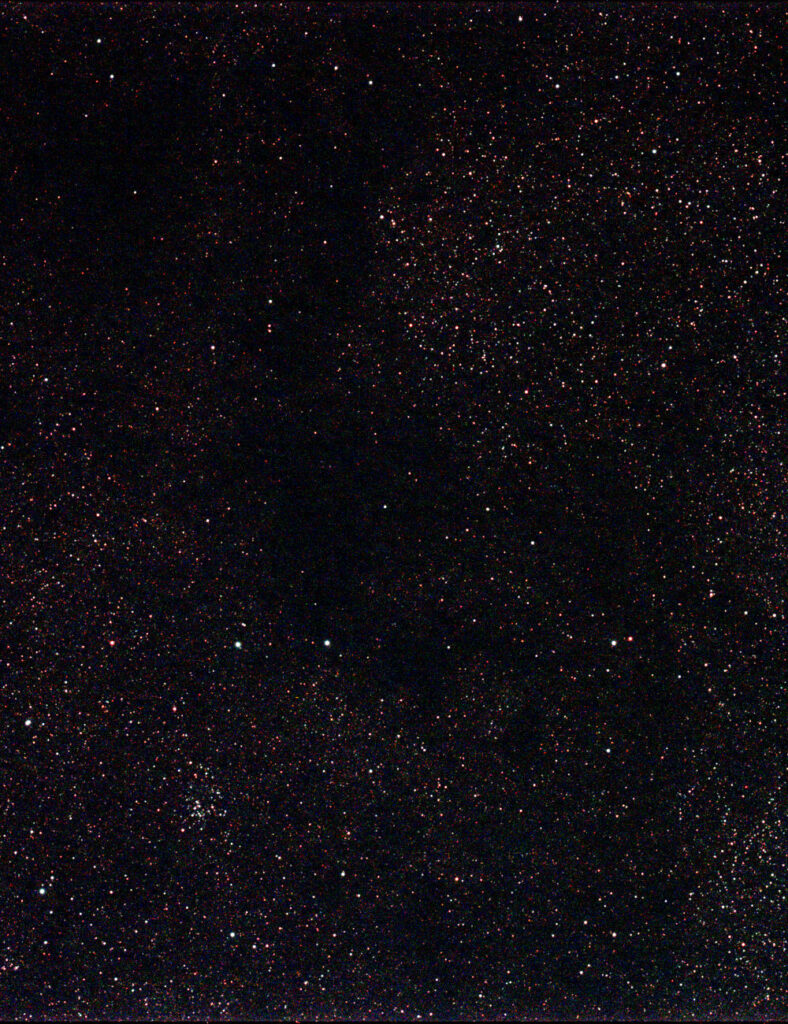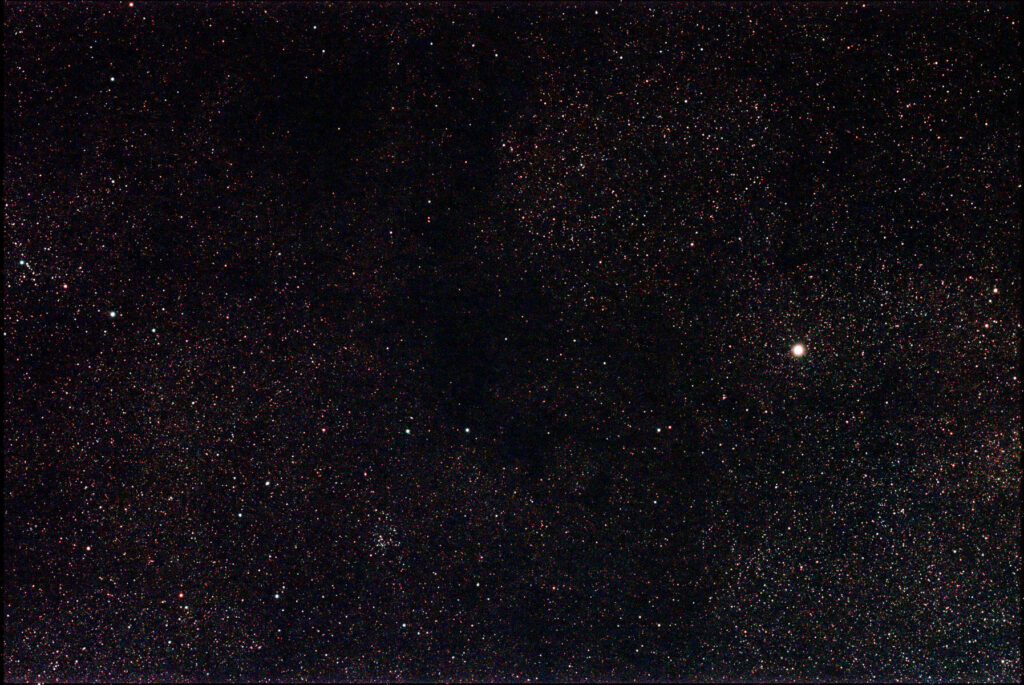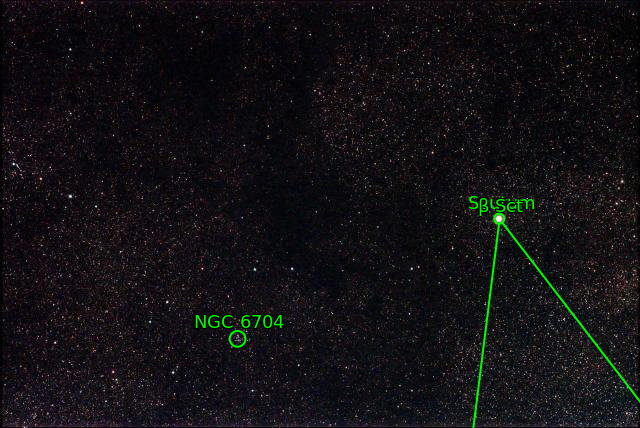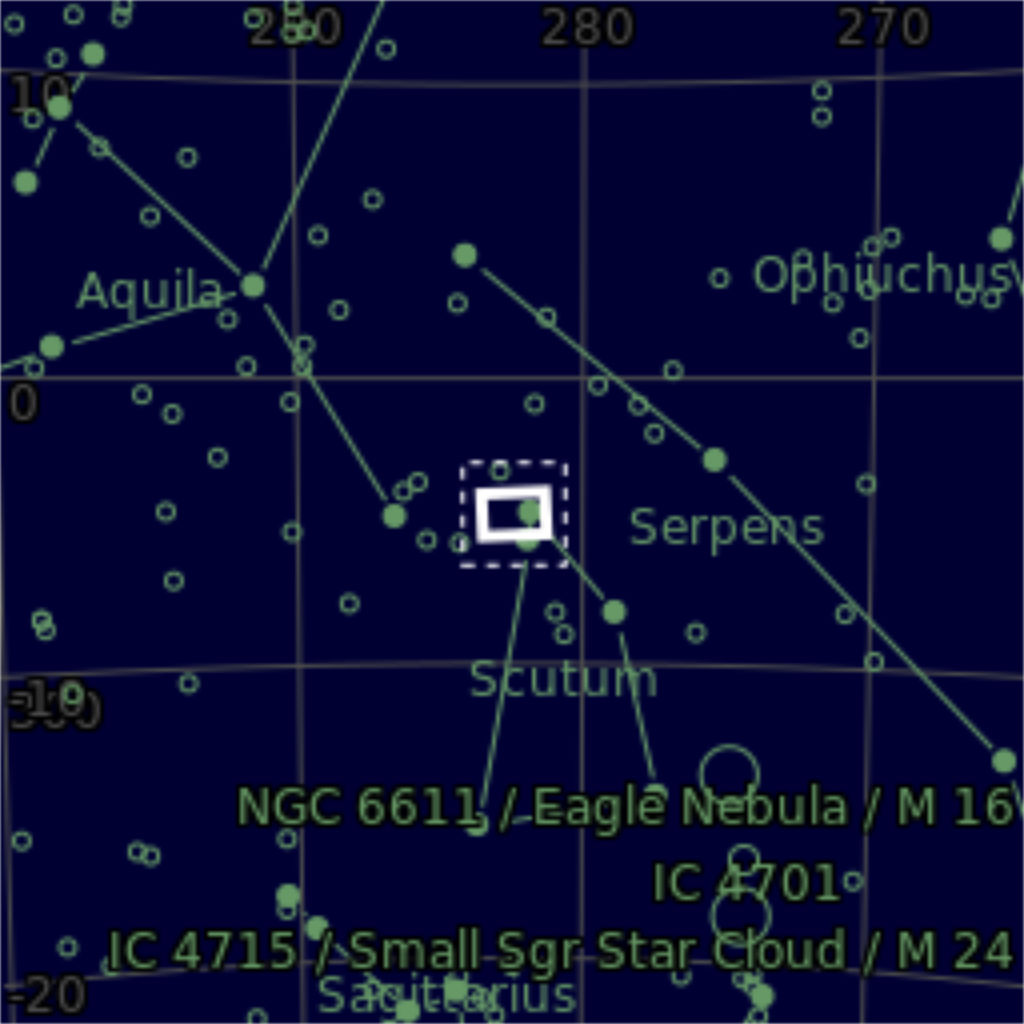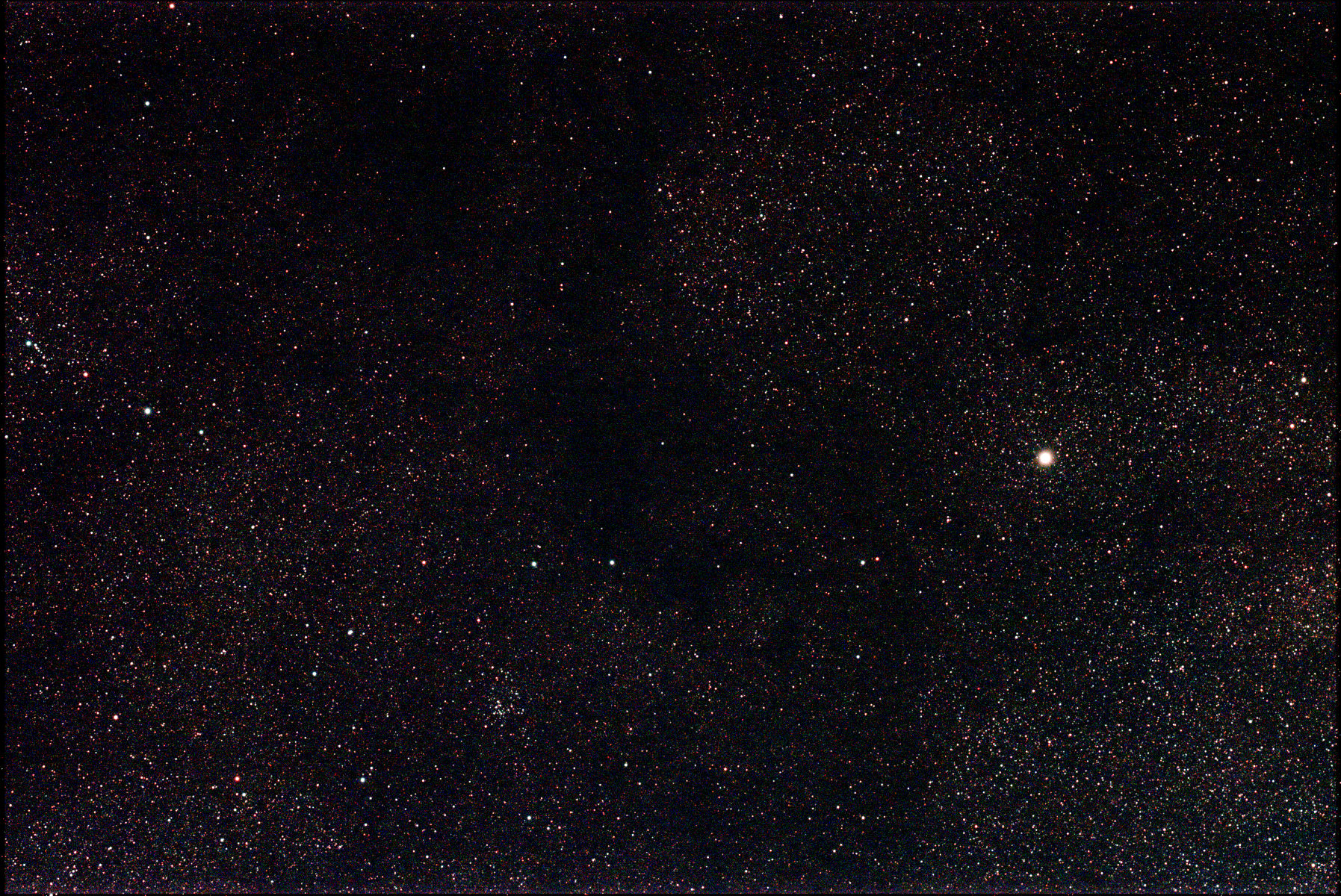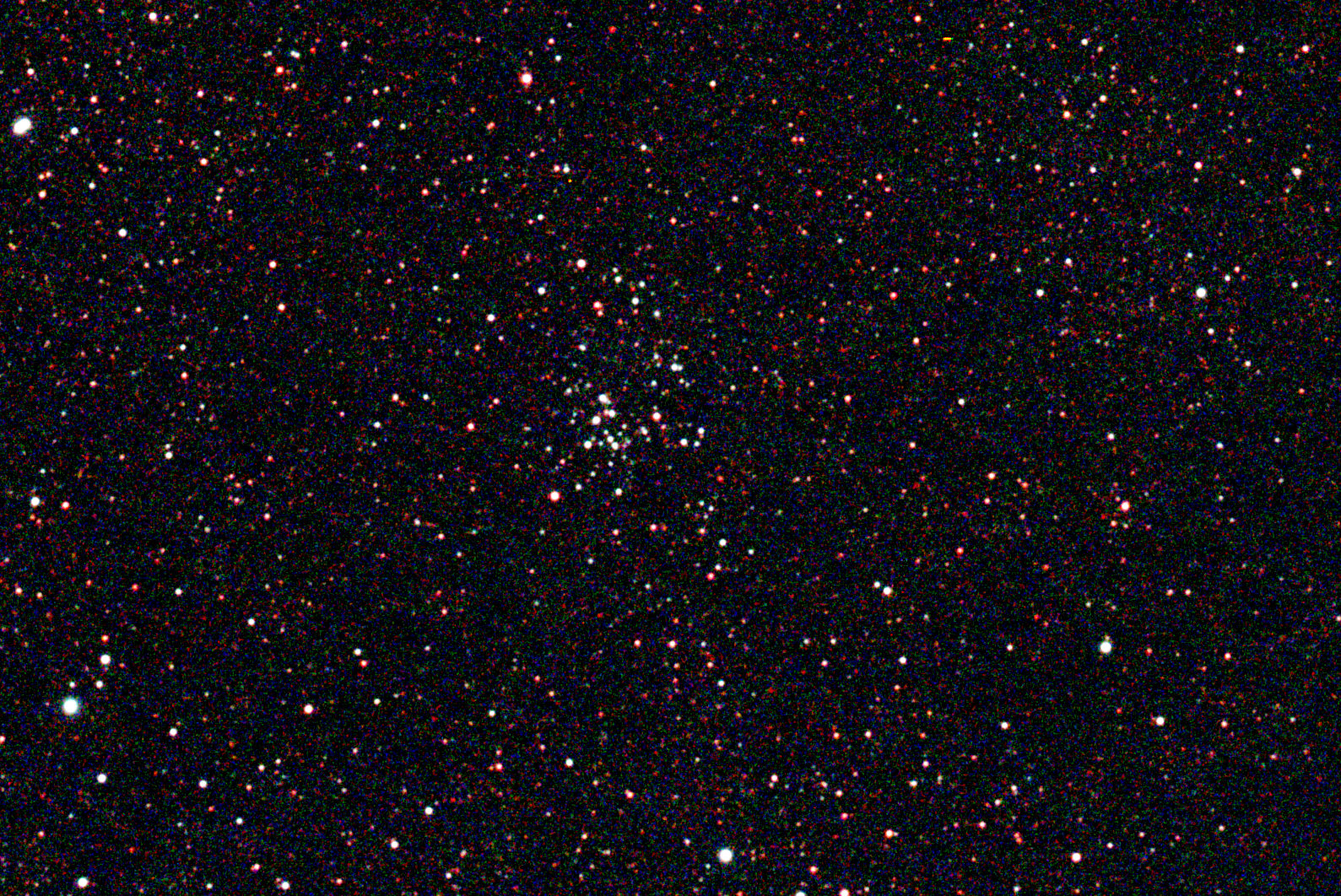
Barnard 110
| Designation(s) | Barnard 110, NGC 6704 |
| Object Type(s) | Dark Nebula |
| Relevant Catalog(s) | All (Chron), NGC |
| Obs. Lat/Long | 42° 17', 073° 57' |
| Constellation | Scutum |
| Date and Time Observed | 2025-07-04 23:25:00 |
| Instrument | Askar V 80mm w extender f7.5-600mm FL |
| Camera | ASI2600MC-Pro |
| Image Details | Up is 357.5 degrees E of N. Transparency: Good. Seeing: Good. Total integration time was 10m 40s. Exposures 20s@250g, L-eNhance Filter. Dithered and recentered in SharpCap. No guiding. |
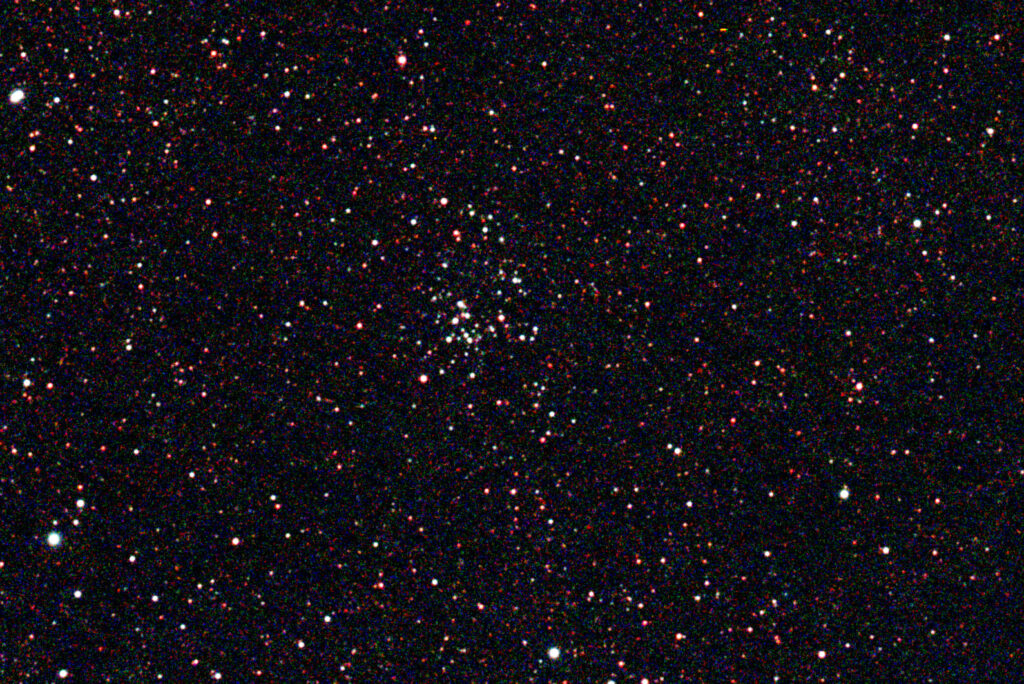
| Description | A dark nebula is an interstellar cloud of cosmic dust that's so dense it absorbs, scatters and blocks visible light, making it appear black when viewed against a starry background. Here the background is part of the Milky Way disk in Scutum. Dark nebulae should NOT be confused with Dark Matter. They are made from "real" matter, aka "cosmic dust" or "interstellar dust", primarily tiny particles of rock, ice, and organic compounds. These particles, often smaller than a grain of sand, have been formed in the atmospheres of stars, and from the remnants of supernovae. They are critical to star formation, creating the initial gravitational focus for larger bodies. Clumps of dust creates bodies with enough mass to attract additional materials such as ionized hydrogen, sometimes accumulating, over millions of years, enough mass to trigger nuclear fusion. The Barnard Catalog is named after Edward Emerson Barnard, an American astronomer who published a record of 192 dark nebulae in 1919, and an extended list, totaling 360, posthumously in 1927. NGC 6704 is a very young (around 4 million years old) loose cluster of about 30 stars which appear in front of Barnard 110. |
| Catalog Links | All Listings |