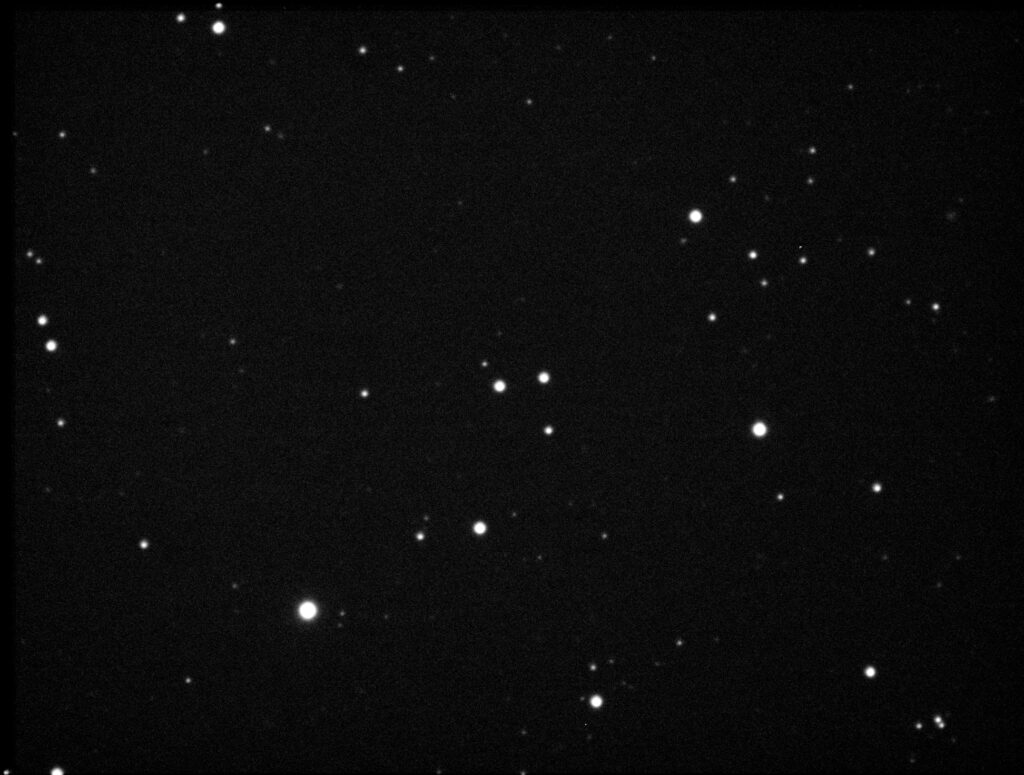
Quasar 3C 270
| Designation(s) | 3C 270 |
| Object Type(s) | |
| Relevant Catalog(s) | All (Chron) |
| Obs. Lat/Long | 42° 17', 073° 57' |
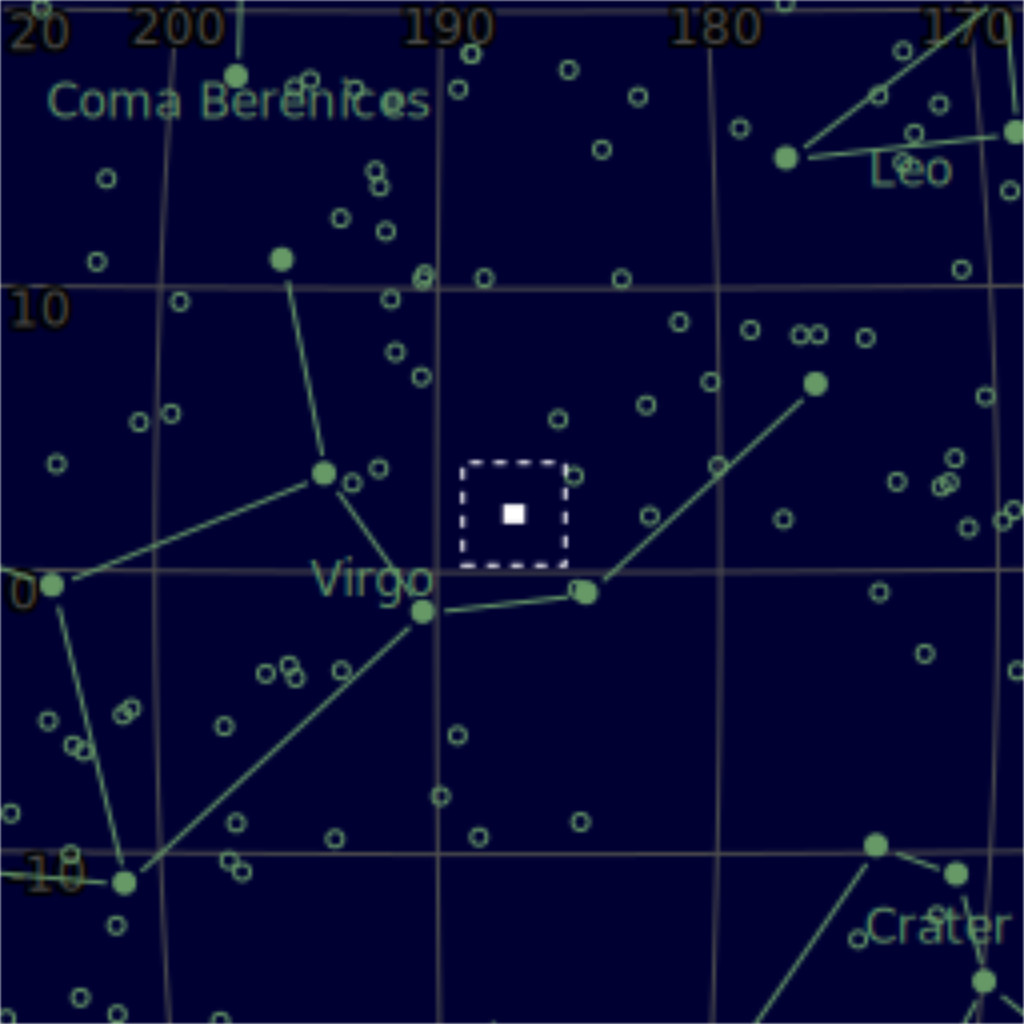
| Constellation | Virgo |
| Date and Time Observed | 2026-05-04 22:42:00 |
| Instrument | EdgeHD 8" w/f7 reducer-1,422mm FL |
| Camera | Player One Apollo-M Mini |
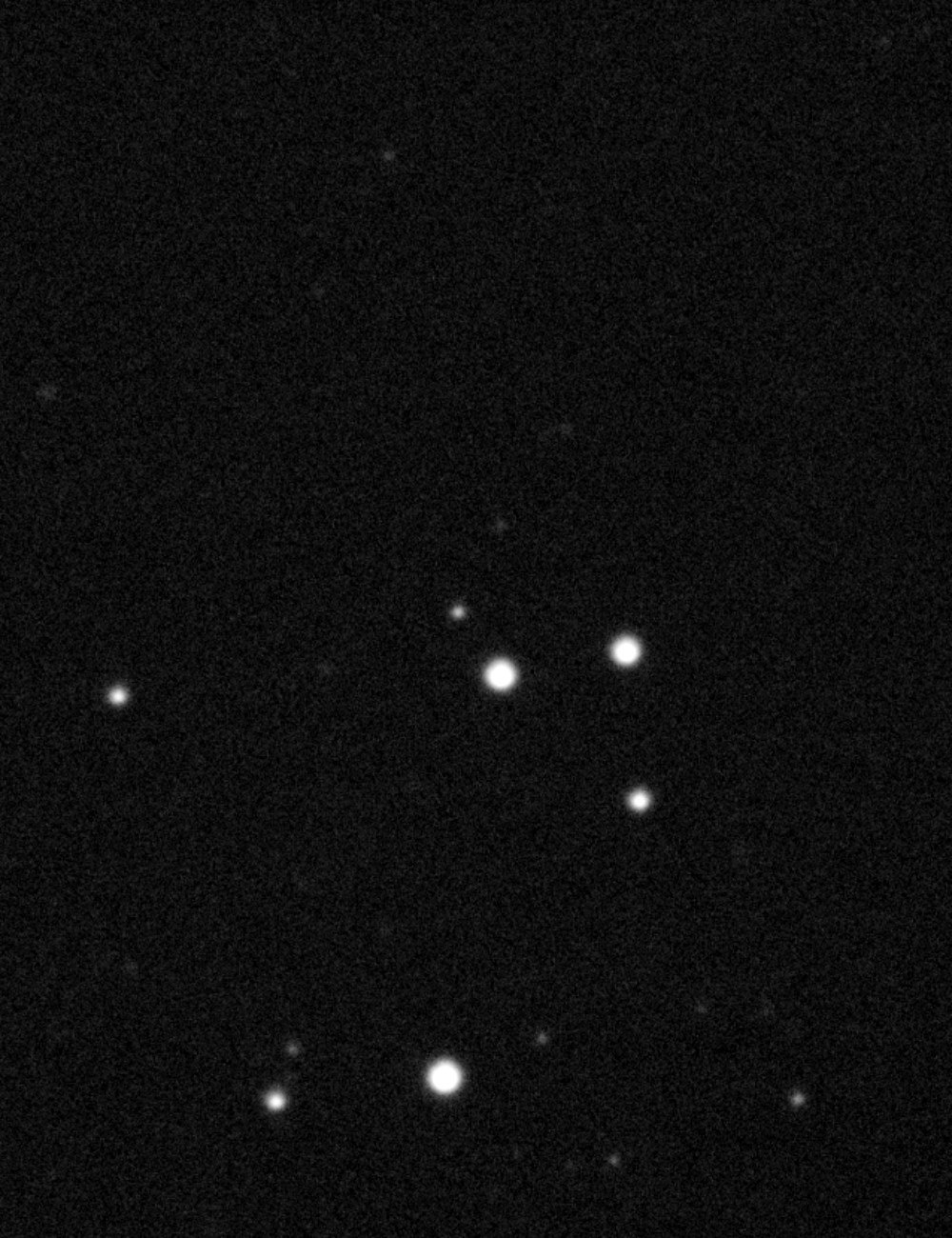
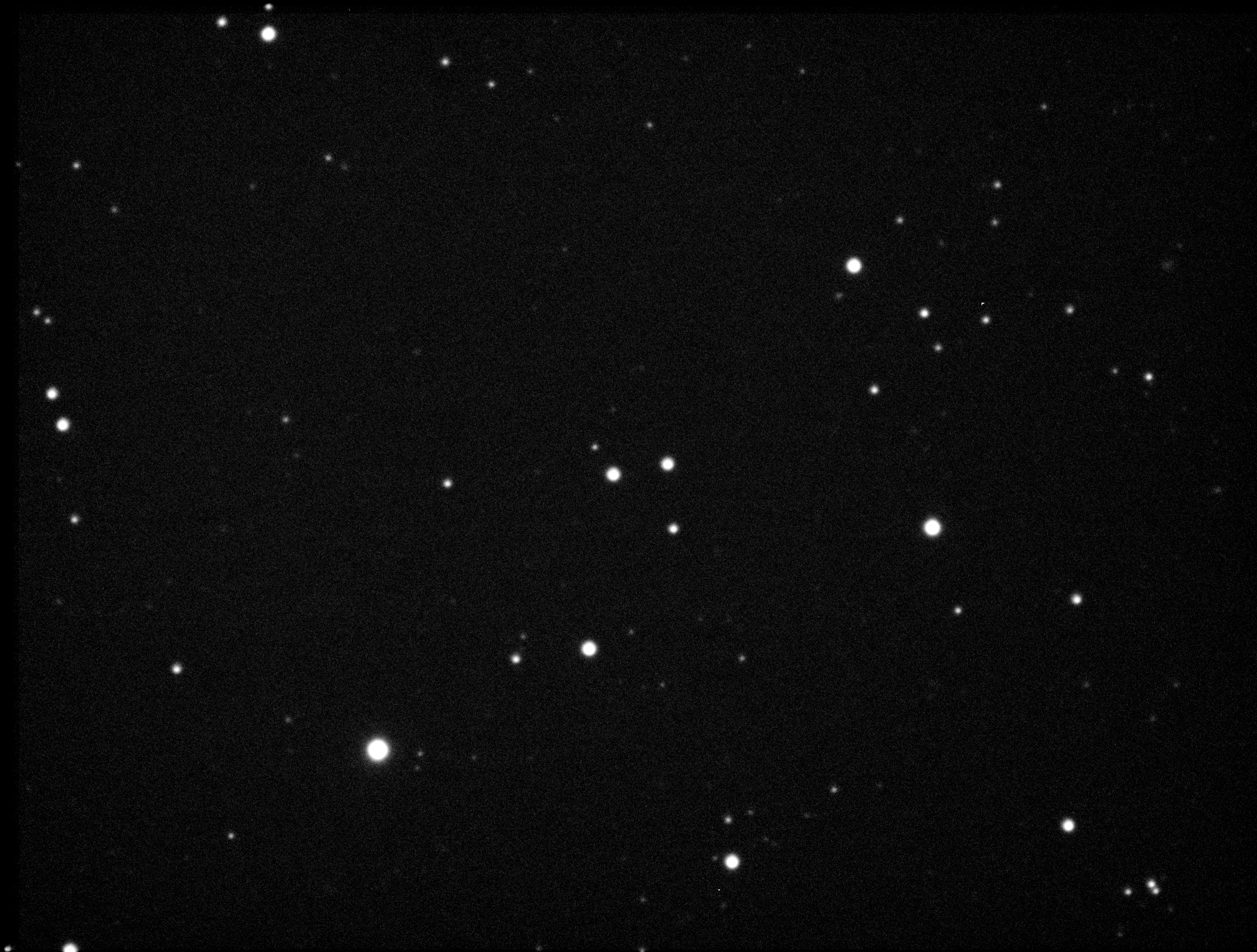
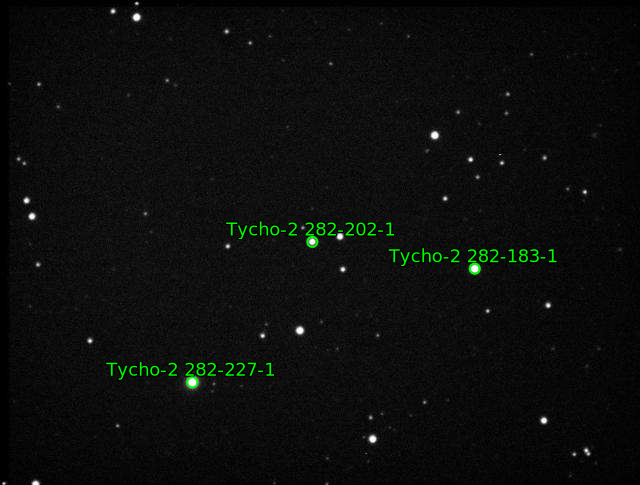
| Image Details | Up is 0.4 degrees E of N. Transparency: Good. Seeing: Good. Total integration time was 4m40s. Exposures 20s@225g, No Filter. Dithered and recentered in SharpCap. No guiding. |
| Description | This is the first quasar (quasi-stellar radio source) ever discovered. Initially listed in a 1959 catalog of active radio objects, its location in the sky was determined accurately a couple of years later at Parkes observatory in Australia. Then investigated by visual astronomers Maarten Schmidt and John "Bev" Oke, both working at Caltech/Palomar and using the 200" telescope. They discovered that it looked like a star, but exhibited a redshift placing it roughly 2.5 billion light years away. Their 1963 paper in Nature created a sensation at the time. Today, approximately 1.3 million quasars have been identified. Quasars are now understood to be distant galaxies with incredibly bright active-nuclei that make them visible from vast distances, where the disc is invisible, making them look like stars. 3C 273 is about 4 trillion times brighter than the Sun, with an absolute magnitude of -26.7. |
| Catalog Links | All Listings |