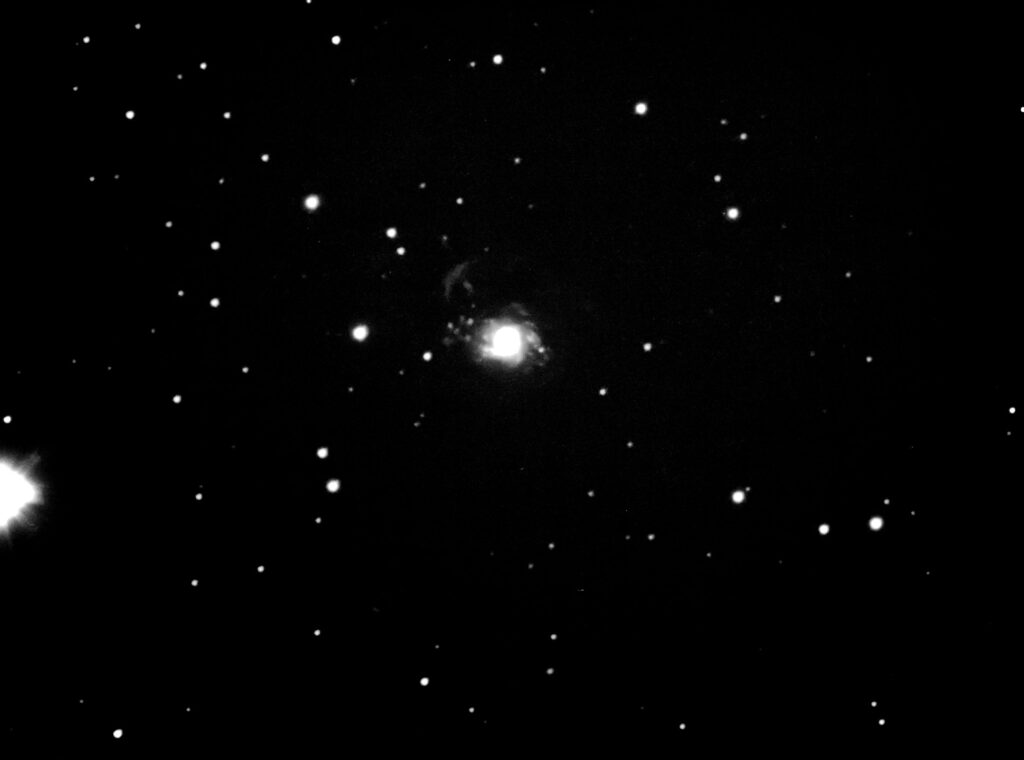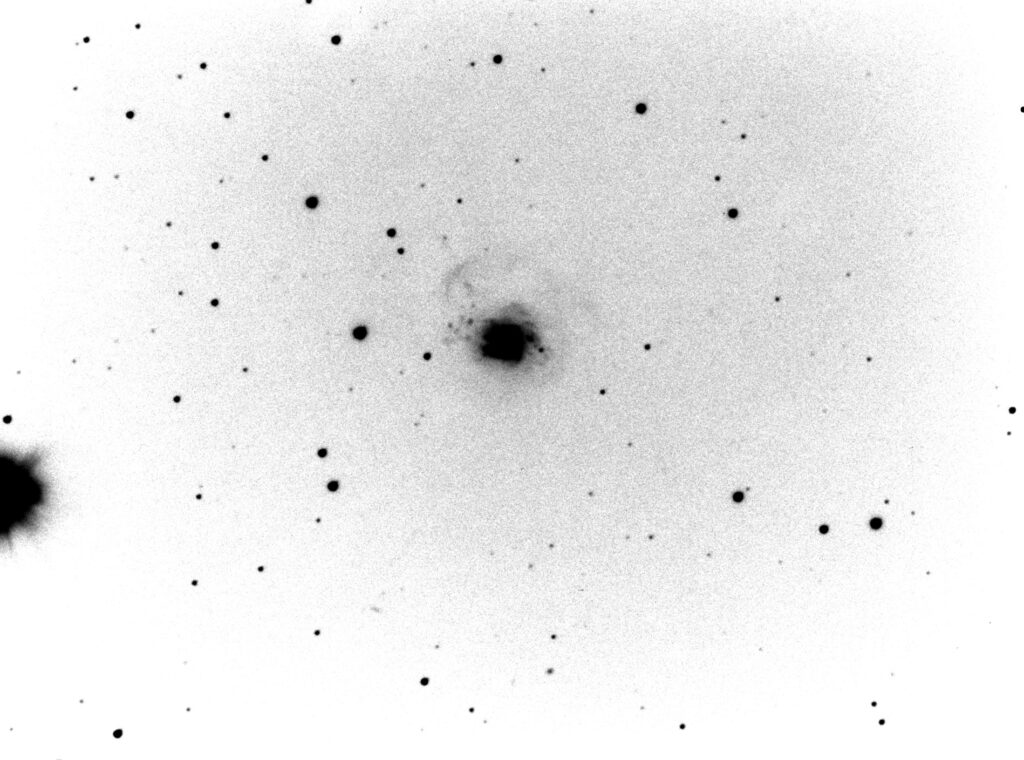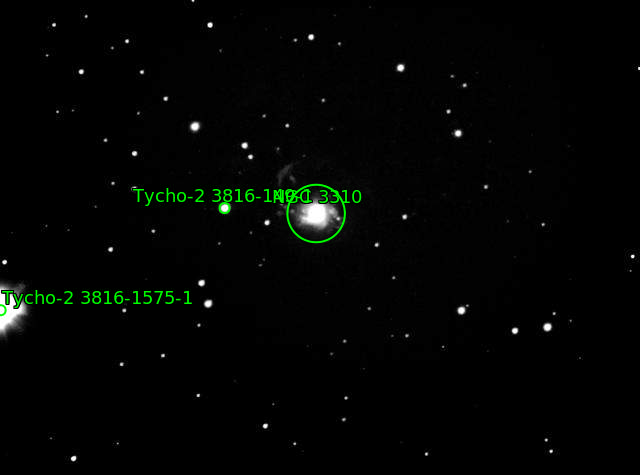
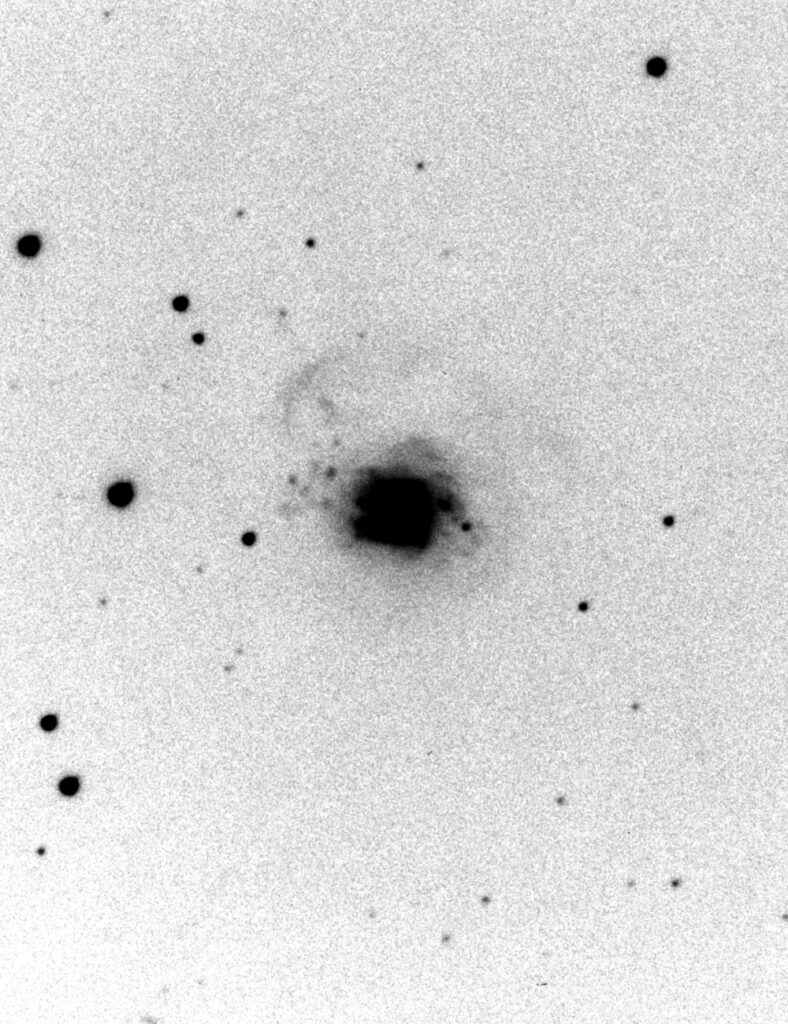
Arp 217 / Bow and Arrow Galaxy / NGC 3310
| Name | Bow and Arrow Galaxy |
| Designation(s) | Arp 217, NGC 3310 |
| Object Type(s) | Galaxy |
| Relevant Catalog(s) | All (Chron), Arp, NGC |
| Arp Category | Galaxies with adjacent loops |
| Obs. Lat/Long | 42° 17', 073° 57' |
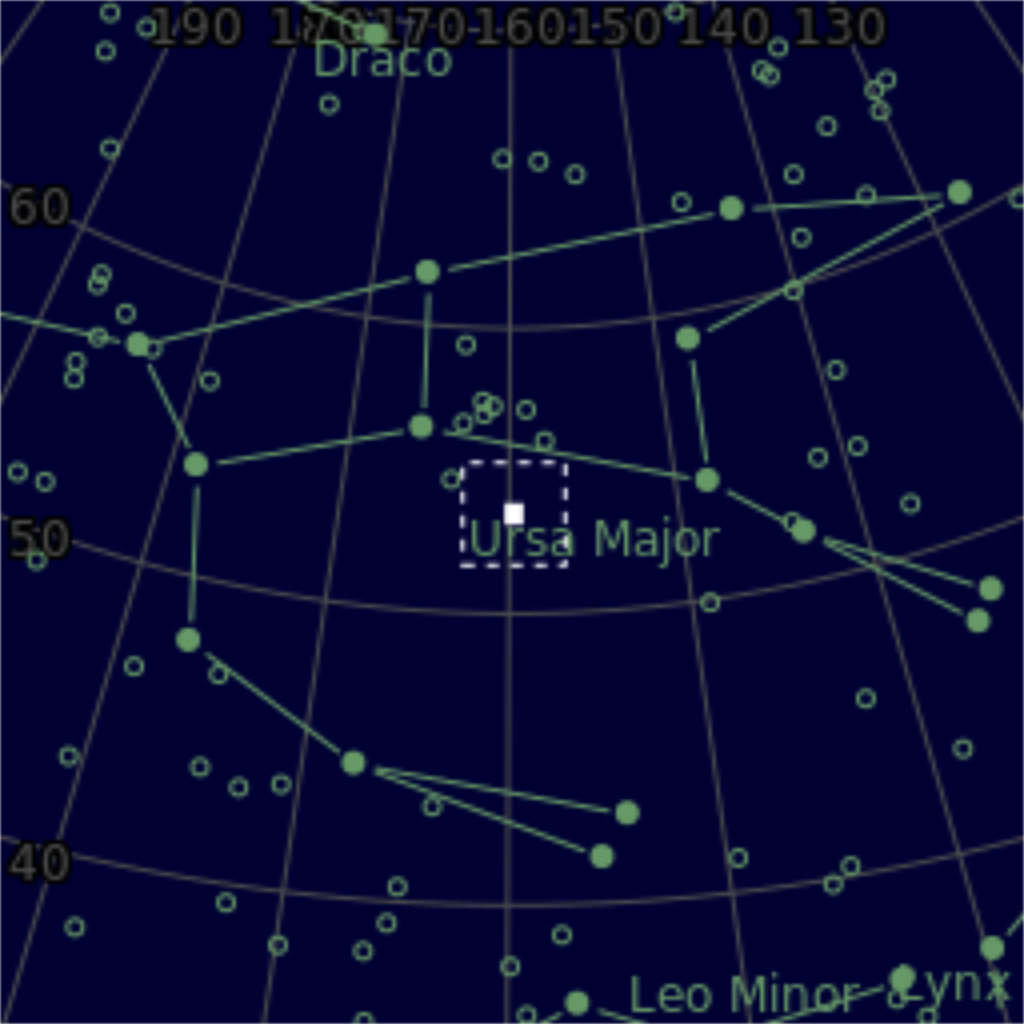
| Constellation | Ursa Major |
| Date and Time Observed | 2025-05-11 22:26:00 |
| Instrument | EdgeHD 8" w/f7 reducer-1,422mm FL |
| Camera | Player One Apollo-M Mini |
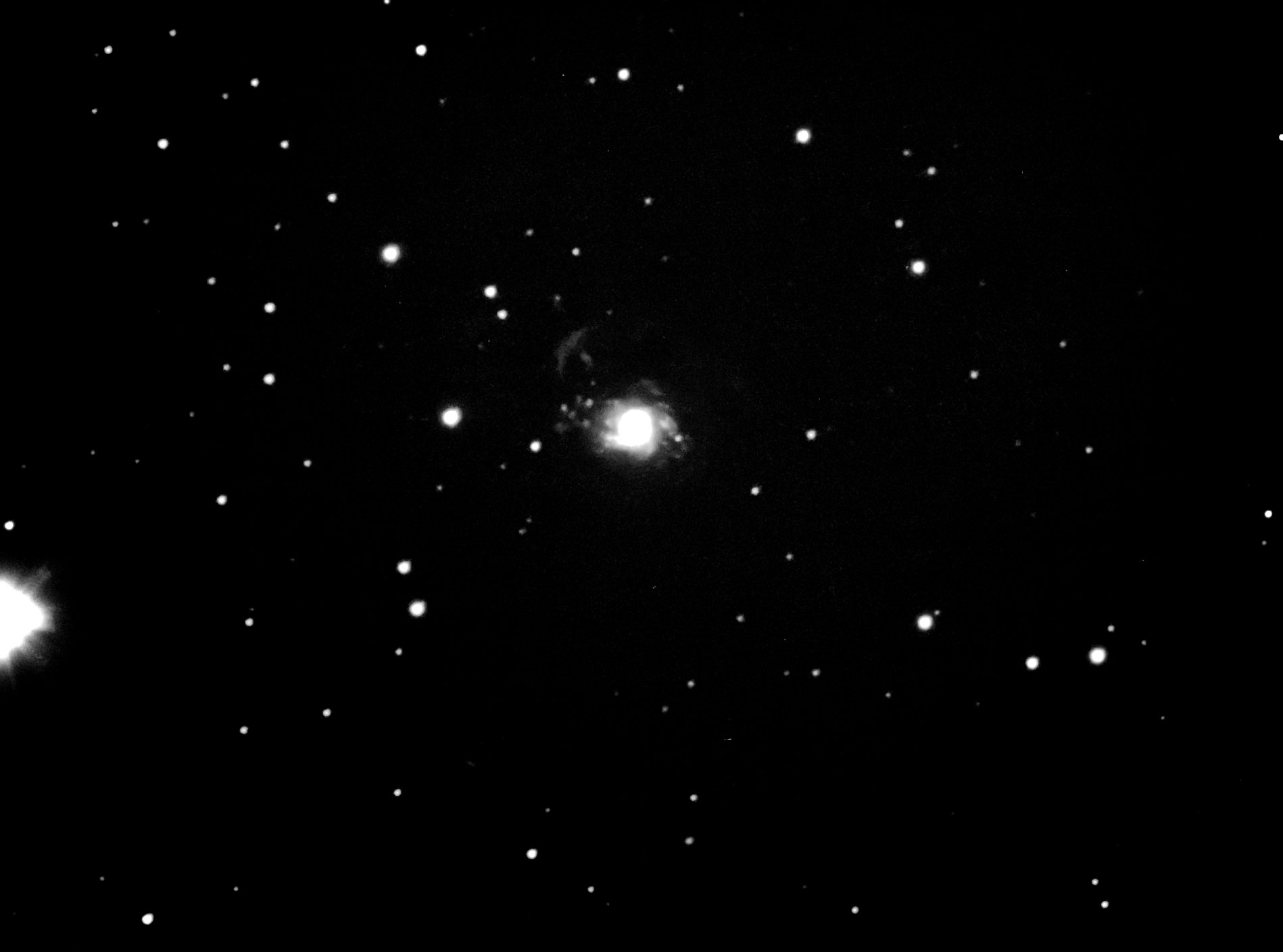
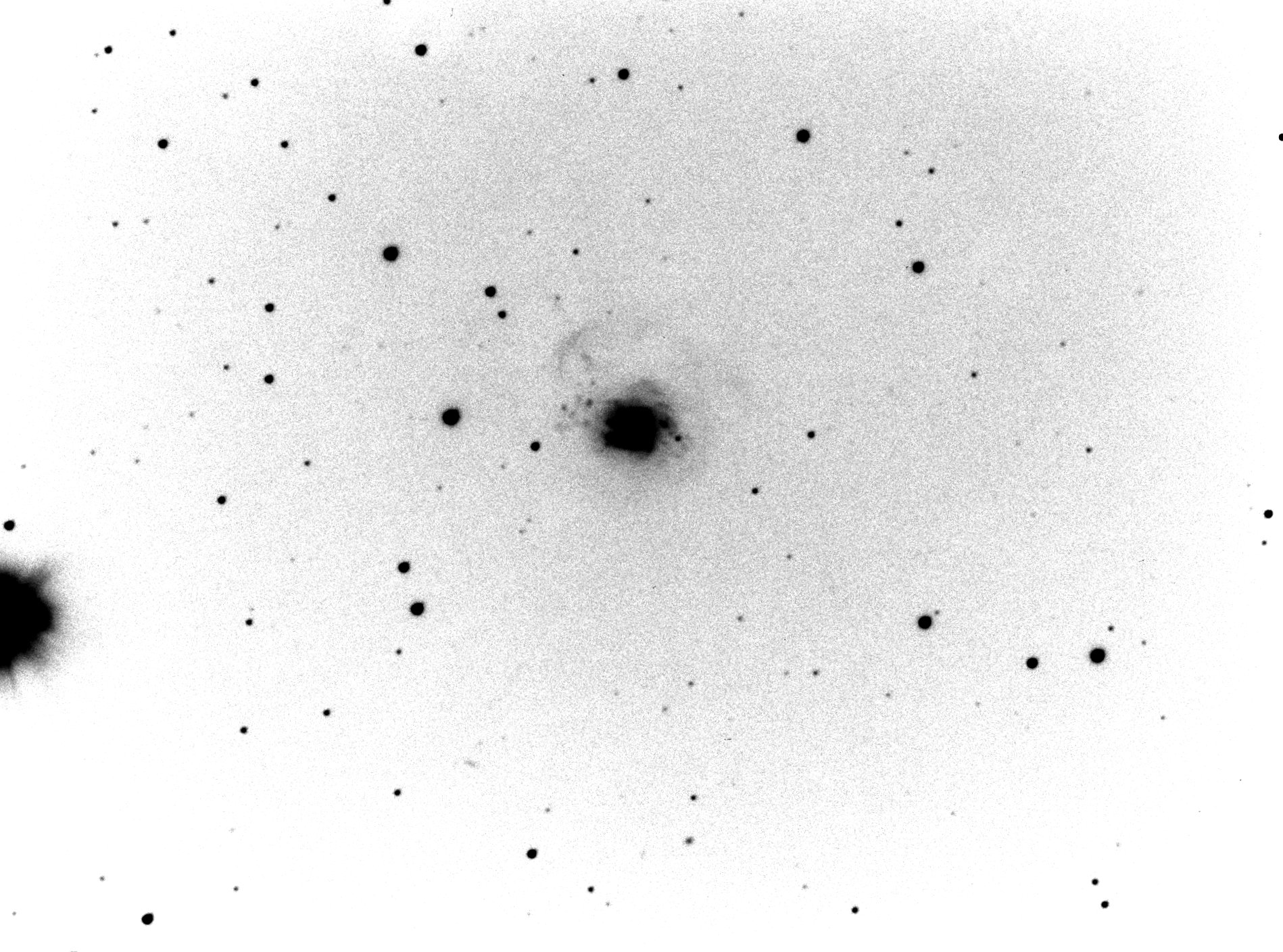
| Image Details | Up is 90.5 degrees E of N. Transparency: Fair. Seeing: Fair. Total integration time was 32m15s. Exposures 15s@300g, UV/IR Cut Filter. Dithered and recentered in SharpCap. No guiding. |
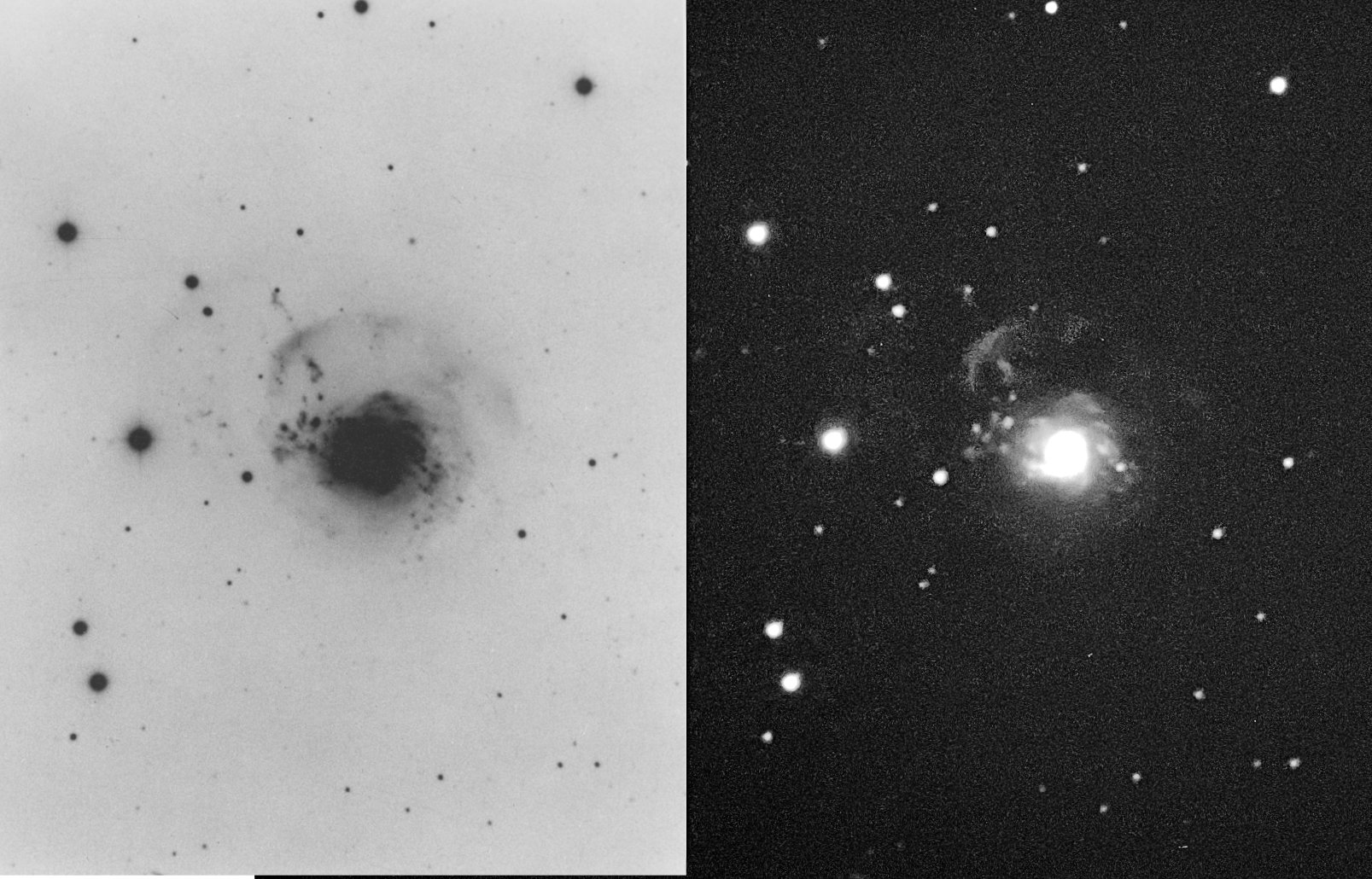
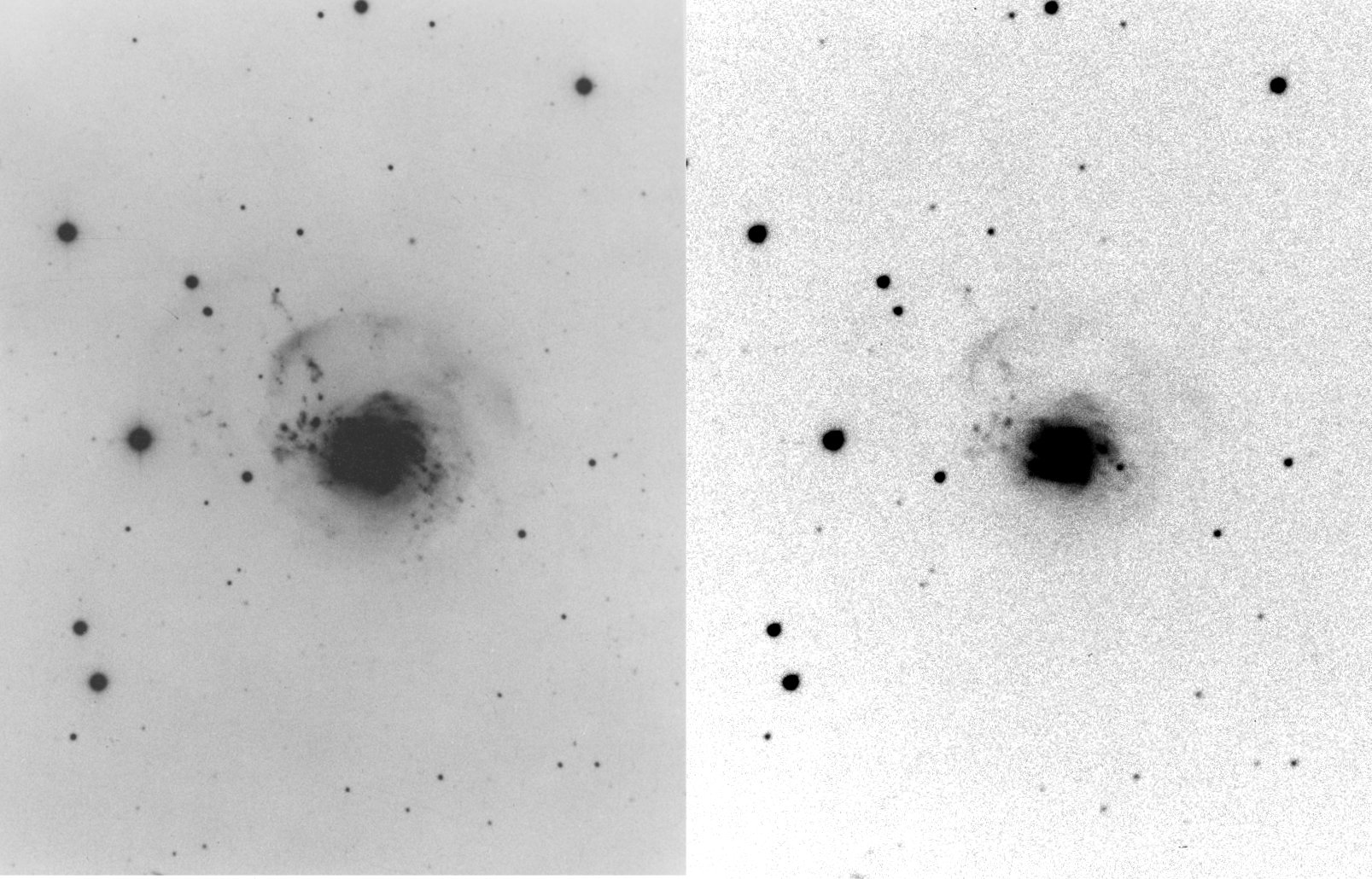
| Description | The first observation following a clear day, but with a full moon. As it turned out clear enough. This has a very bright galactic core, and is another William Herschel discovery from 1789. Arp categorizes this as "Galaxies with adjacent loops", and notes that the main arc (the bow) consists of H-alpha. This is normally associated with start formation, and modern commentators classify this as a post-merger "starburst galaxy". "Starburst galaxies" have a star formation rate at least 10x the Milky Way's. They are often characterized by funky structure, as we see in this case. Note, particularly in the inverted image, there is a pretty convincing arrow crossing the bow towards the left end of the arc. Certainly in my inverted image, it appears that at least two galactic cores abut each other: a big central core, viewed top down and therefore nearly round, and the second, to the upper right, viewed edgewise. There appear to be a set of nodules to the left of the core: star birthing areas? Dwarf galaxies never absorbed? Best viewed in the positive image with some reference to the inverted. All on all, a fascinating set of structures which appear to be the result of disruption. |
| Catalog Links | <Previous | Arp Listings | Next> |
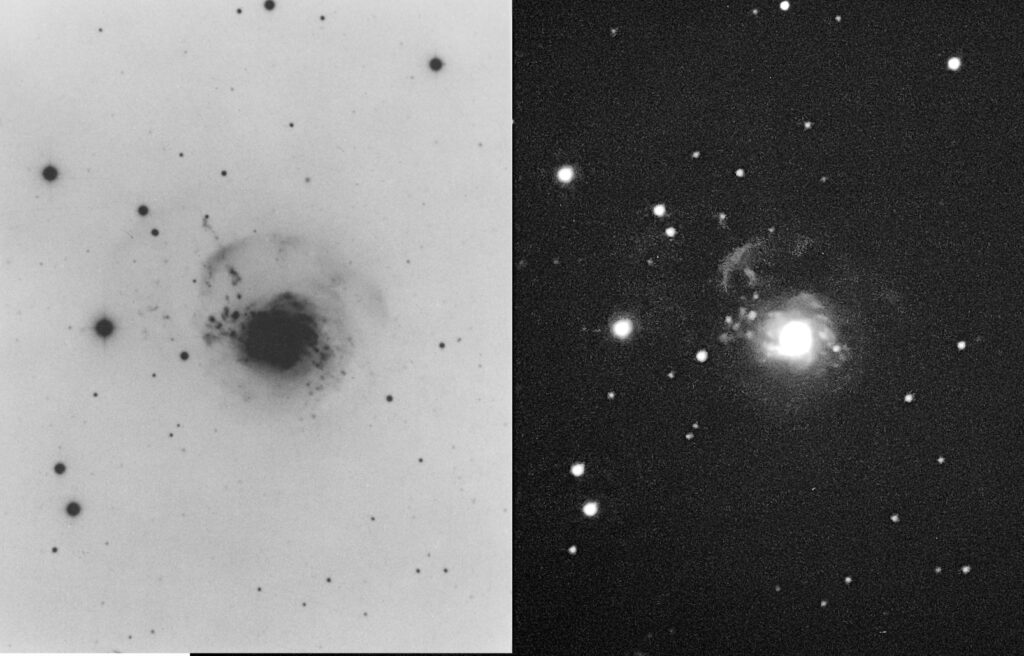 Arp plate left, my positive right
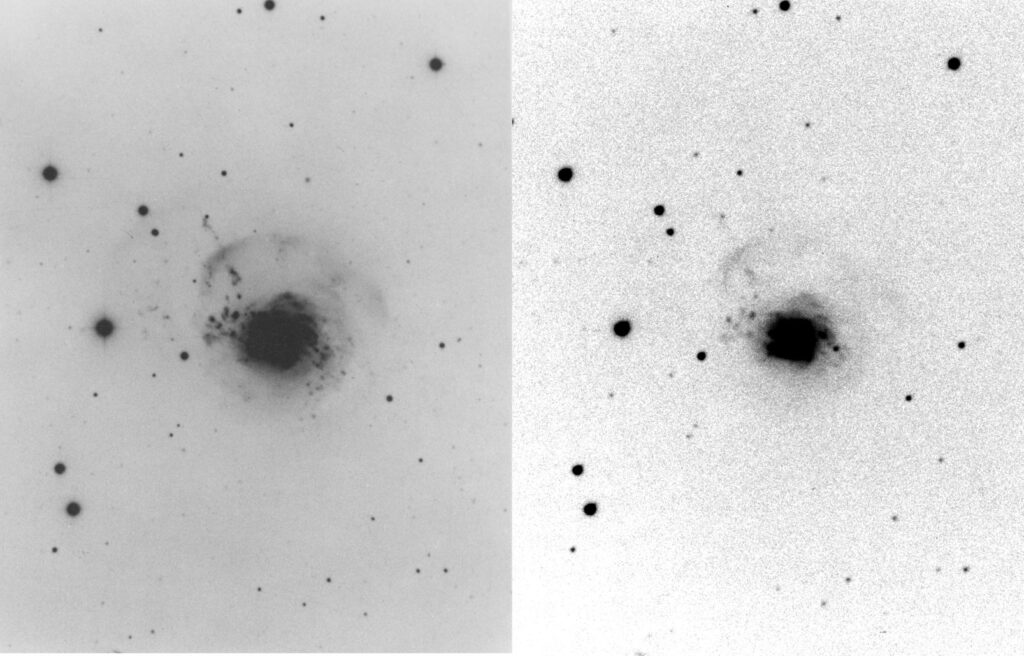 Arp plate left, my inverted right