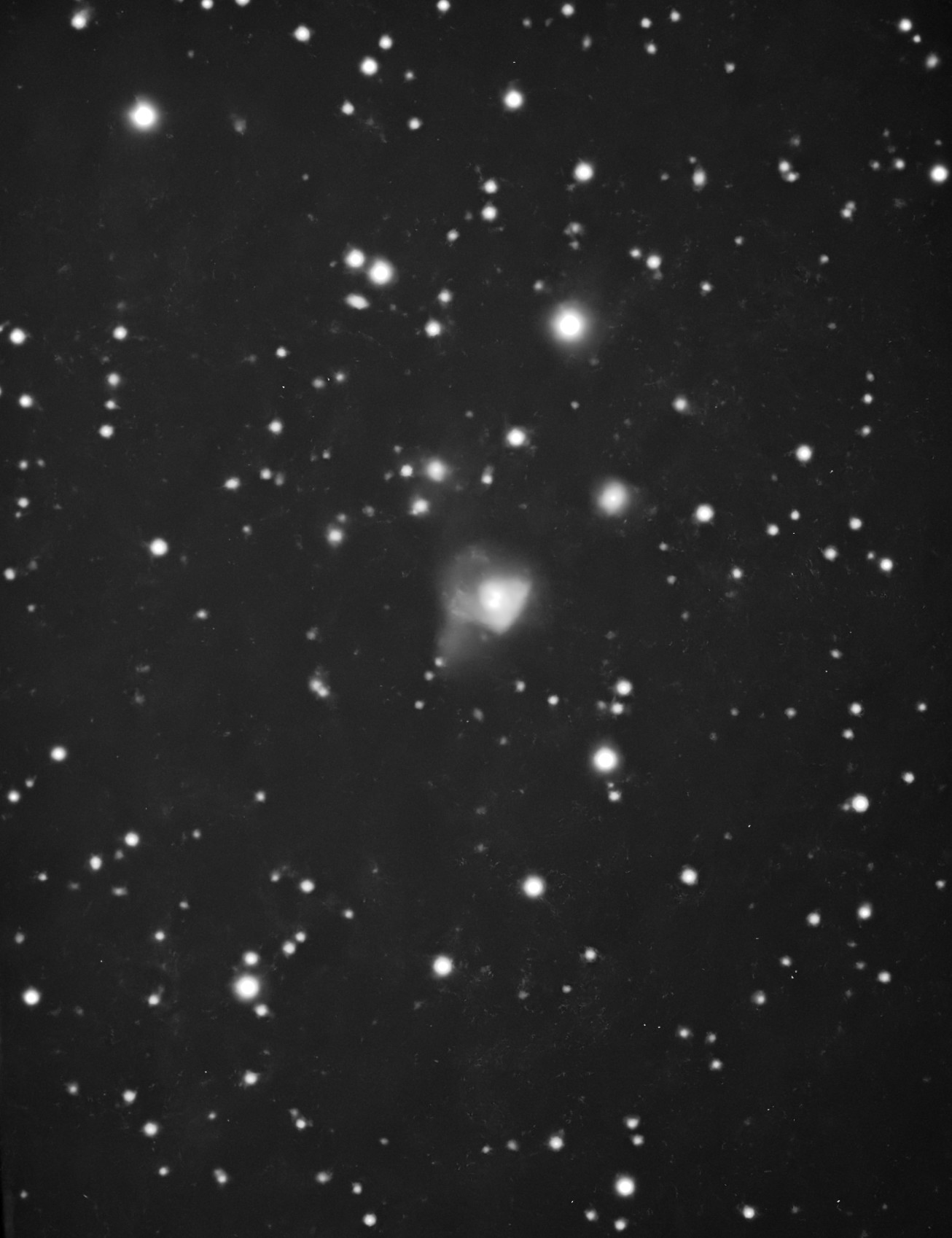
Arp 220 / NGC 5421
| Object Type(s) | Galaxy |
| Relevant Catalog(s) | All (Chron), Arp, IC |
| Arp Category | Galaxies with adjacent loops |
| Obs. Lat/Long | 42° 17', 073° 57' |
| Date and Time Observed | 2025-07-23 14:23:54 |
| Instrument | Other |
| Camera | ASI294MC-Pro |
| Image Details | Up is 181.5 degrees E of N. Total integration time was 35m. Exposures 15s@300g, UV/IR Cut Filter. Dithered and recentered in SharpCap. No guiding. |
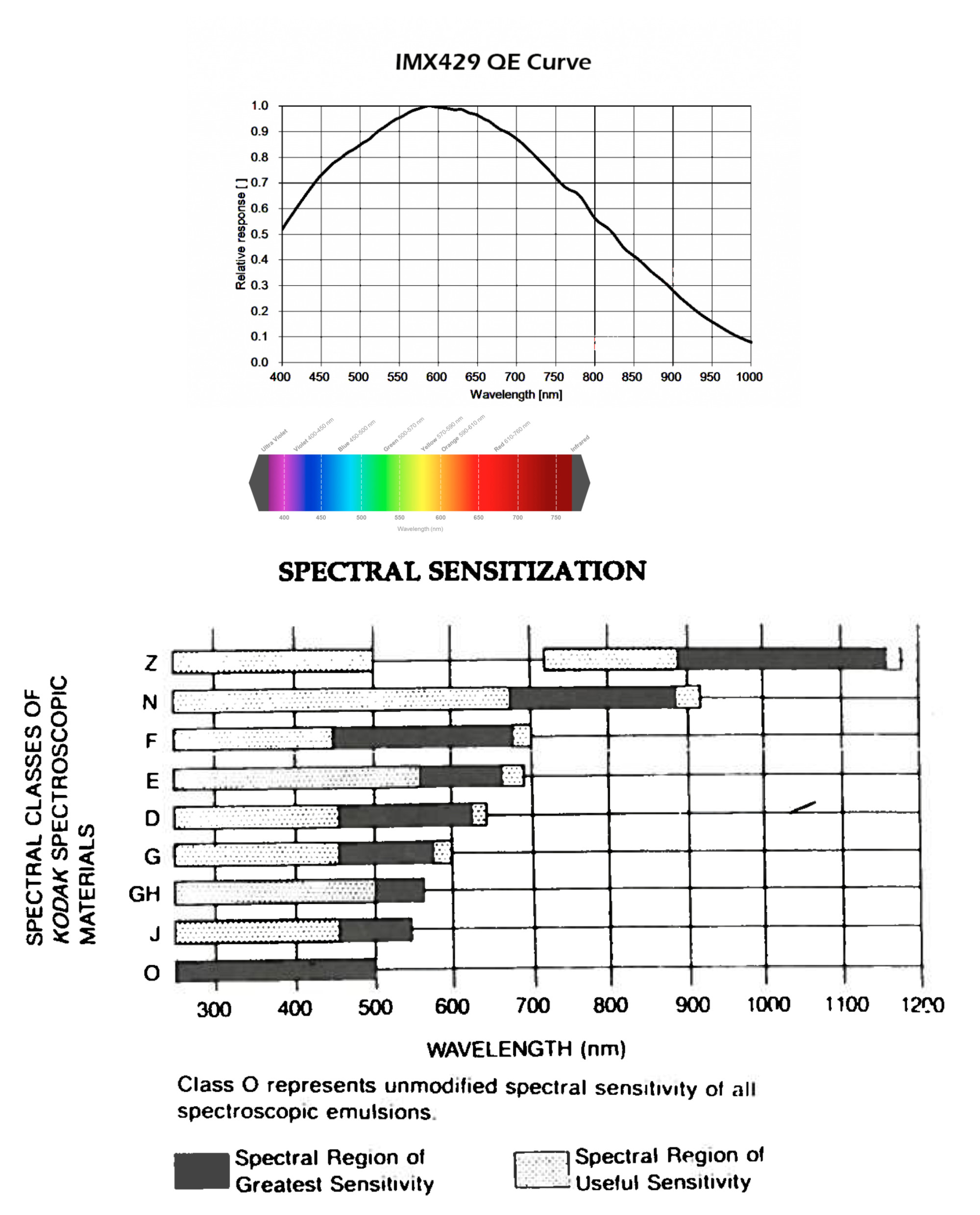
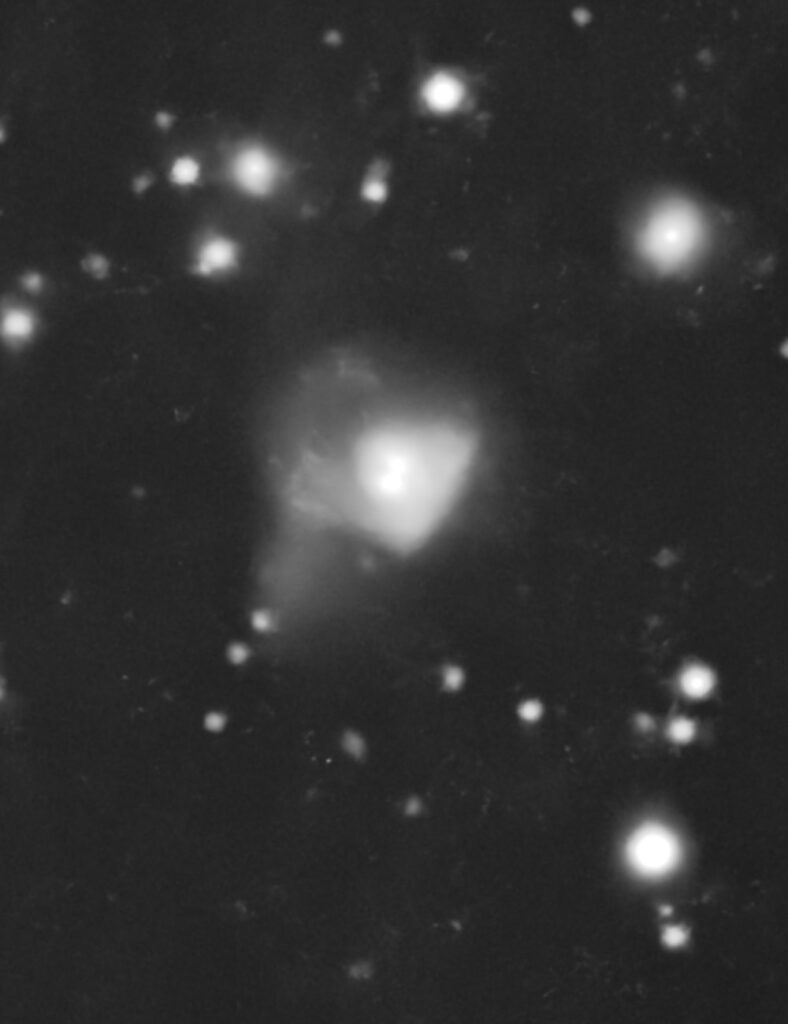
| Description | Arp 220 is the closest ultraluminous infrared galaxy (ULIRG) to Earth, and heavily distorted. Arp saw a bright nucleus, then wispy arms that seemed to form a loop surrounding empty space (as do the other 5 galaxies in this category of "Adjacent Loops"). However, shockingly, even my little 8" telescope could go "deeper" than Arp's image, and shows what is an extended, lower surface brightness body behind the bright nucleus. It's certainly not the 200" telescope which has several hundred times the light gathering power of my telescope. It's not the telescope, it must be the film. So I did a deep dive. Discovered on Table 1 of the Atlas, that unlike MOST images which use the fairly broad spectrum film emulsions (103a-D or -O), this capture was using the emulsion they reserved for "faint" targets (103a-J). If you look at the spectral sensitivity, Line J has a much narrower response curve in the middle of the visual spectrum, biased towards the blue-green. It doesn't get even into the yellow/orange, much less red. Line D, corresponding to the most commonly used emulsion (103s-D) does get into the red, but nowhere near infrared. Note that all 3 diagrams in the image shown below have roughly aligned scales. The sensor in my Player One Apollo M-mini (top curve), has a much wider response range, particularly in the near-infrared range where, given this ULIRG galaxy, would show well. Arp had no way of knowing that this target was a big IR emitter, so the J emulsion was a terrible choice, and the films he used delivered a Quantum Efficiency of 3% or less, while my little CMOS camera is close to 100%. So I really could get deeper than Arp. That's particularly important in the context of this target, which is now known to be an ultraluminous infrared galaxy, and is studied for this reason. So it's reasonable to infer, particularly for this target, that my sensor will be unusually responsive to this target, whereas Palomar much less so, particularly when using the 103a-J emulsion. |
| Catalog Links | All Listings |
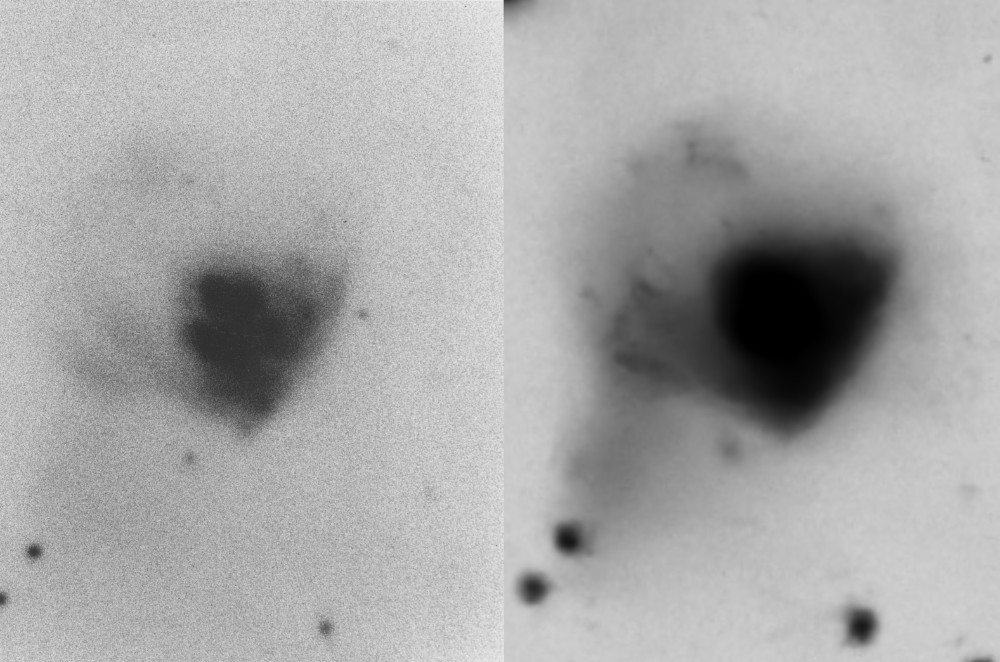
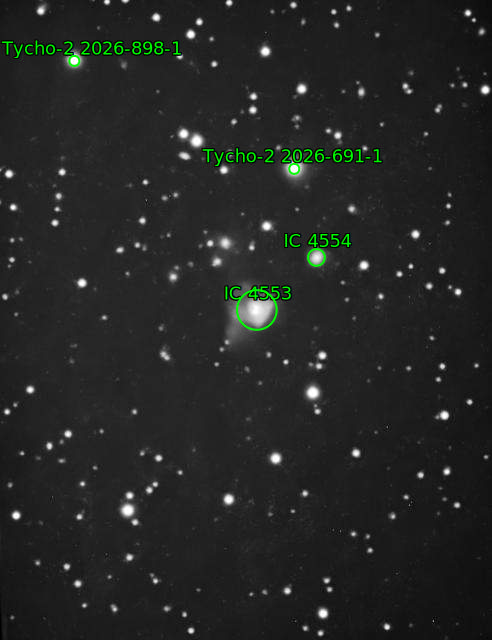
Arp’s image (left), my image right. Amazingly, mine goes deeper! 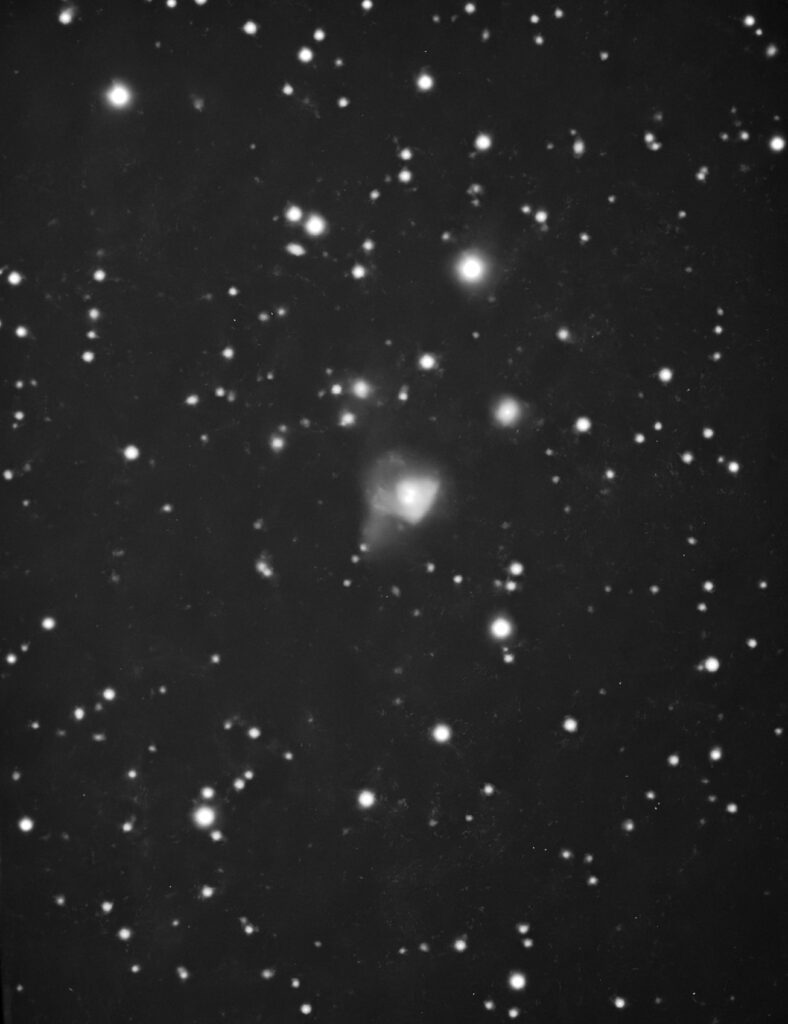
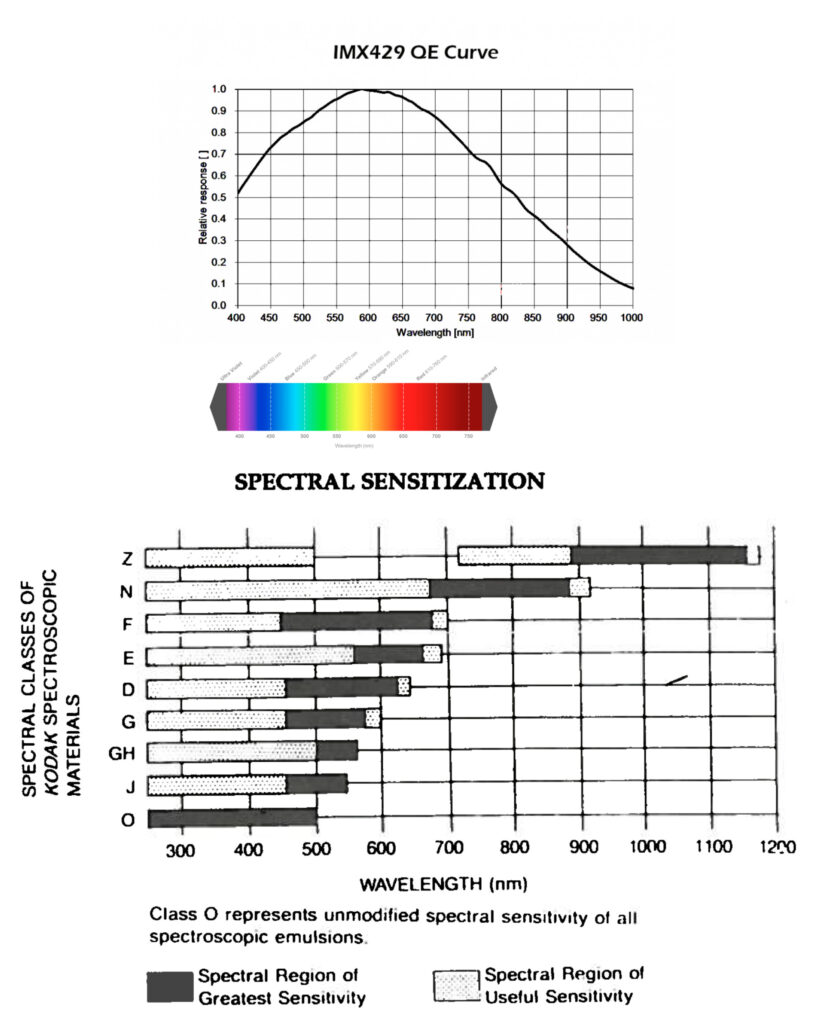
Arp had no way to know this was an ultraluminous IR galaxy. My camera has much more sensitivity in the near IR than the “J” emulsion he used here for a “faint” target.