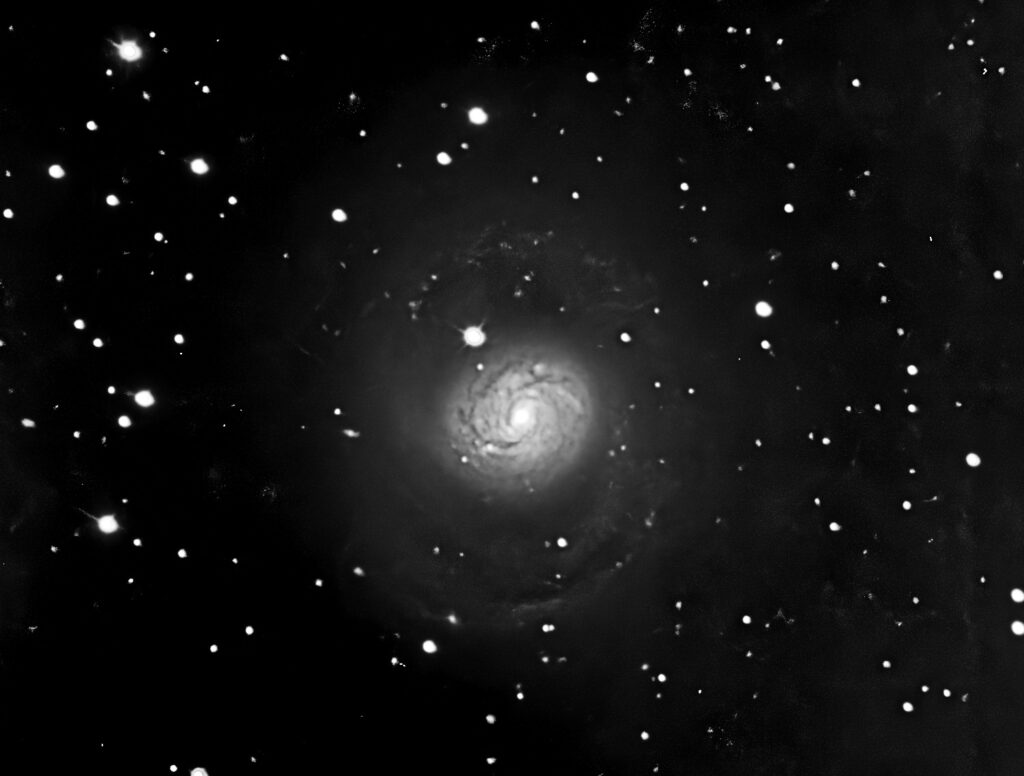
Arp 37 / M77 Revisit
| Name | Squid Galaxy |
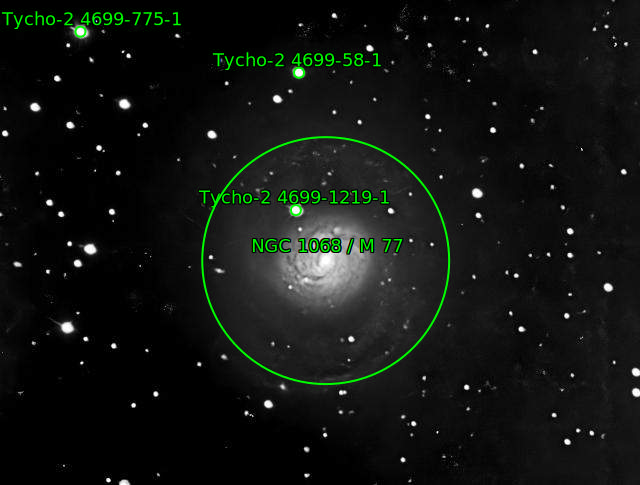
| Designation(s) | Arp 37, M 77, NGC 1068, Cetus A |
| Object Type(s) | Galaxy |
| Relevant Catalog(s) | All (Chron), Arp, Messier, NGC |
| Arp Category | Spiral galaxies with low surface brightness companion on arms |
| Obs. Lat/Long | 42° 17', 073° 57' |
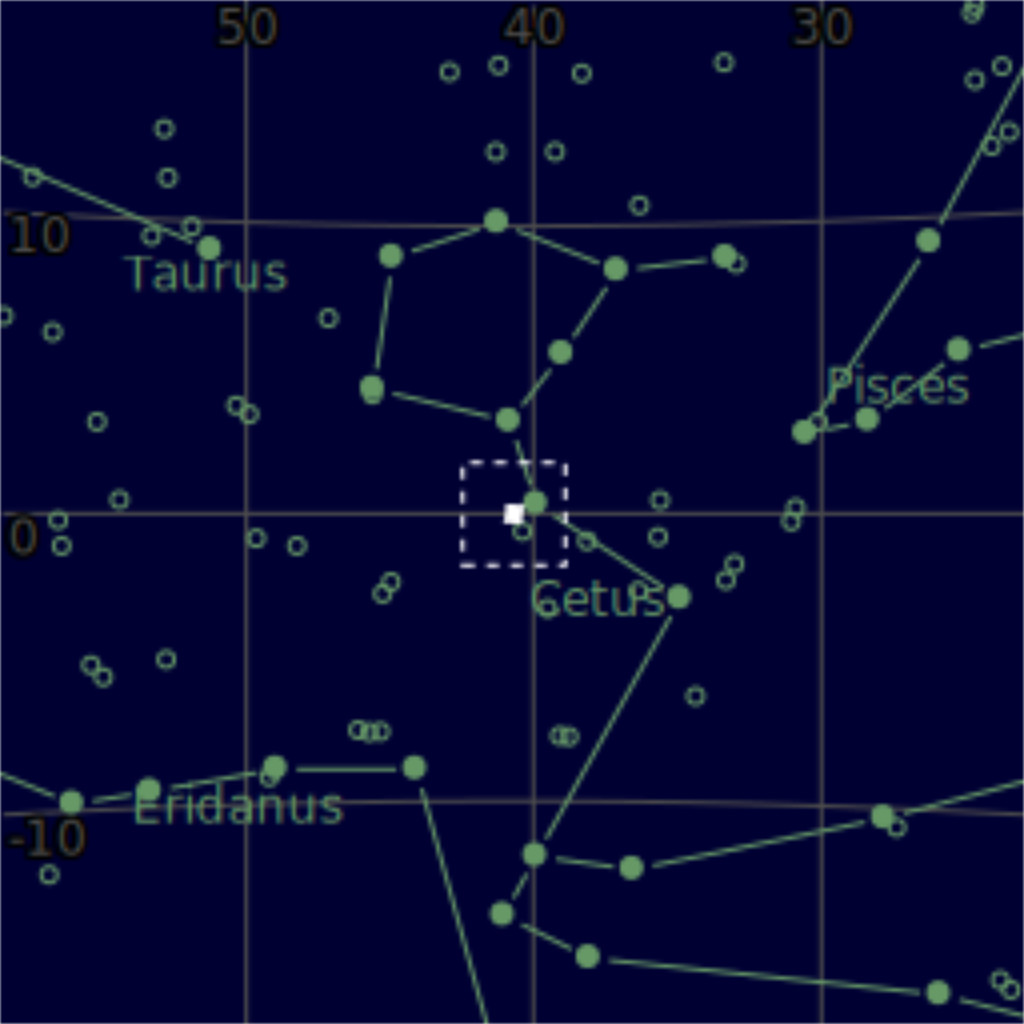
| Constellation | Cetus |
| Date and Time Observed | 2025-10-27 00:03:00 |
| Instrument | EdgeHD 8" w/f7 reducer-1,422mm FL |
| Camera | Player One Apollo-M Mini |
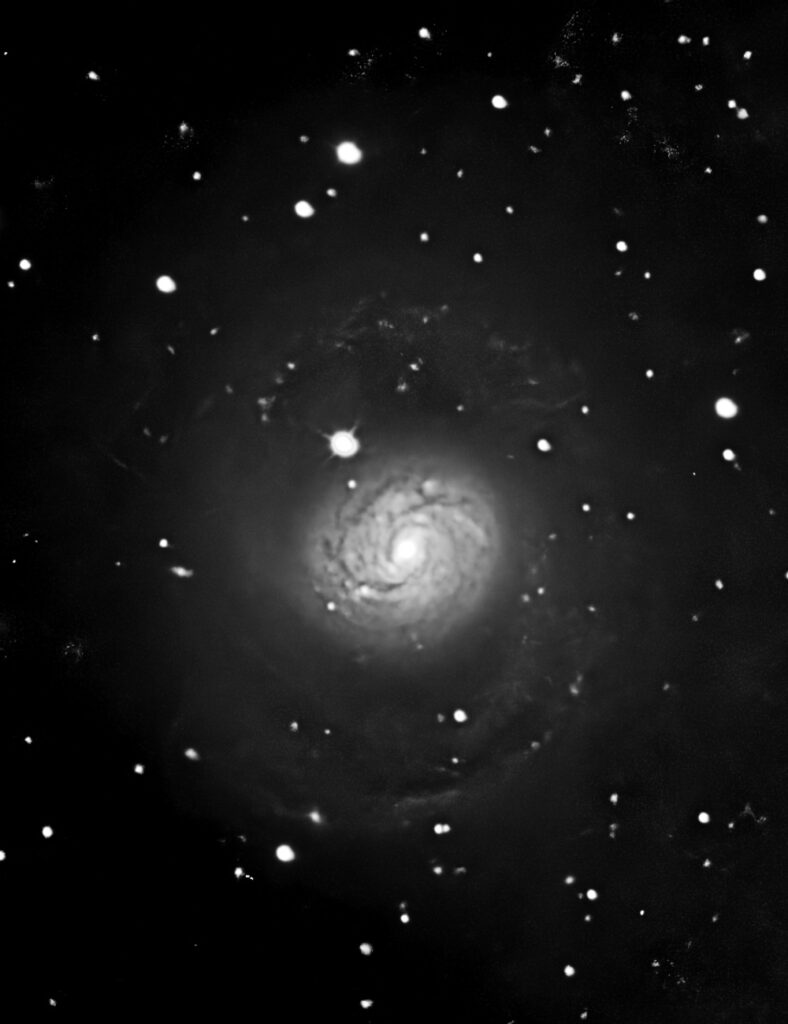
| Image Details | Up is 276.4 degrees E of N. Transparency: Fair. Seeing: Good. Total integration time was 50m. Exposure 15s@225g, UV/IR Cut Filter, captured in SharpCap. Darks subtracted, no flats. |
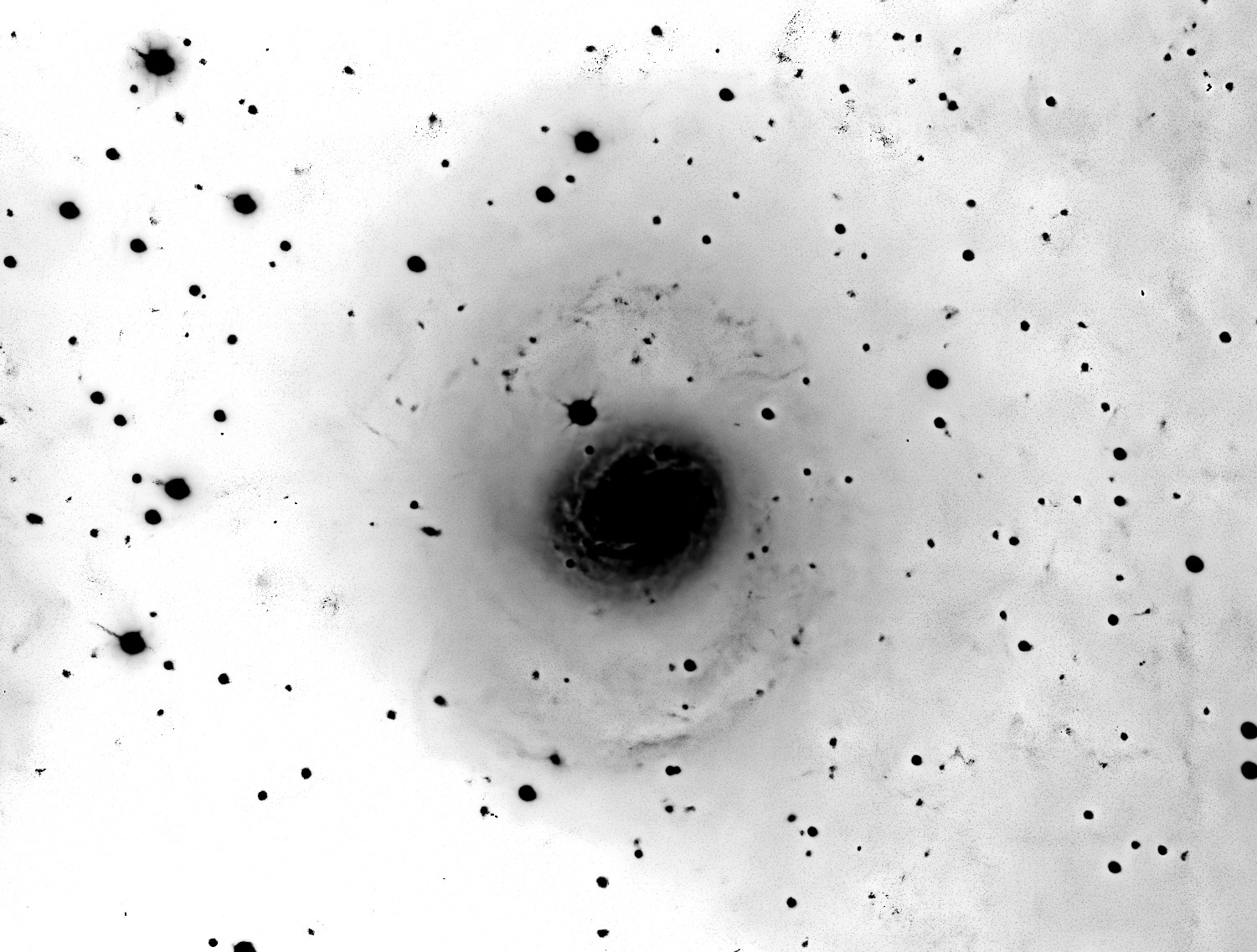
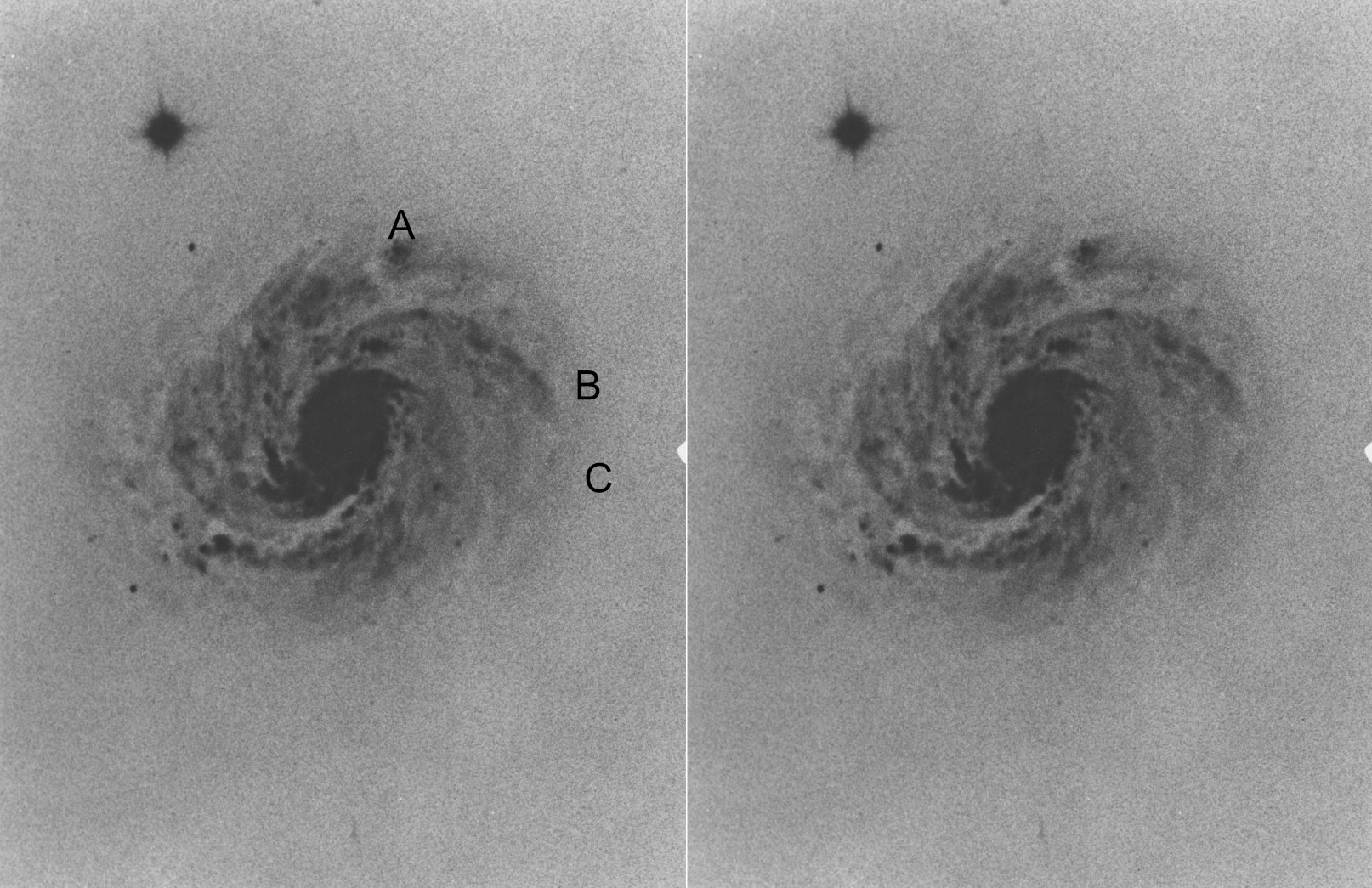
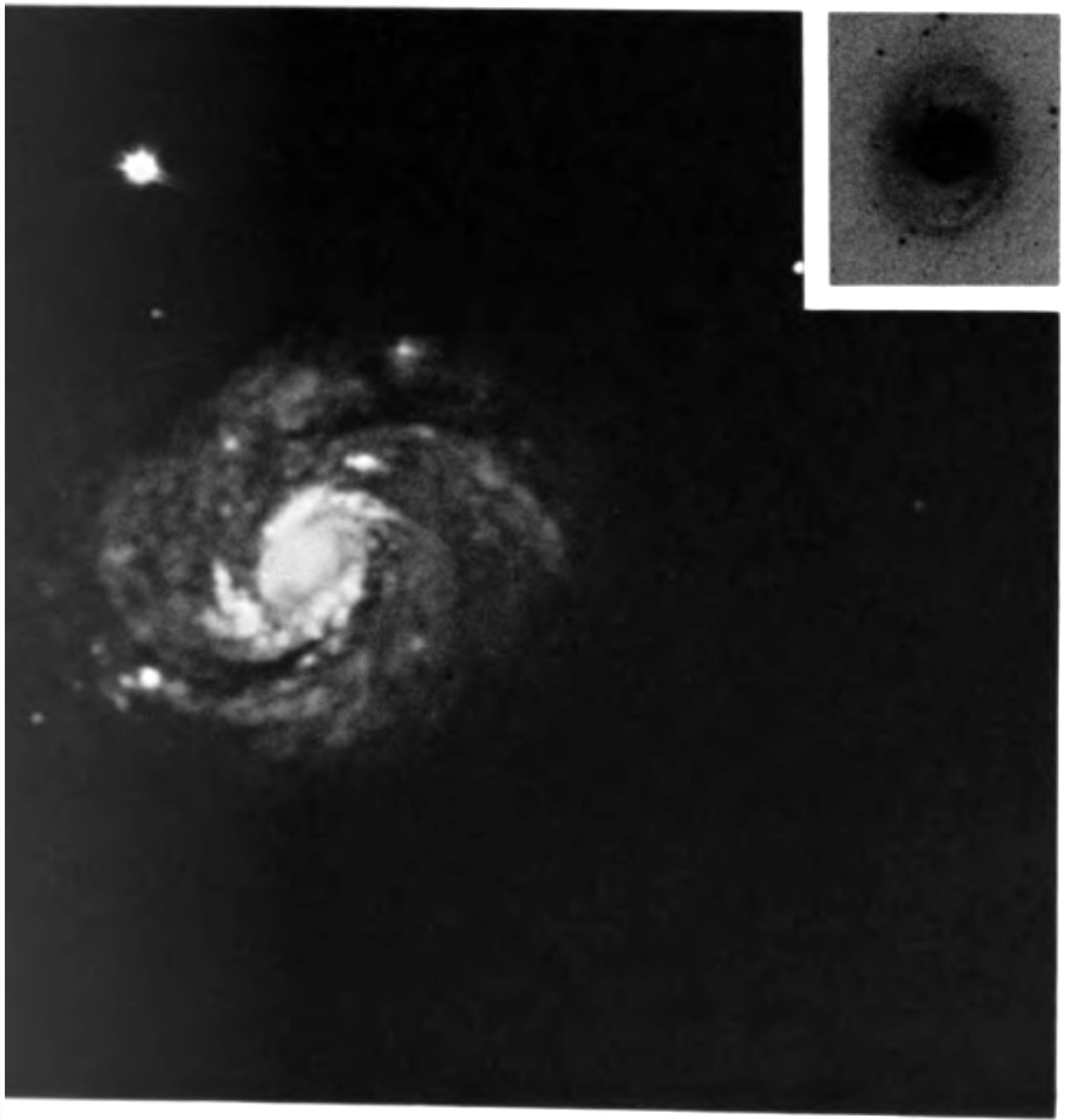
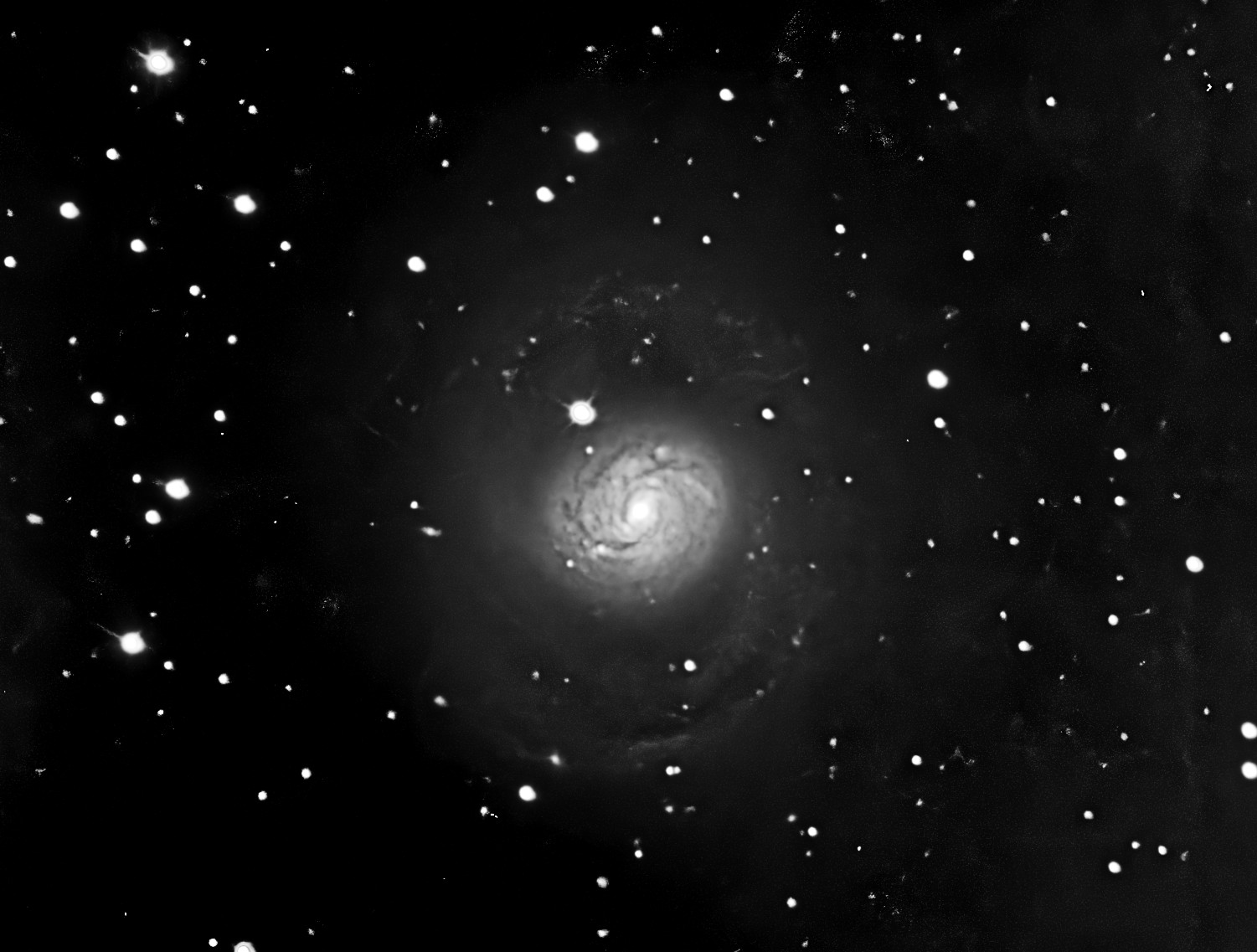
| Description | This is actually a very challenging observation because the nucleus is so bright, and the outer rings are so dim. I ended up adding a UV/IR cut filter to reduce near infrared light from nucleus, which helped a little. Then post processing to recover the center. MESSIER COMMENTS: Recorded December 17, 1780: "Cluster of small stars, which contains some nebulosity, in Cetus & on the parallel of the star Delta, reported of the third magnitude, & which M. Messier estimated to be hardly of the fifth. M. Méchain saw this cluster on October 29, 1780 in the form of a nebula." Interesting... Messier didn't see the nebula. Just a cluster of stars on top? Was his eyesight starting to fail? ARP PECULIAR GALAXY COMMENTS: Arp was heavily influenced by Armenian astronomer Viktor Ambartsumian, who theorized that active galaxies like M77 created new matter and spit out small, young galaxies. Arp ran a conference while at Max Planck Institute in 1999 to focus on VA's work where he commented: “From simply looking at pictures, [Ambartsumian] realized that new galaxies were formed in ejections from old galaxies”. Similarly, from his 1998 book, Seeing Red, “For me, the whole lesson of the Atlas of Peculiar Galaxies was that galaxies are generally ejecting material". The category is "low surface brightness companion on arms" but his comment here is simply, "Seyfert galaxy. Small knot in arm." Where is it? It could be a lot of things, though the knot A seems the most likely candidate. B & C are also possible. From the notes, I also infer that Arp reused the image from the Hubble Atlas of Galaxies, which was taken on the 100" Hooker Telescope on Mt. Wilson, not the 200" Hale. It's a positive image, and Position A looks very companion-like in that image. There's also an inset that points out the ring system. |
| Related Observations | Arp037 (2) M77 (2) NGC1068 (2) |
| Catalog Links | <Previous | Messier Listings | Next> |
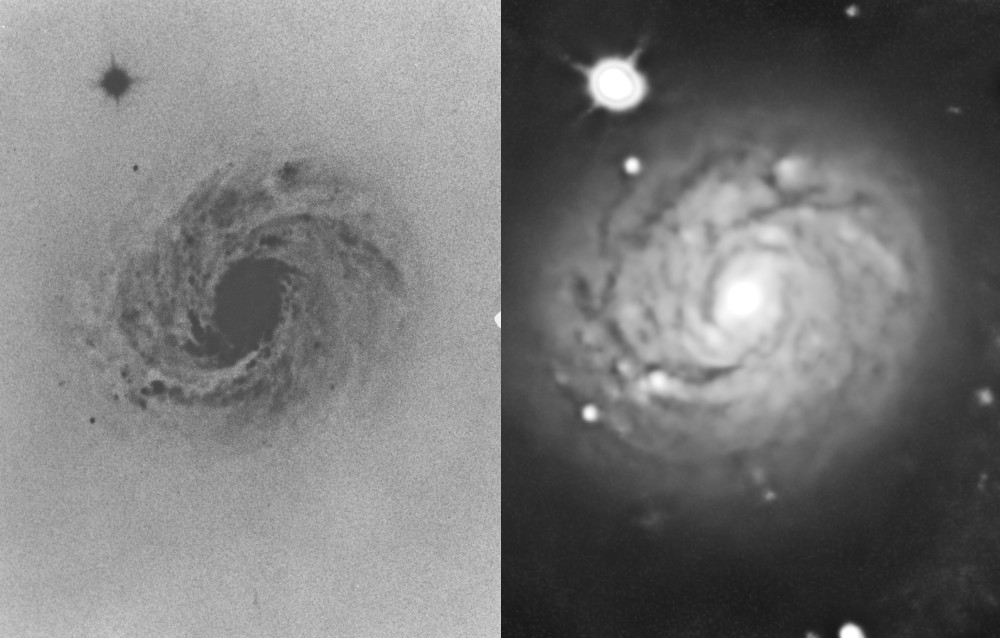
Arp’s image left, mine right 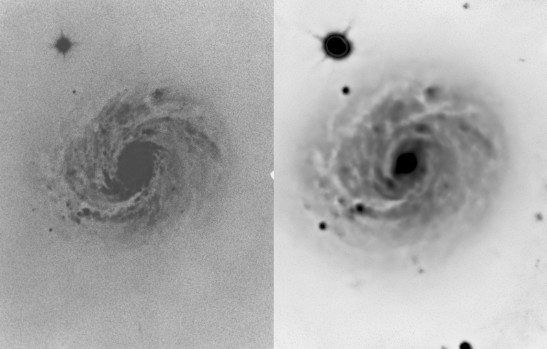
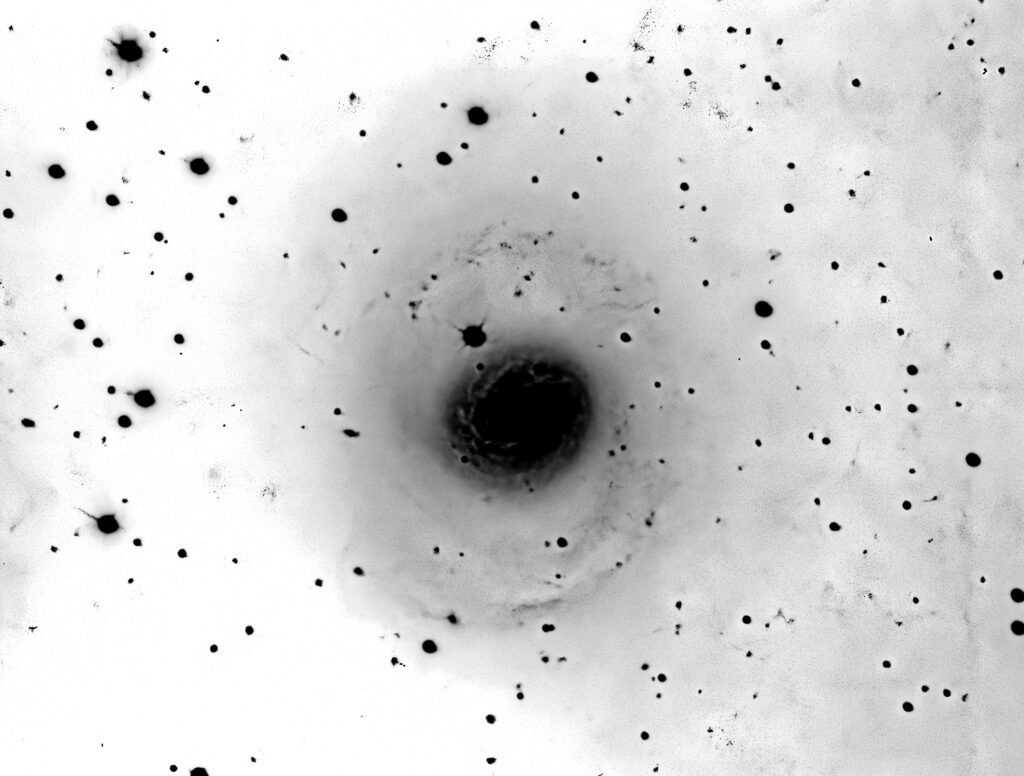
Levels altered to show extended ring system. 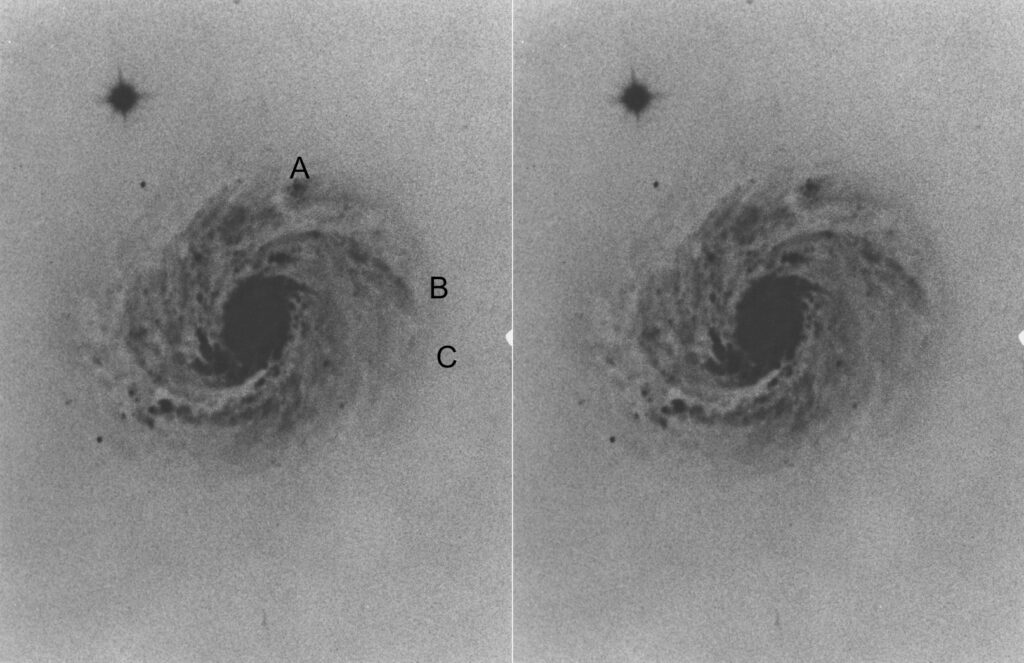
Where is the companion? Position “A” seems most likely. Base images are both from Atlas of Peculiar Galaxies. 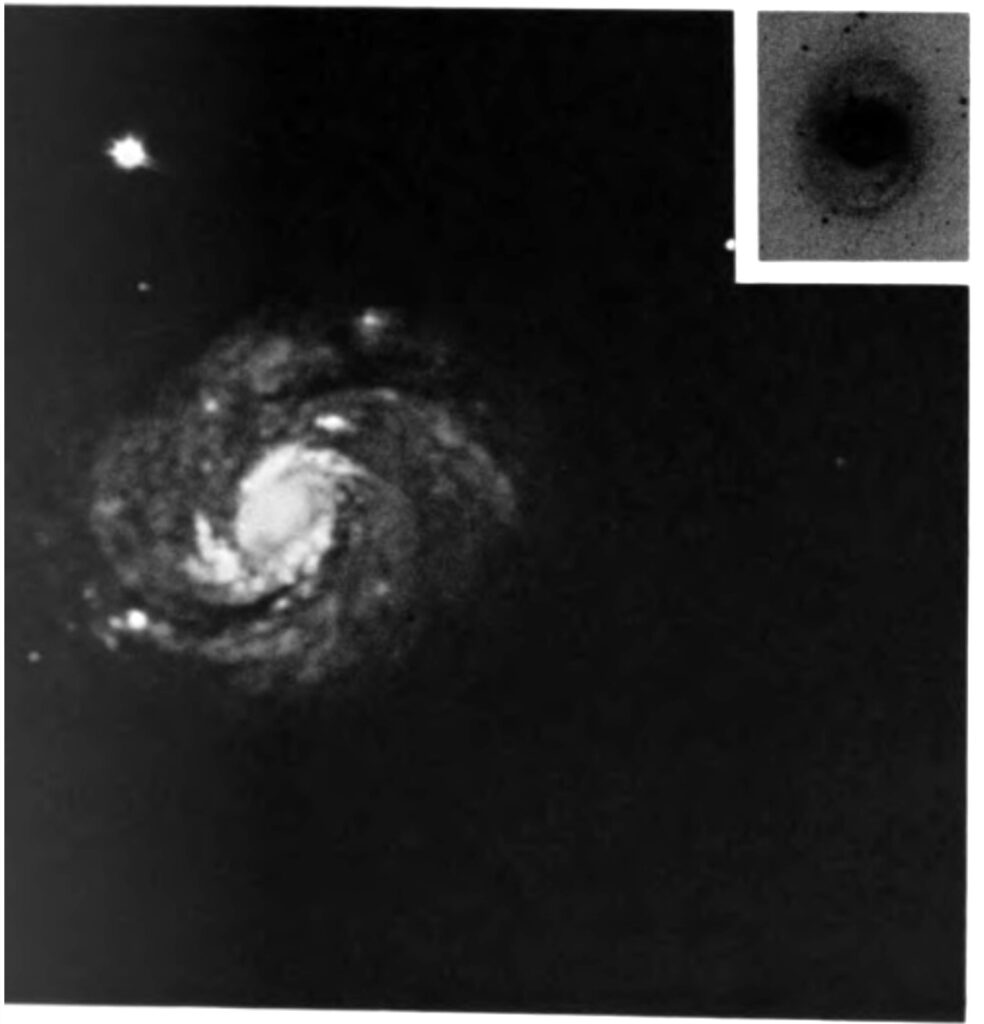
Image from Hubble Atlas of Galaxies (1961). Position A, in this positive image, really looks like a companion galaxy, much more so than in Arp’s Atlas. I believe from Arp’s notes that they are the same image as in the Atlas of Peculiar Galaxies, just inverted for the “Hubble” Atlas.