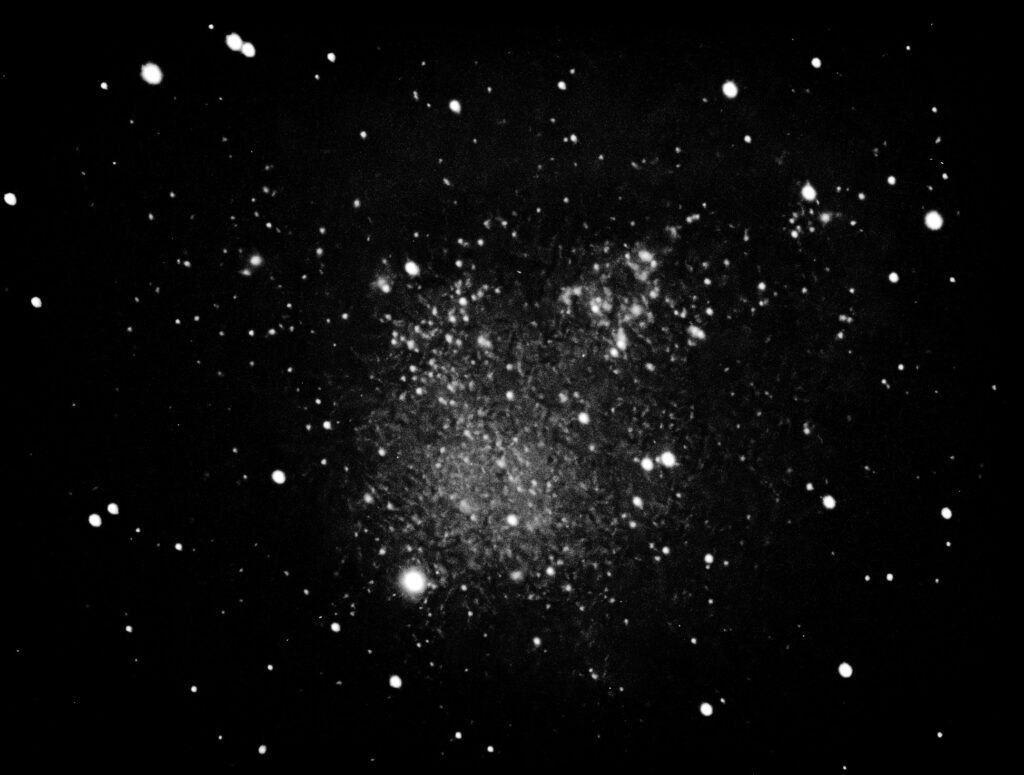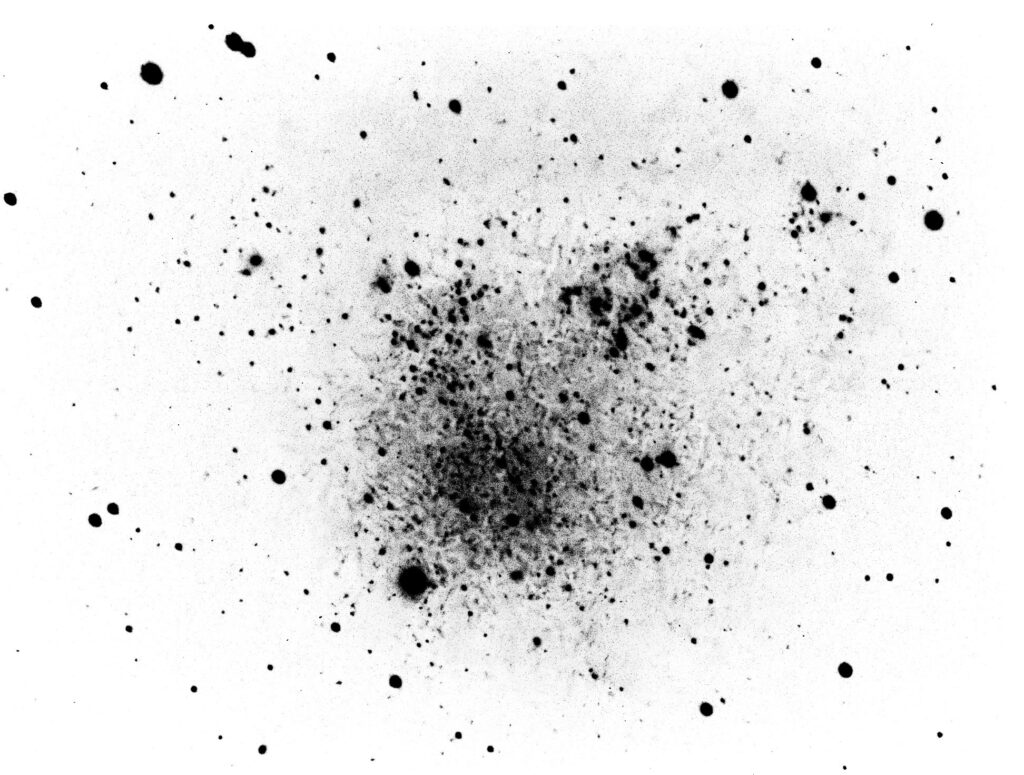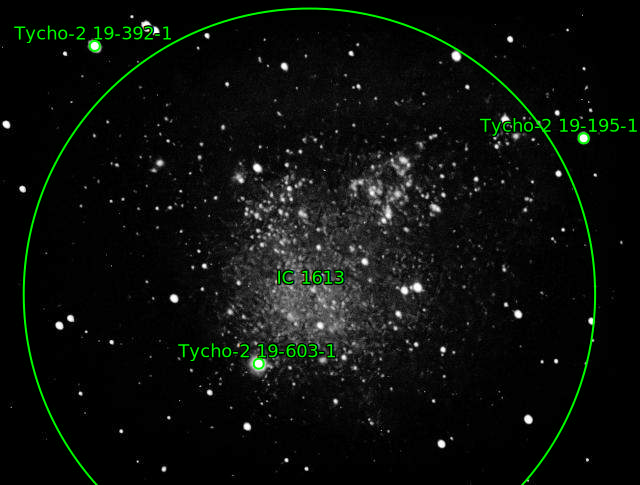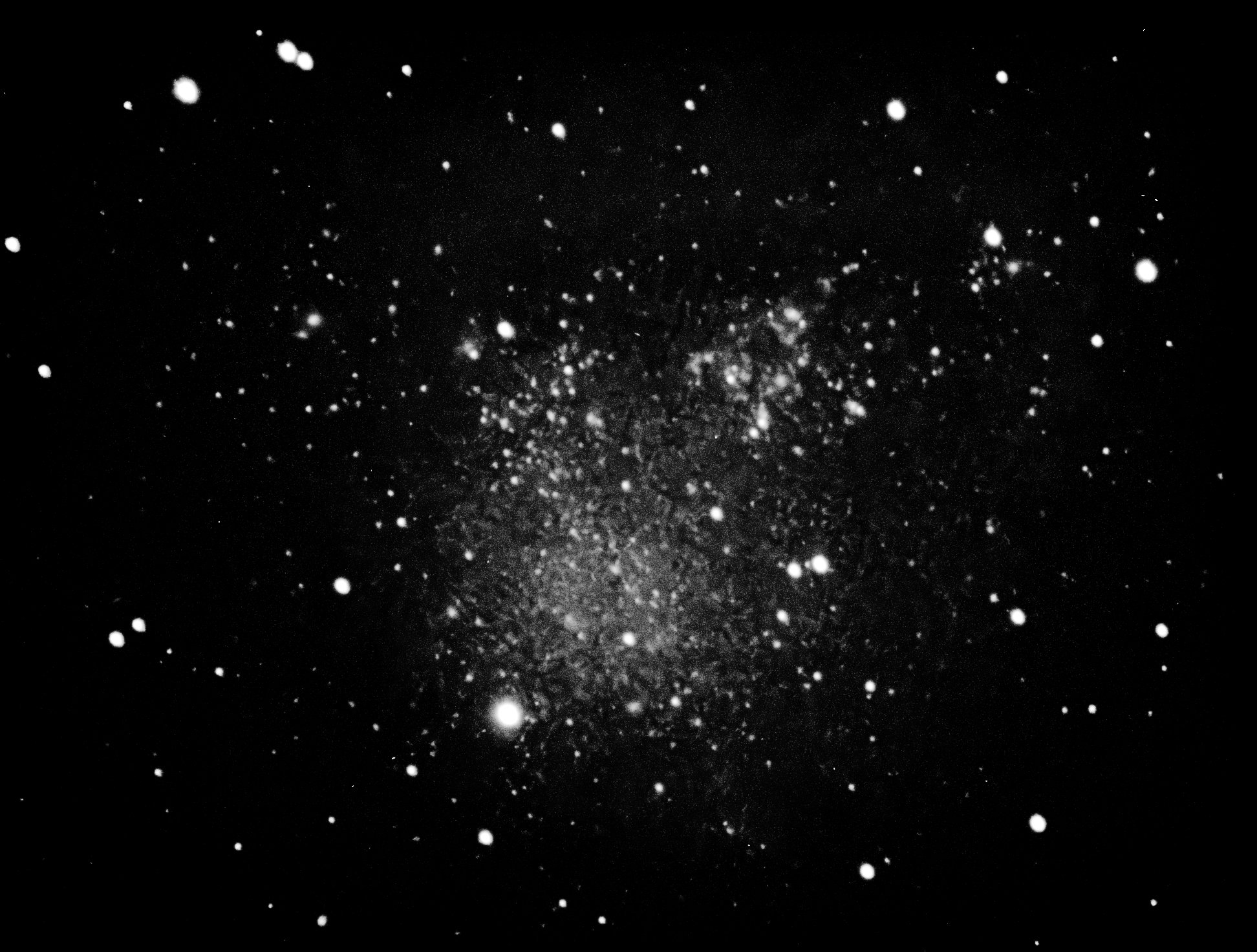
C 51 | IC 1613
| Designation(s) | C 51, IC 1613 |
| Object Type(s) | Galaxy |
| Relevant Catalog(s) | All (Chron), Caldwell, IC |
| Obs. Lat/Long | 42° 17', 073° 57' |
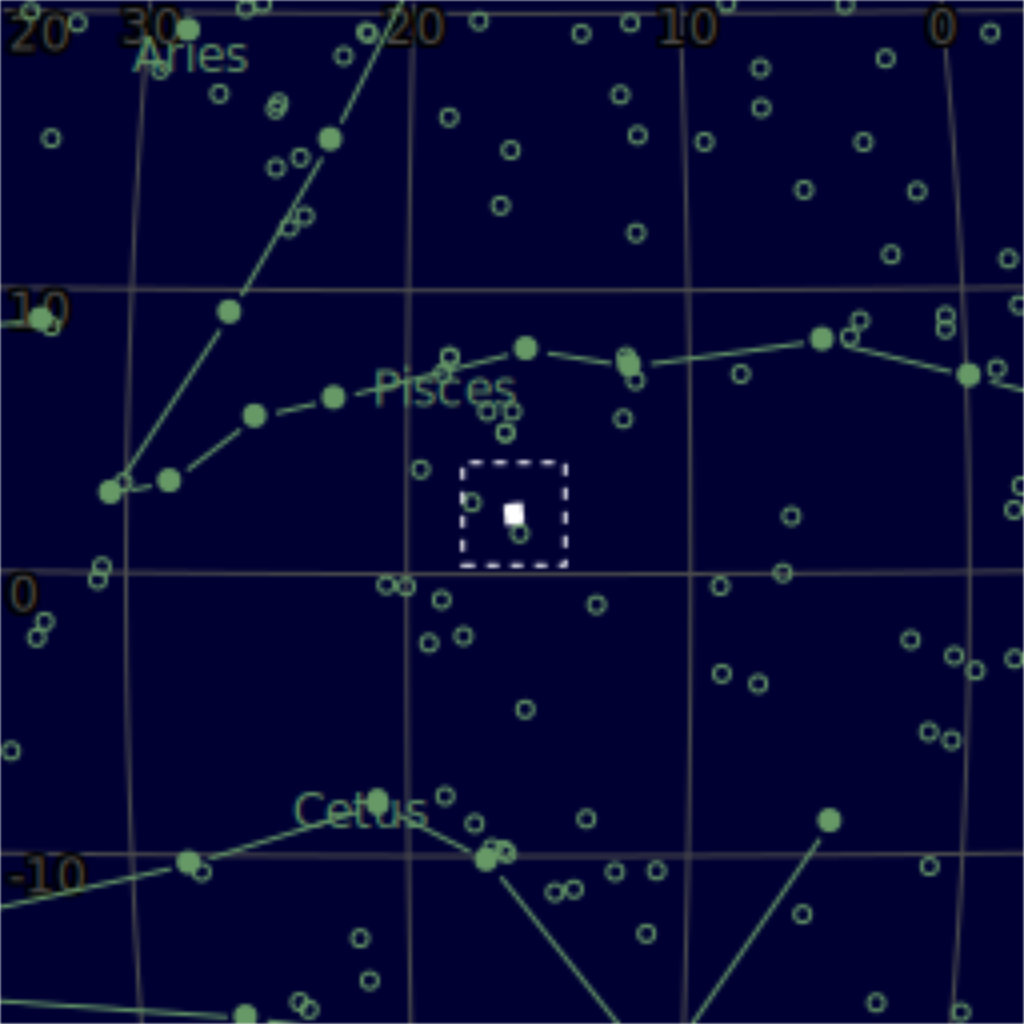
| Constellation | Cetus |
| Date and Time Observed | 2025-09-19 00:30:00 |
| Instrument | EdgeHD 8" w/f7 reducer-1,422mm FL |
| Camera | Player One Apollo-M Mini |
| Image Details | Up is 263.1 degrees E of N. Transparency: Good. Seeing: Good. Total integration time was 30m 30s. Exposures 15s@300g, No Filter. Dithered and recentered in SharpCap. No guiding. |
| Description | This is a challenging object to capture as the "disc" of the galaxy (such as it is) has very low surface brightness. Using EAA techniques as I do, it first looks like a disorganized open cluster more than a distinct object. No wonder it wasn't discovered until 1906 by Max Wolf. Walter Baade, using the 100" Link telescope at Mt. Wilson, carefully measured its distance in 1926, taking advantage of the fact that IC 1613 is virtually "dust free", allowing precise distance estimates with minimal adjustments. The galaxy is 2.4 million light years away. Cepheid techniques were crucial to the Mt. Wilson Observatory (as well as later at Mt. Palomar run by the same group) as they were employed by Edwin Hubble in his 1925 paper that established Andromeda was a separate galaxy outside of the Milky Way. Hubble continued to refine the estimates until his death in 1953... making significant adjustments, critical to refining the value of the "Hubble Constant" though the top level conclusion of his 1925 was never in doubt. Halton Arp performed many of the later measurements on the 60" telescope on Mount Wilson, as a Ph.D. candidate at CalTech, and continued this work as a post-doc after Hubble's death. |
| Catalog Links | <Previous | Caldwell Listings | Next> |