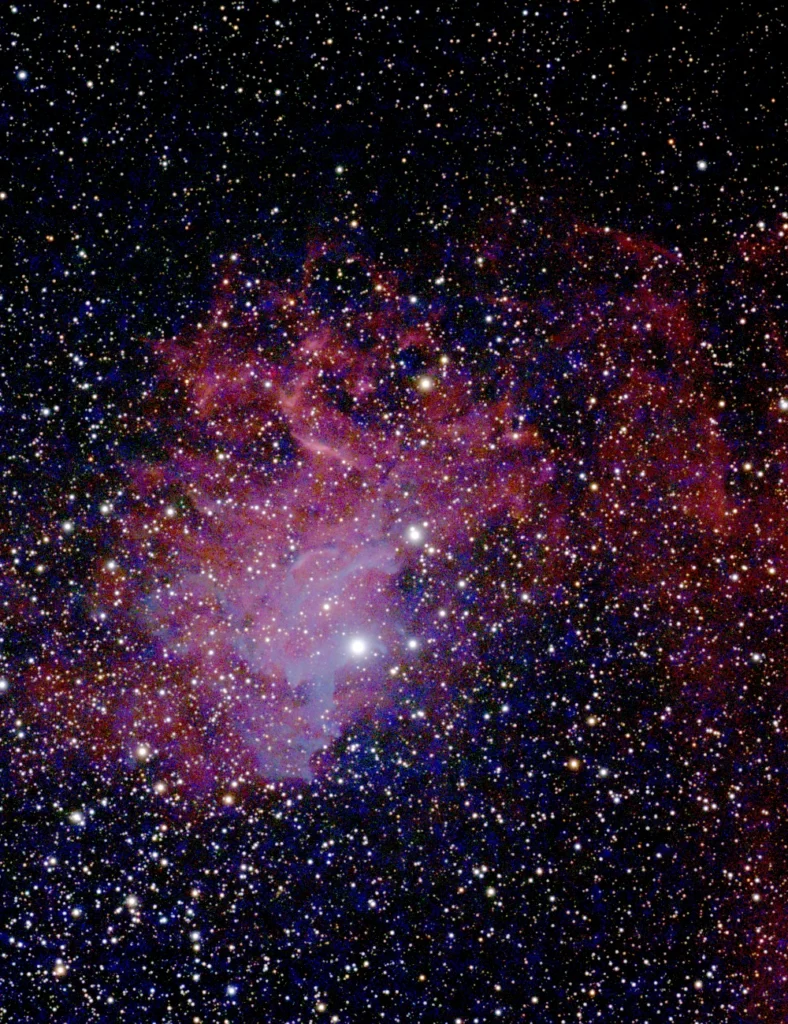
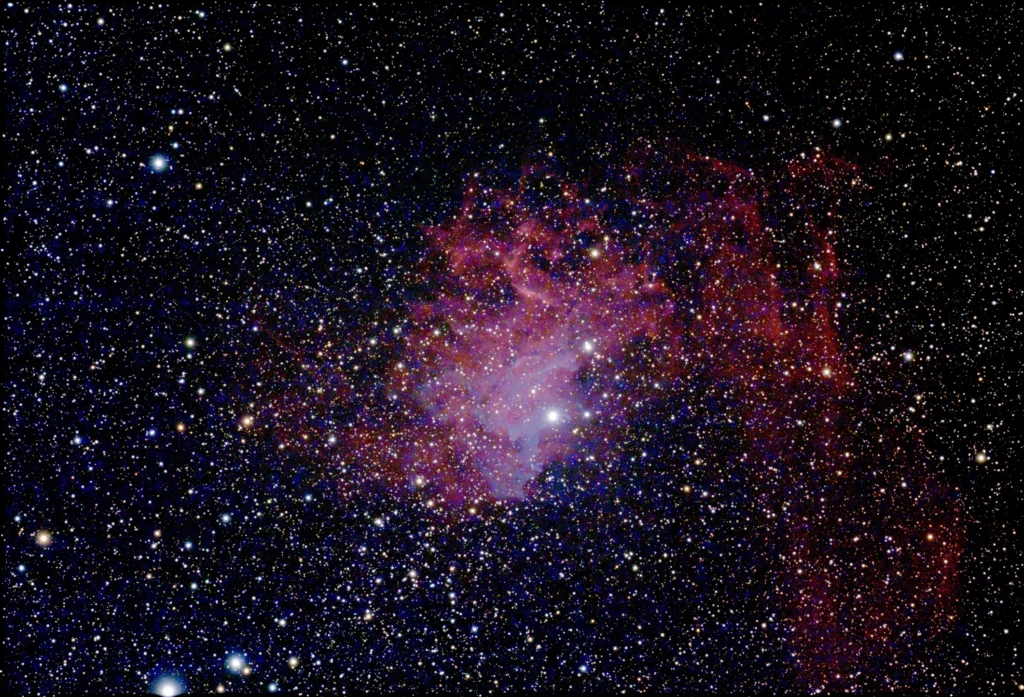
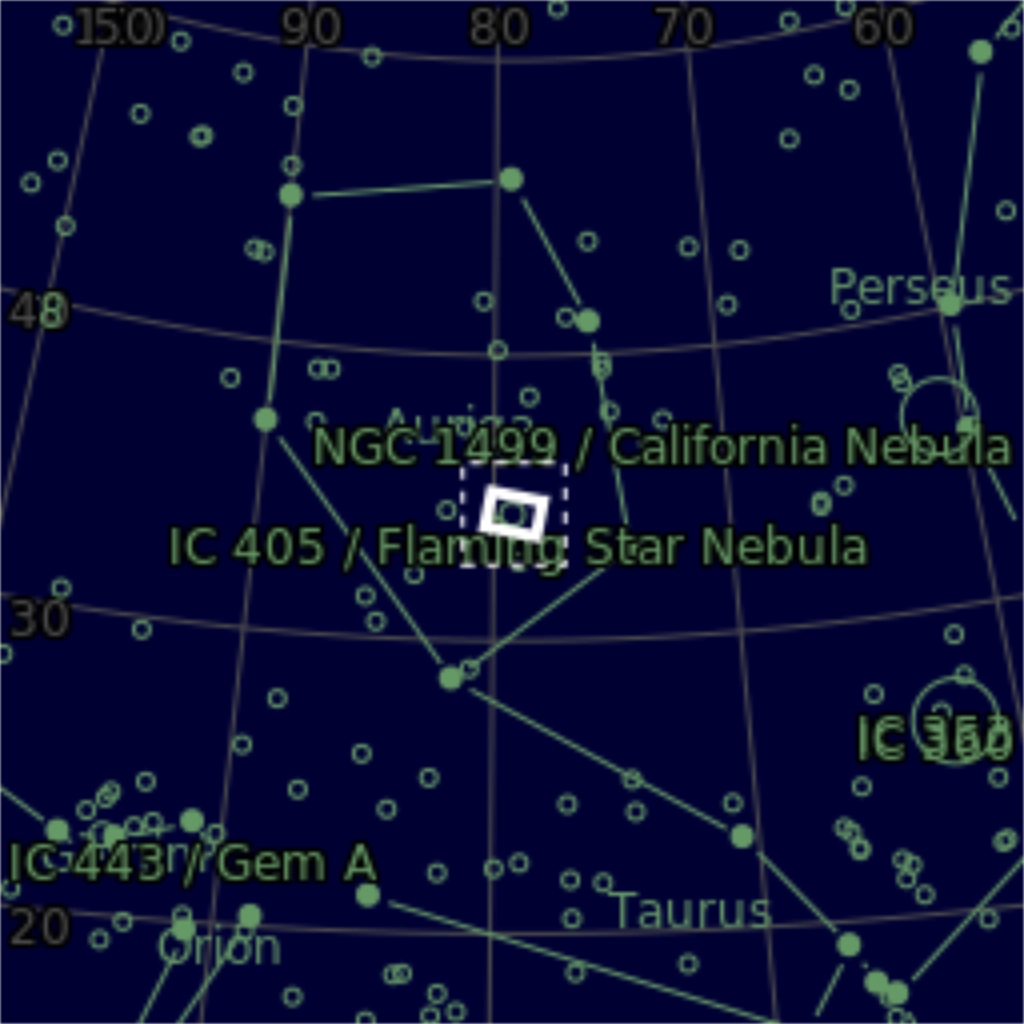
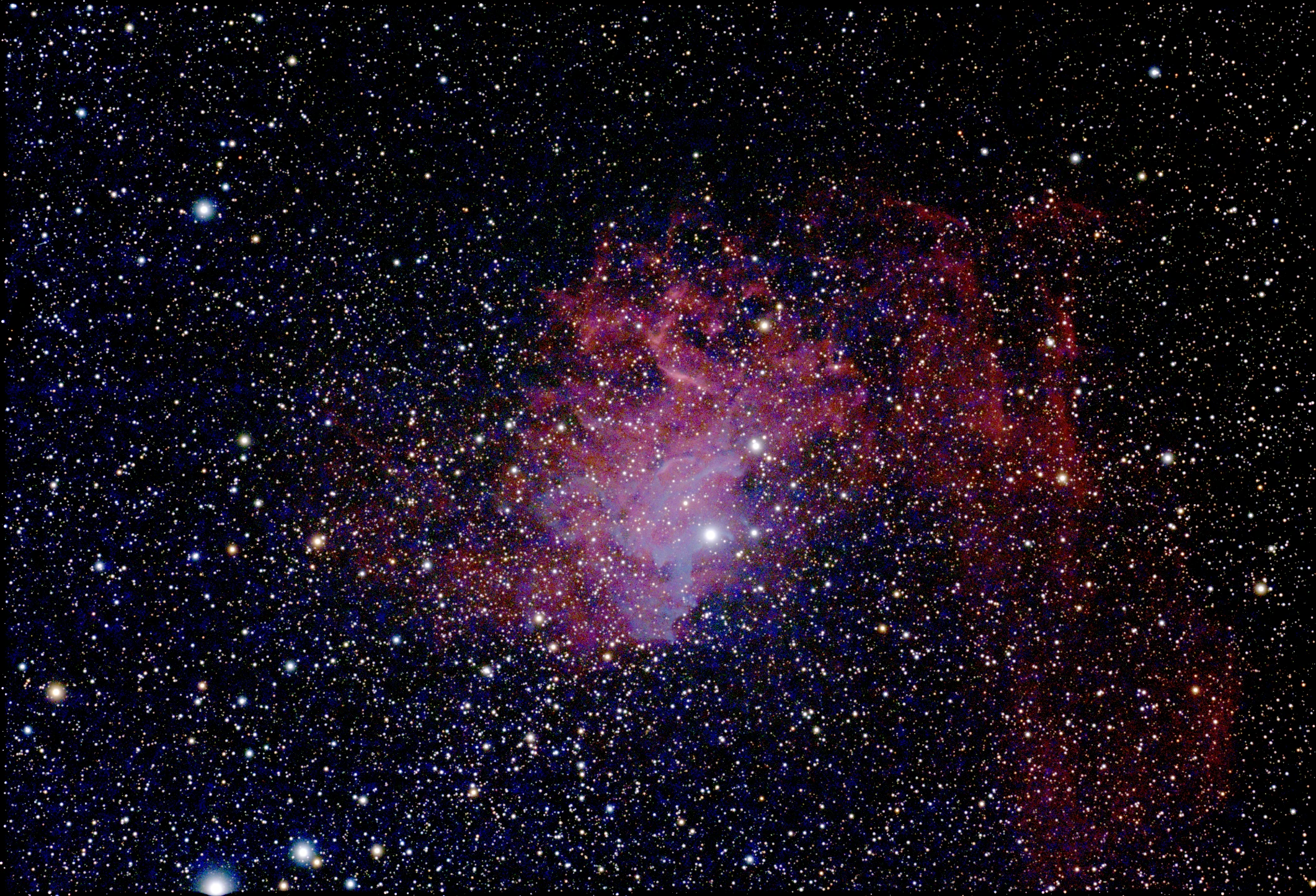
| Description | IC 405 was discovered photographically in 1892 by John Martin Schaeberle, with two others, Max Wolf and Hungarian Eugen von Gothard independently capturing it the same year. Wolf was responsible for its nickname, describing the central star as a "burning body". This is a bear of a target with an OSC. If you use a dual band filter, like my L-eNhance, you lose the reflection nebula, which is the most important feature IMO. This meant the Hydrogen II (red areas) which is quick to capture with the filter, builds really slowly. I found the the reflection nebulousness -- the snot -- really looked good with a high black point and high saturation, but you lost most of the red structure so painfully captured. Bring out the red, and you washed out the snot. Most of all it needed TIME. This was a compromise. Now I know why people love narrowband imaging. Captured on a chancy night with lots of high clouds. While I managed 60m integration time, this took over 2 hours because SharpCap's brightness filtering was kicking in frequently. Processed in Affinity photo from the Sharpcap "saved with adjustments" .png file. The related observation (click button below) is a wide-field view of the Tadpole Nebula with the Flaming Star Nebula. It's taken with the L-eNhance, so you have a much better view of the HII structure, but not a hint of the reflection nebula. |