M100 / NGC 4321 / Mirror Galaxy: A Vera Rubin Galaxy
| Name | Mirror Galaxy |
| Designation(s) | M100, NGC 4321 |
| Object Type(s) | Galaxy |
| Relevant Catalog(s) | All (Chron), Messier, NGC |
| Obs. Lat/Long | 42° 17', 073° 57' |
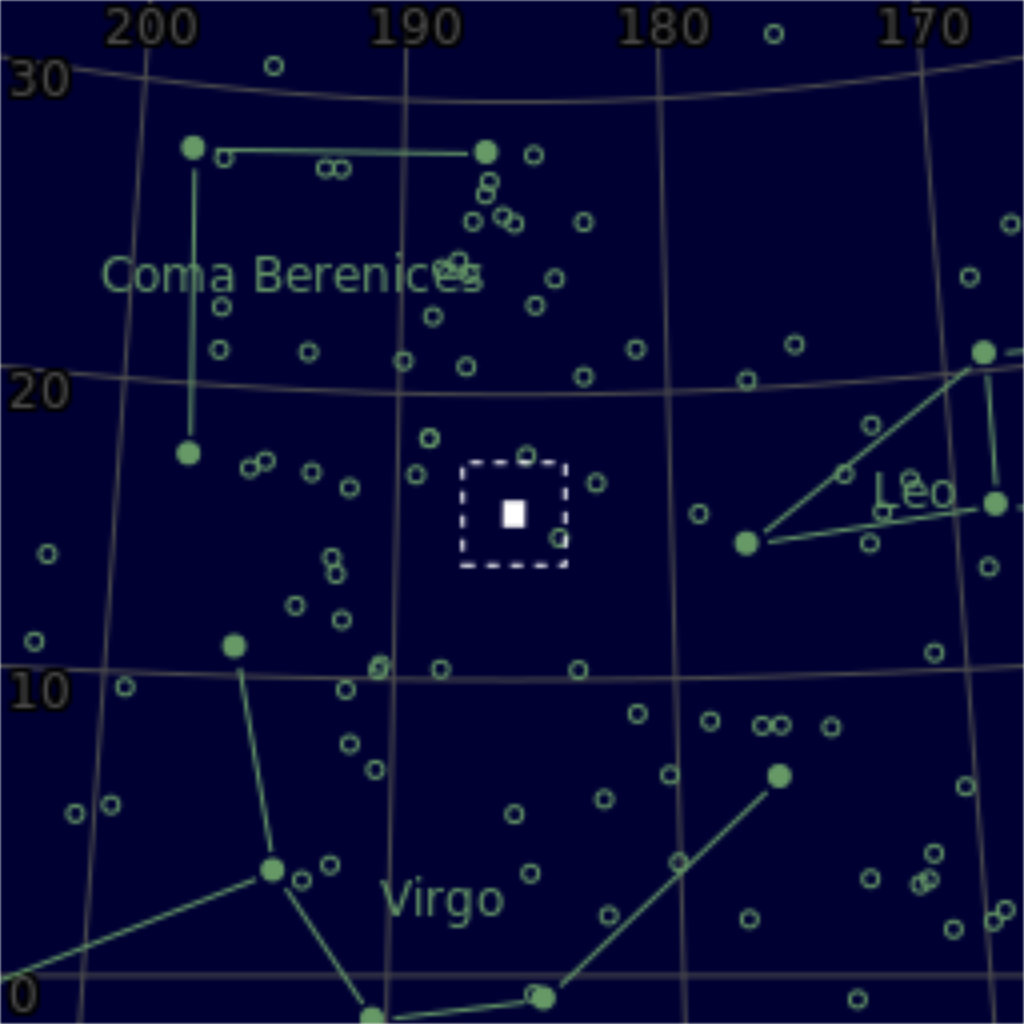
| Constellation | Coma Berenices |
| Date and Time Observed | 2025-03-26 22:32:01 |
| Instrument | EdgeHD 8" w/f7 reducer-1,422mm FL |
| Camera | Player One Apollo-M Mini |
| Image Details | Up is 110.2 degrees E of N. Transparency: Good. Seeing: Fair. Total integration time was 24m30s. Exposures 30s@300g, UV/IR Cut Filter. Darks subtracted, no flats. Dithered and recentered in SharpCap. . |
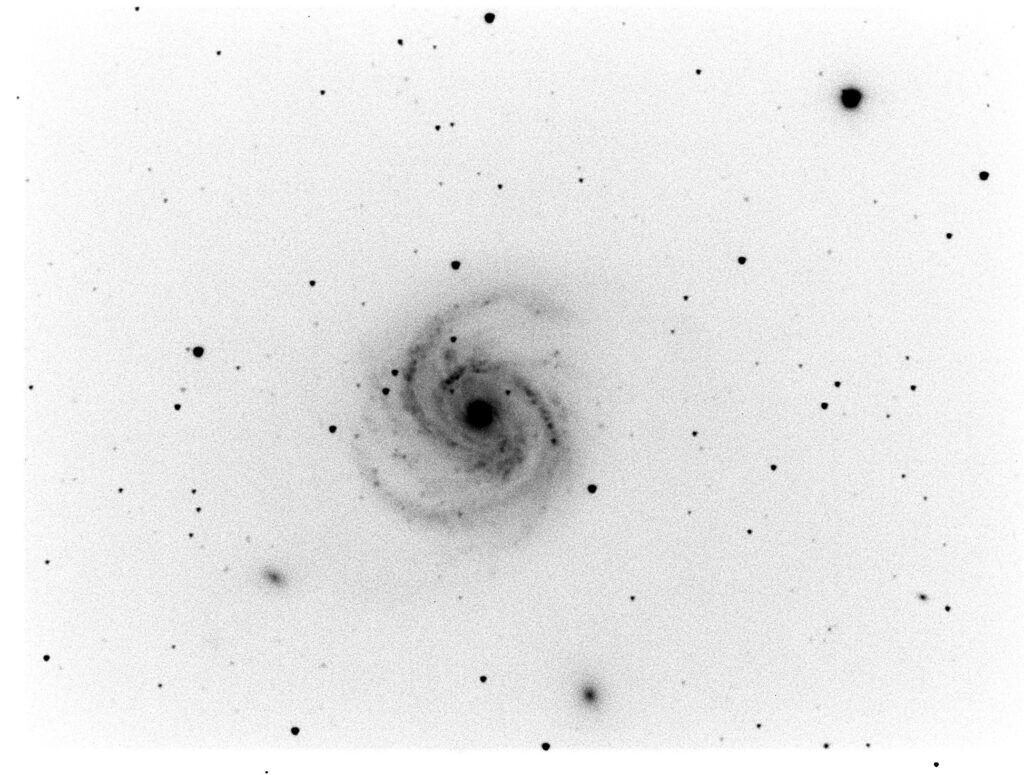
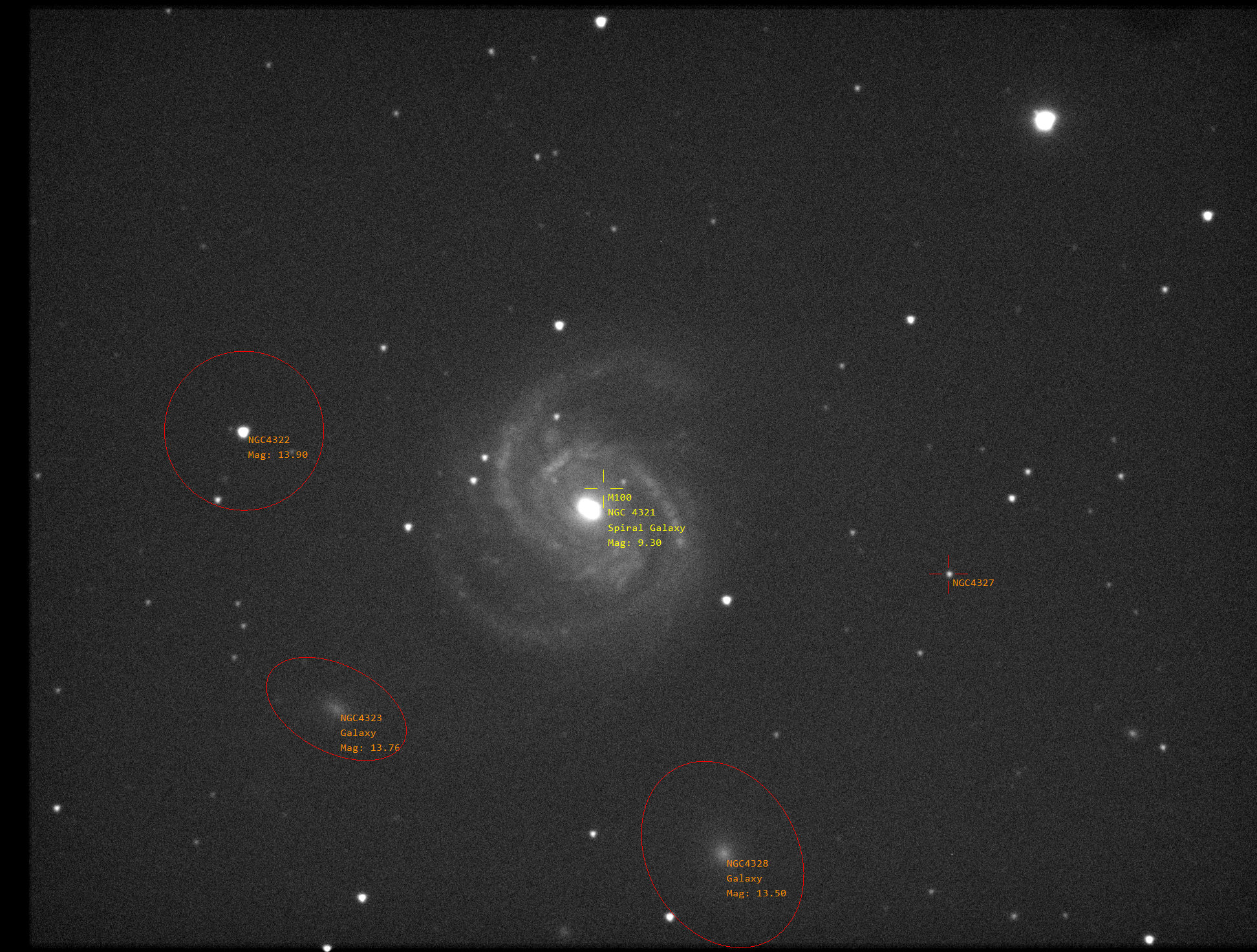
| Description | After a break of 3 weeks, three Méchain galaxies (M98-M100) recorded April 13, 1781: "Nebula without star, of the same light as the preceding [M99], situated in the ear of Virgo. Seen by M. Méchain on March 15, 1781. These three nebulae, nos. 98, 99 & 100, are very difficult to recognize, because of the faintness of their light: one can observe them only in good weather, & near their passage of the Meridian." <--> This is one of the prettiest spiral galaxies in the Messier catalog: almost like a cross of M101 and the Fireworks Galaxy. This was a re-visit to this object using my standard mono galaxy rig, which is much faster than any of my OSC options. I was intrigued by what appears to be interaction between M100 and NGC 4323. I thought I saw some sort of tidal flow between them, and the inverted image makes it clear that there is. M100 is itself a gorgeous intermediate spiral galaxy, just suggesting the beginning of a bar. I was hoping to integrate about 40 minutes, but thick clouds rolled in eventually. The last 15m of integration took more than an hour as SharpCap's brightness filter cut out most lights. M100 also happens to be one of the 21 galaxies where Vera Rubin measured its rotation curve in her seminal paper that demonstrated the existence of dark matter. |
| Catalog Links | All Listings |


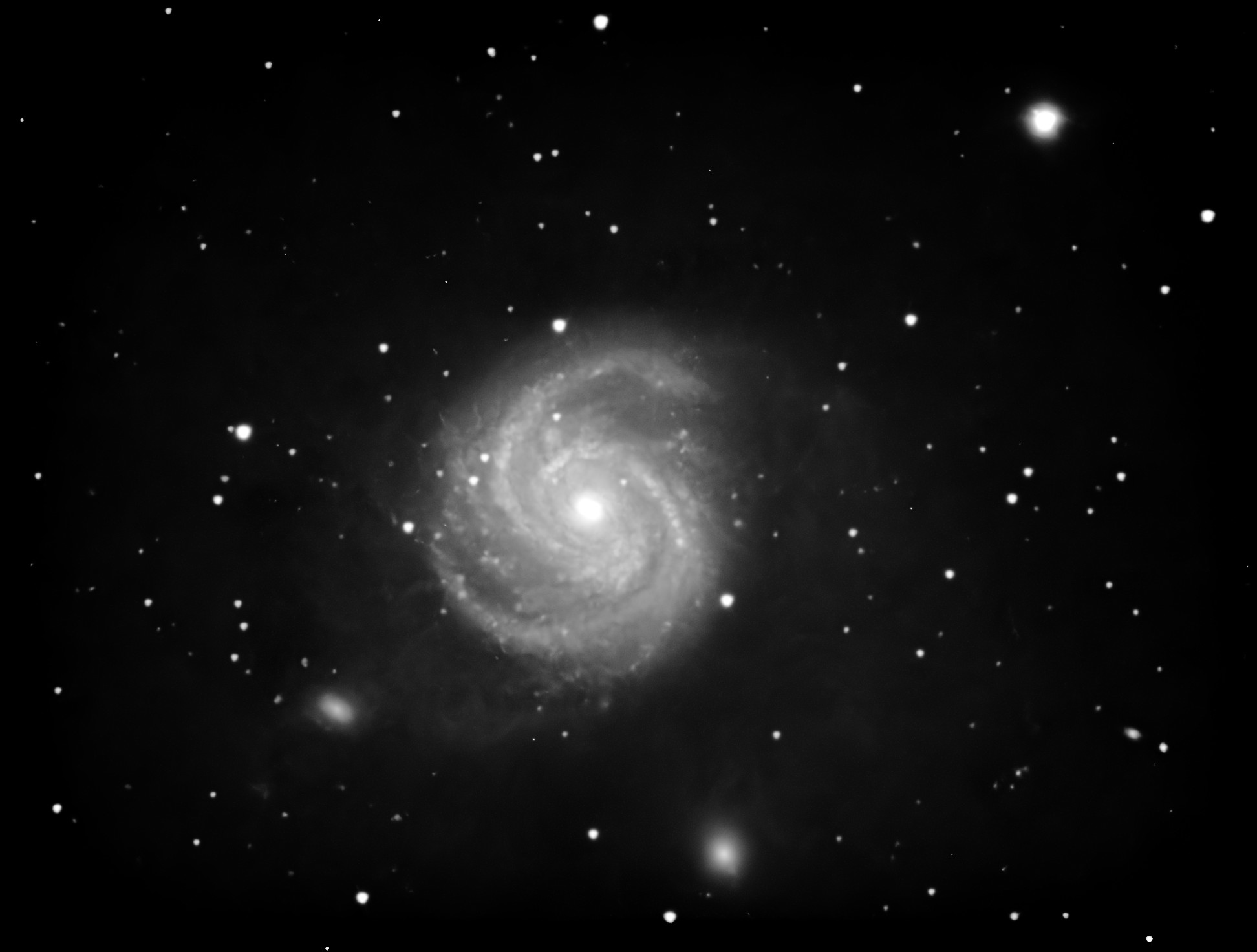
Processed using NoiseXTerminator and aggressive Ritson Macos 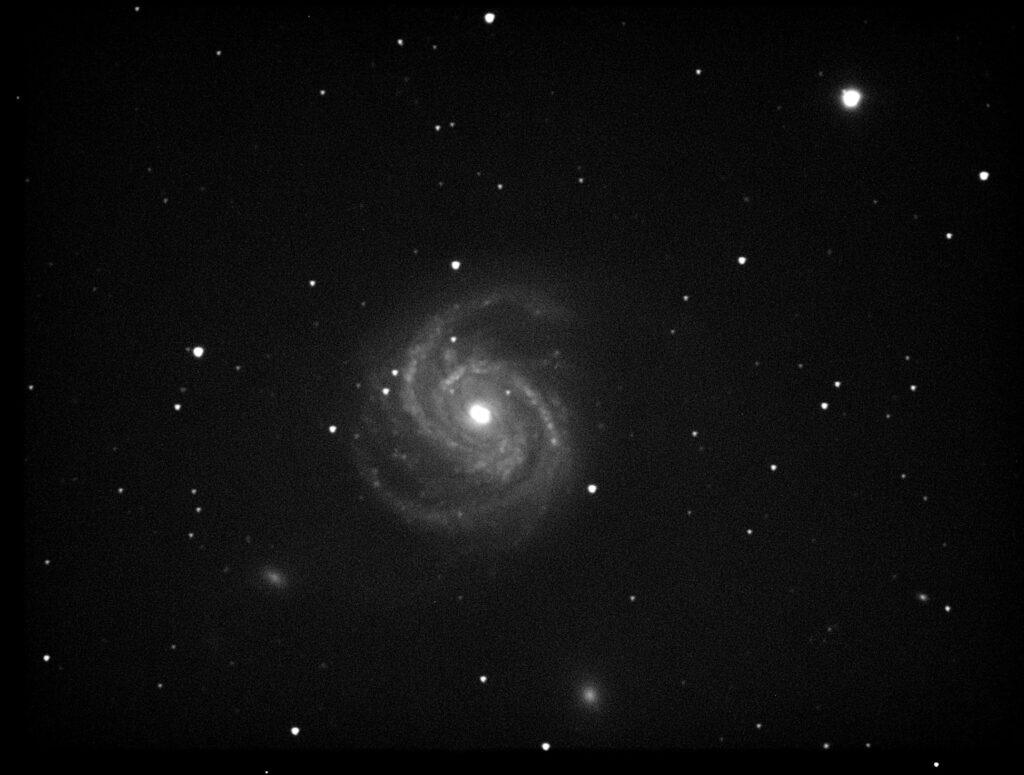
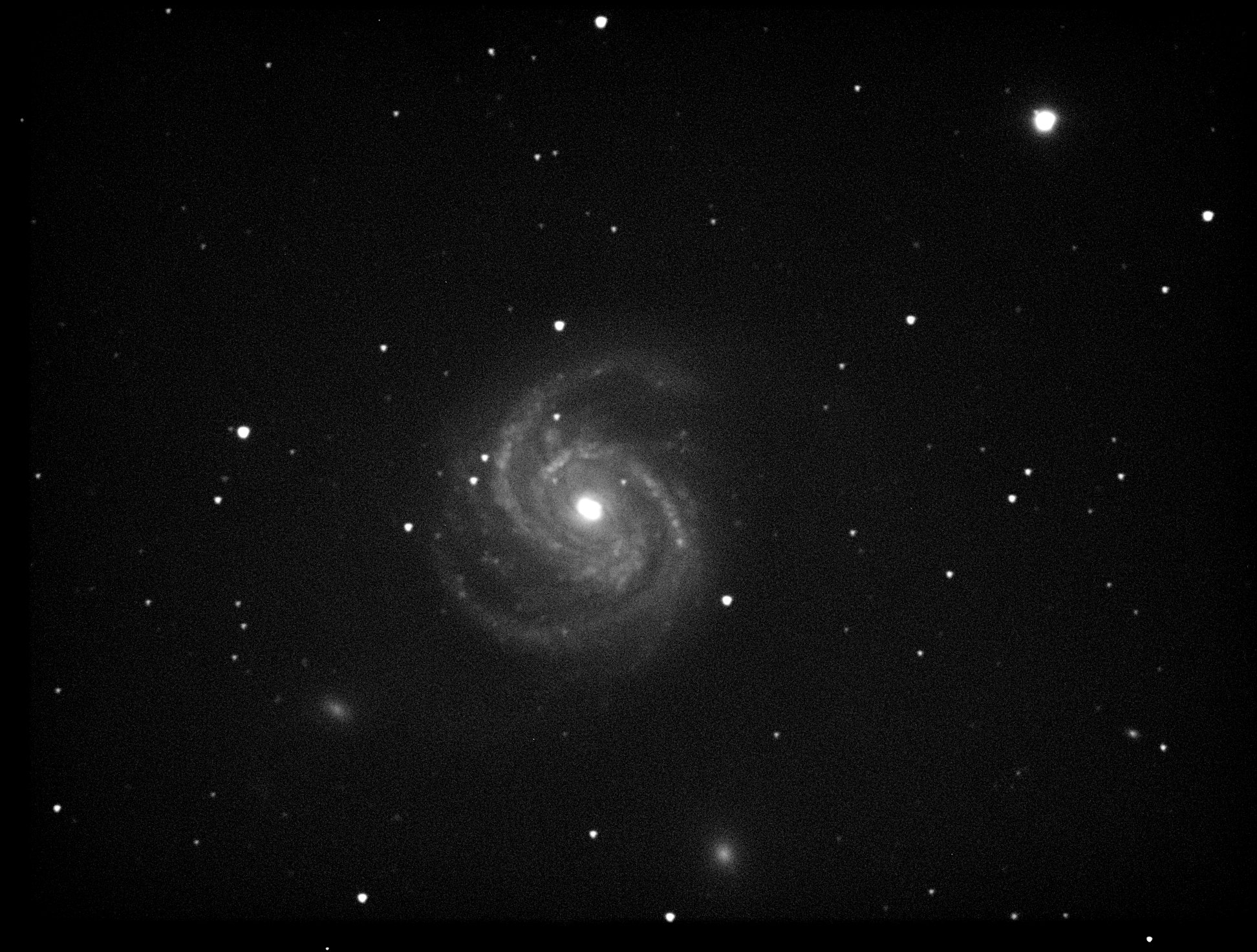
Original processing without NoiseXTerminator