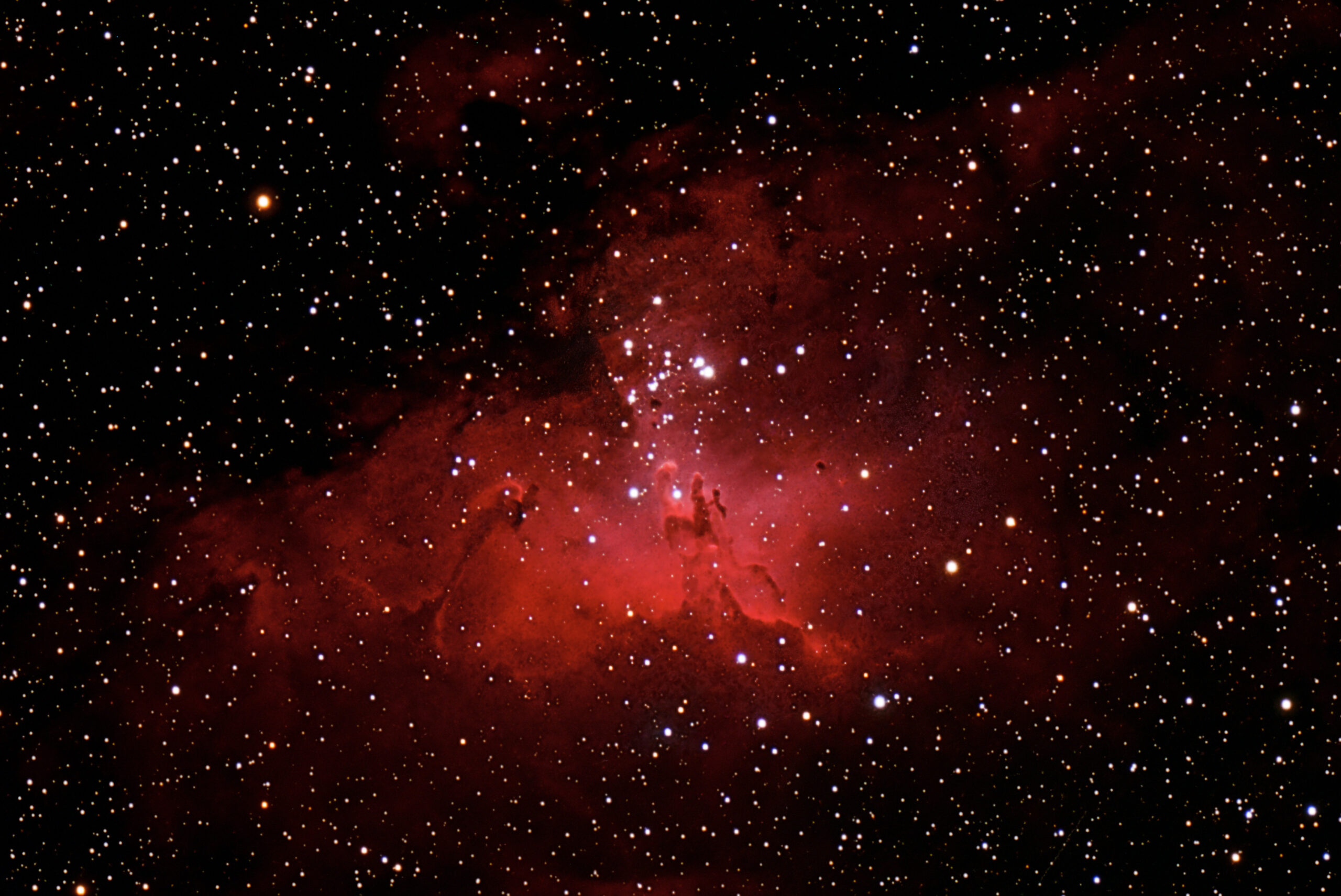
M16 / Eagle Nebula / Sh2-49 (Revisit, First Light)
| Name | Eagle Nebula |
| Designation(s) | M16, Sh2-49, NGC 6611 |
| Object Type(s) | Emission Nebula |
| Relevant Catalog(s) | All (Chron), Messier, NGC, Sharpless |
| Obs. Lat/Long | 42° 17', 073° 57' |
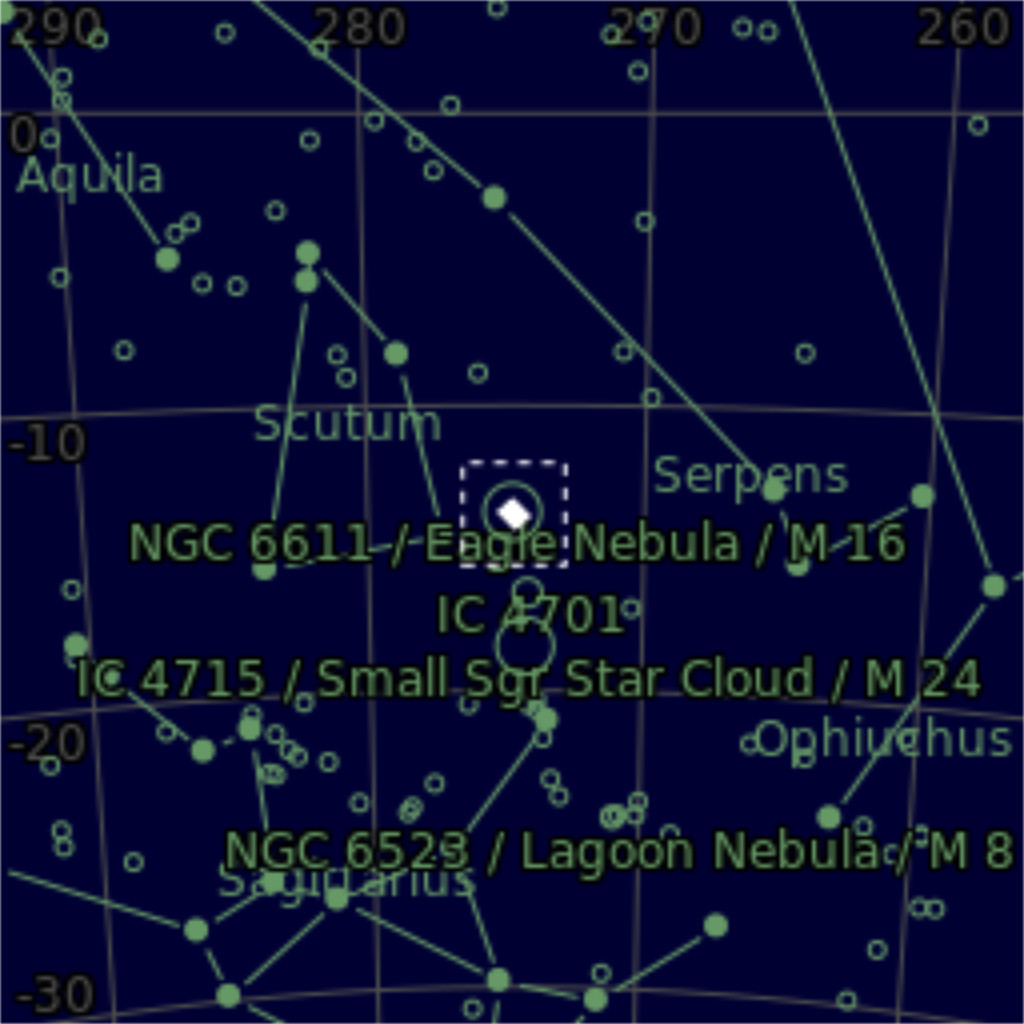
| Constellation | Serpens |
| Date and Time Observed | 2026-07-19 23:05:00 |
| Instrument | ZWO FF131 f7.5-983mm |
| Camera | ASI2600MC-Pro |
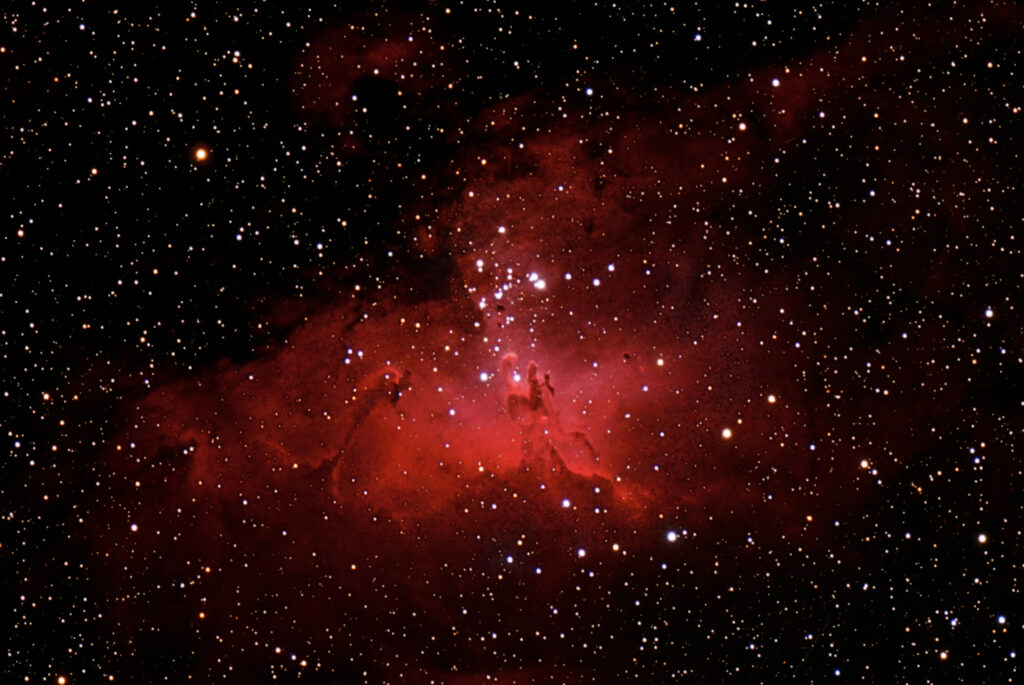
| Image Details | Up is 52.8 degrees E of N. Transparency: Good. Seeing: Fair. Total integration time was 40m. Exposures 20s@101g. No callibration frames. No guiding.. |
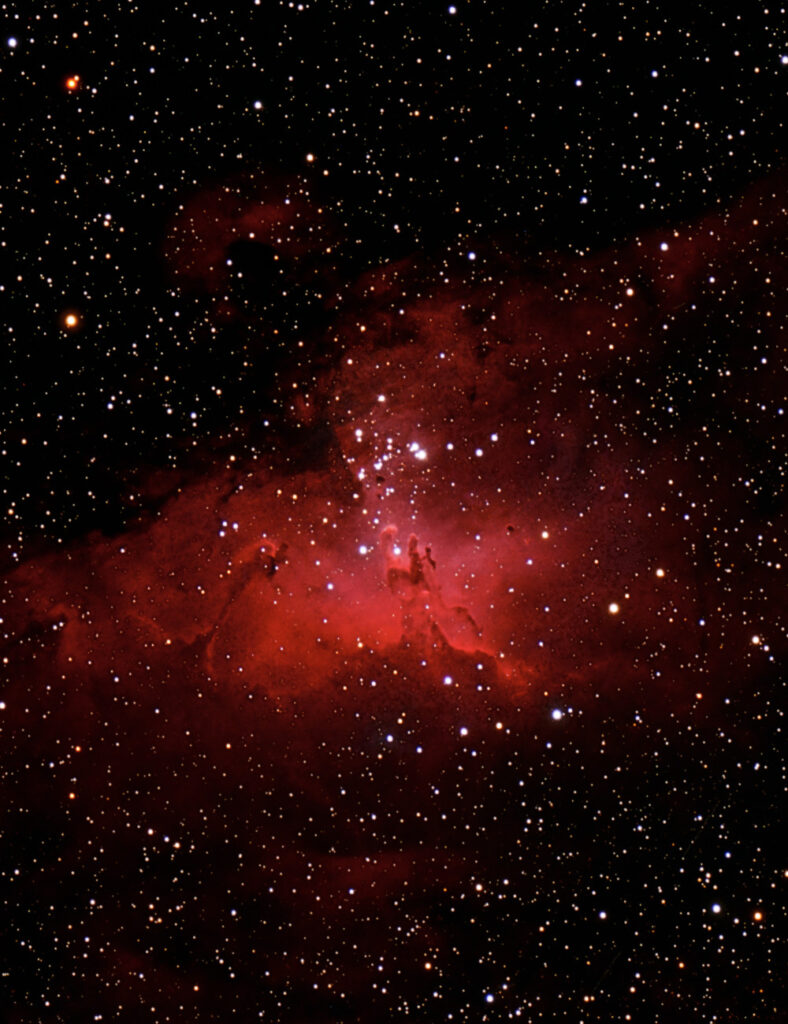
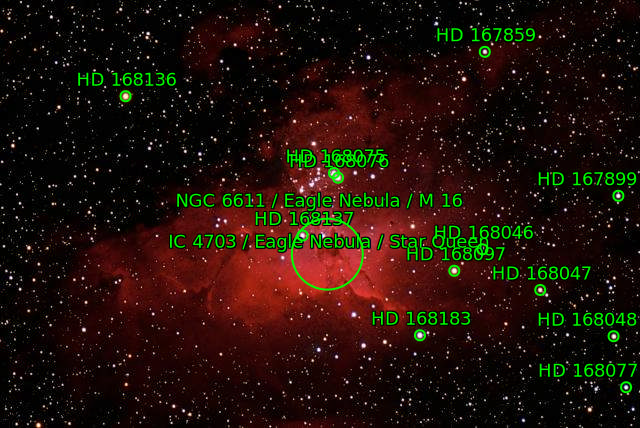
| Description | This famous target evolved over time. A small, open cluster (NGC 6611) was discovered by Jean-Philippe de Cheseaux in 1745–46. It was cataloged by Messier with a notation of nebulosity, on June 3, 1764 (same as M15-18): "A cluster of small stars, enmeshed in a faint glow, near the tail of Serpens, at little distance to the parallel of Zeta of this constellation; with an inferior telescope this cluster appears like a nebula." Today, these distinction are generally ignored and M16 now refers to the Eagle Nebula complex. <--> M16 includes the famous "Pillars of Creation" of Hubble fame, which emerge in the center and left of the image. The area is surrounded by dark nebulae which are feeding raw materials to the star-incubators in the pillars. This is one of the closest star birthing areas to our solar system. This was first light with my new 983mm refractor. Definitely more detail and depth than from the last visit which was Bin 2 on the 2600 with EdgeHD @ f/10. |
| Related Observations | M16 (4) NGC6611 (3) |
| Catalog Links | All Listings |