M20 / NGC 6514 / Trifid Nebula
| Name | Trifid Nebula |
| Designation(s) | M20, NGC 6514 |
| Object Type(s) | Emission Nebula, Reflection Nebula |
| Relevant Catalog(s) | All (Chron), Messier, NGC |
| Obs. Lat/Long | 44.1800084, -68.7096701 |
| Constellation | Sagittarius |
| Date and Time Observed | 2026-06-19 23:29:00 |
| Instrument | Askar V 80mm w extender f7.5-600mm FL |
| Camera | ASI2600MC-Pro |
| Image Details | Up is 70.2 degrees E of N. Transparency: Fair. Seeing: Fair. Total integration time was 15m 20s. Exposures 20s@150g. Dithered and recentered in SharpCap. No guiding. |
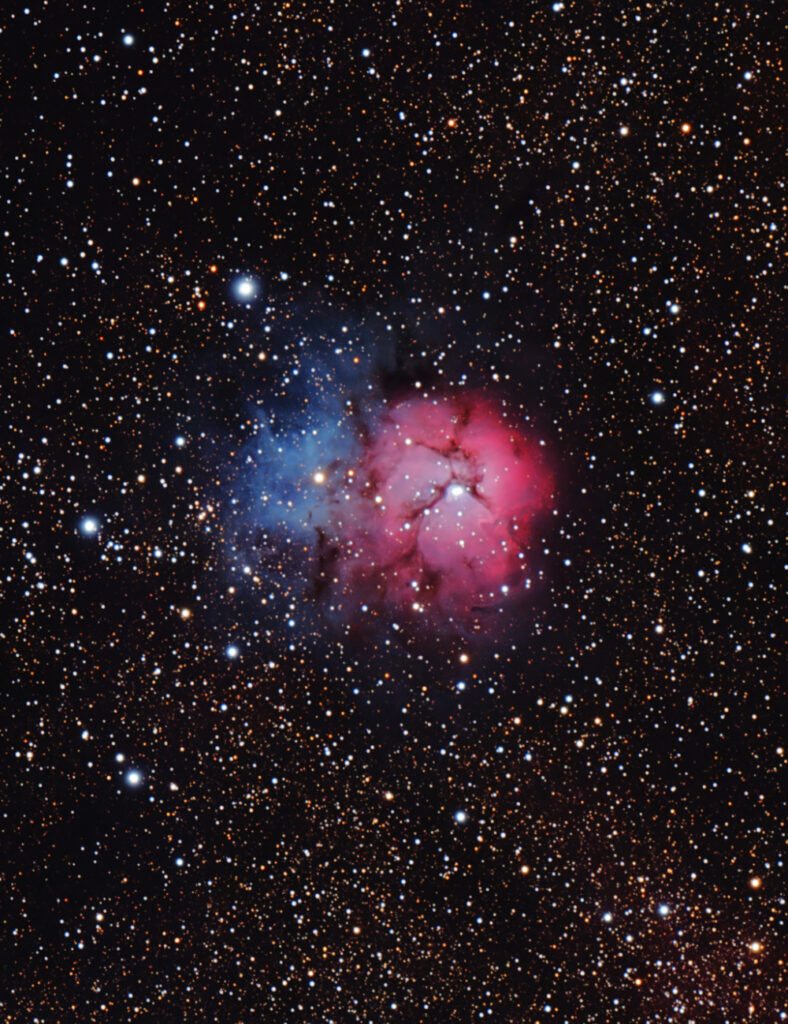
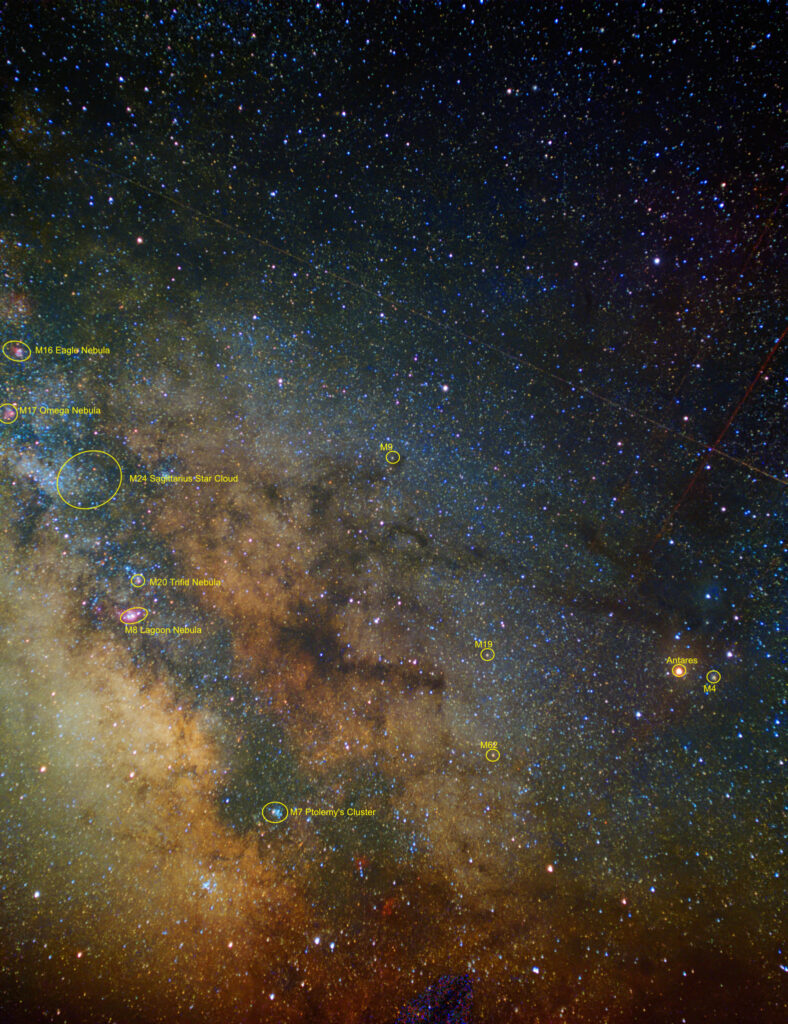
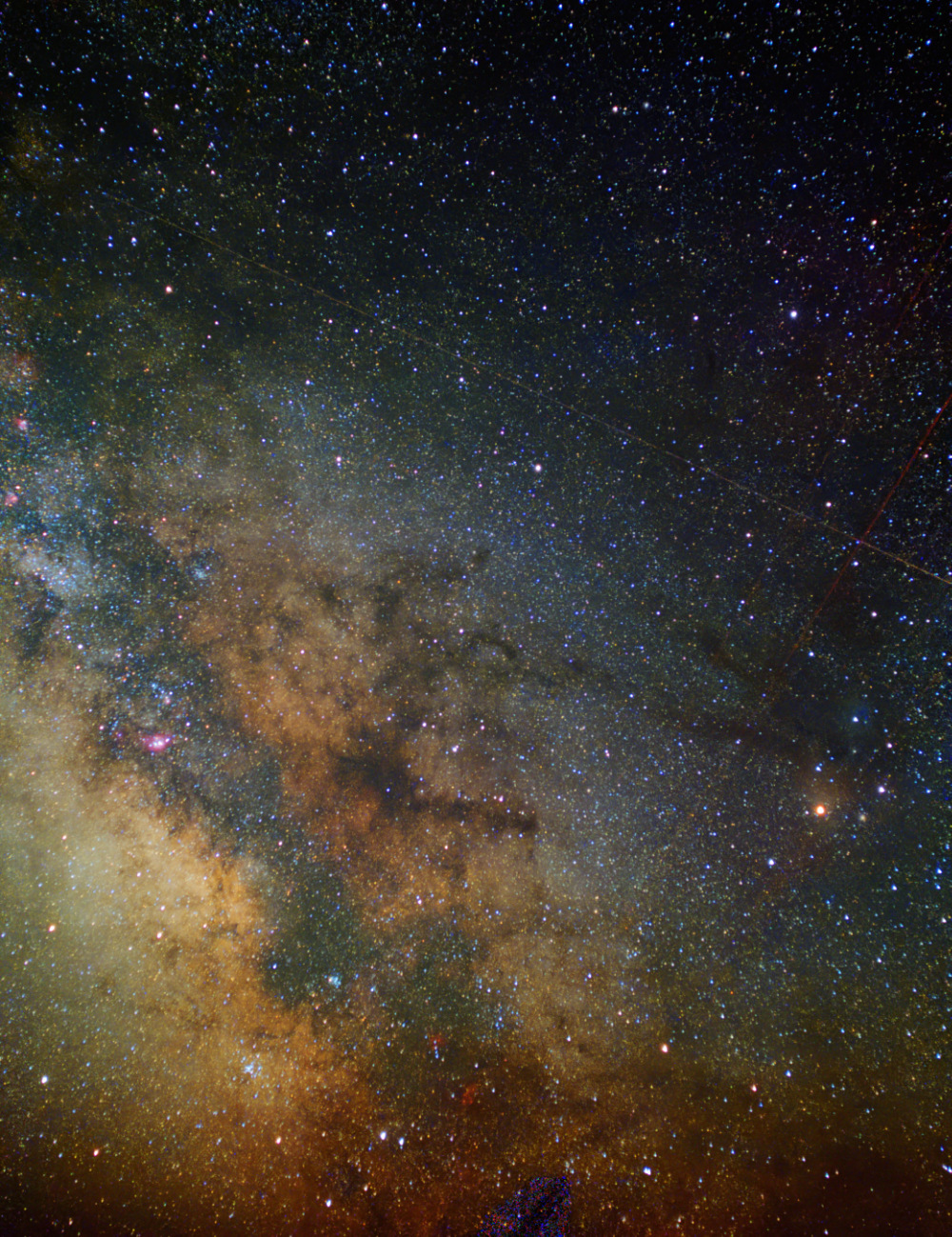
| Description | Observed from Deer Island Maine, at the tail end of a private star party for friends of my wife. I stuck around to see if I could get a pretty Trifid. M20 was discovered by Messier (eighth so far) and recorded on June 5, 1764: "Cluster of stars, a little above the Ecliptic, between the bow of Sagittarius & the right foot of Ophiuchus..' His description is completed at the end of his entry for M21 (same date) where he comments: "The stars of both these clusters [M20 & M21] are of 8-9 magnitude, enveloped in nebulosity." The Trifid Nebula is a bright spot, low on the Southern Horizon, just above the Lagoon Nebula... check out the wide field image of this part of the Milky Way in the gallery, captured a couple of days prior. Trifid is connected by a band of HII gas to the Lagoon, although it's unclear whether Messier could see this. Collectively, these make up one of the most active star forming regions in our part of the Milky Way, eclipsed only by the Orion complex. Trifid, btw, means "3-lobed" which is an obvious name when you examine the "bulb" and appear to be an illusion established by strands of dark nebulae stretched across the HII bubble. The blueish "cap" is a reflection nebula. |
| Related Observations | M20 (3) M21 (3) M8 (3) NGC6514 (2) |
| Catalog Links | <Previous | Messier Listings | Next> |