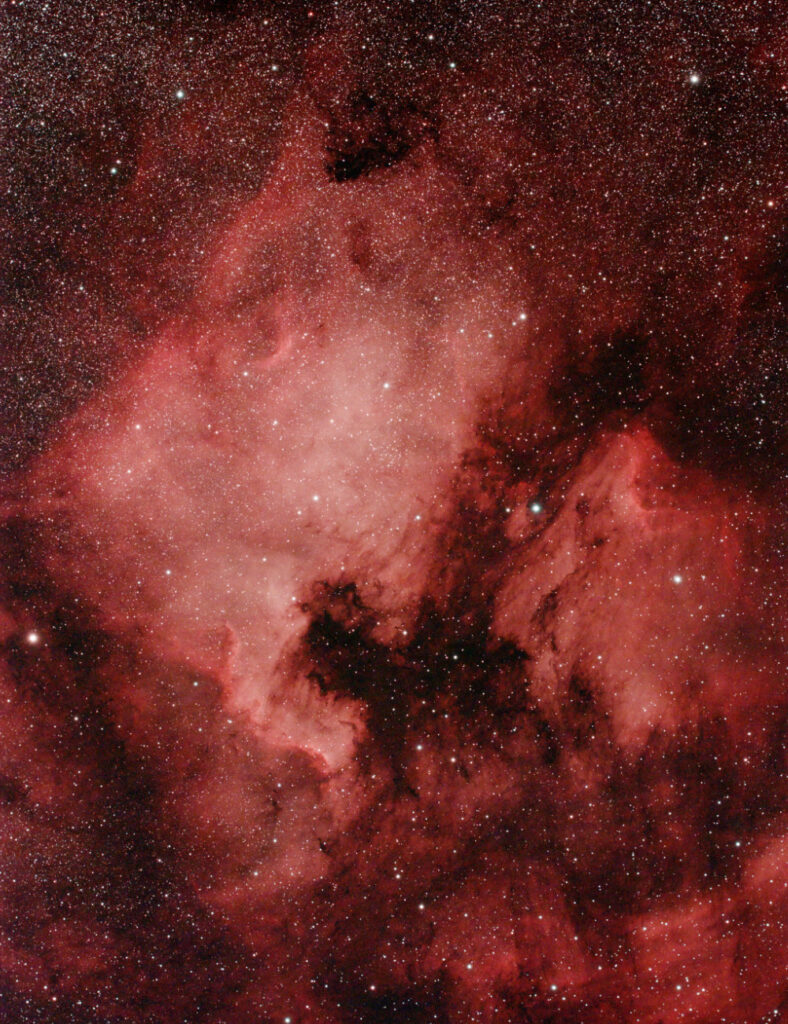
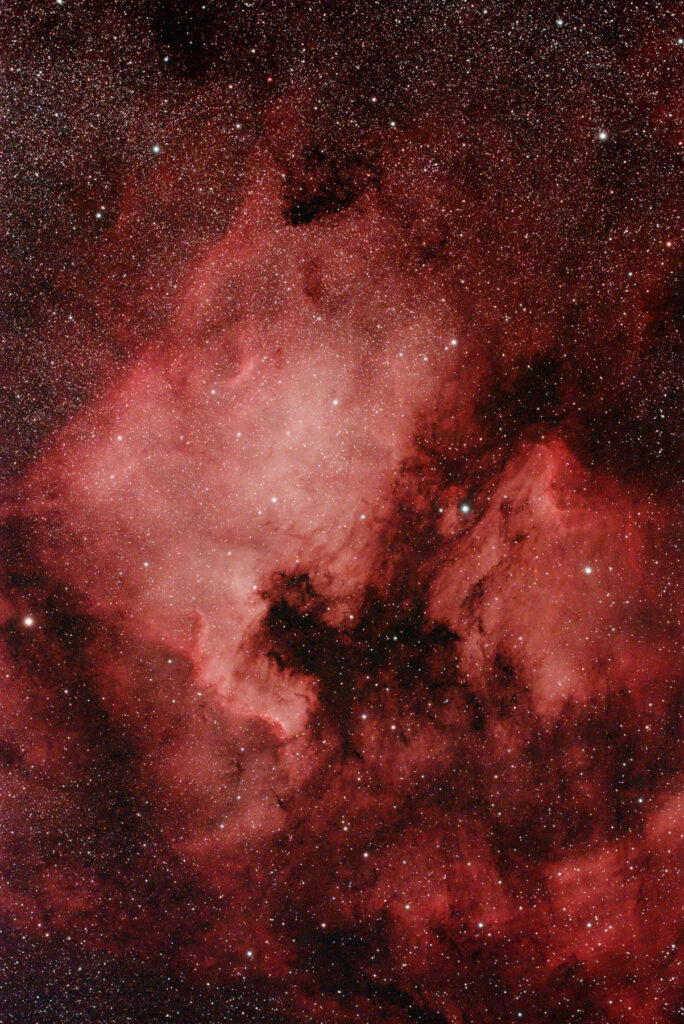
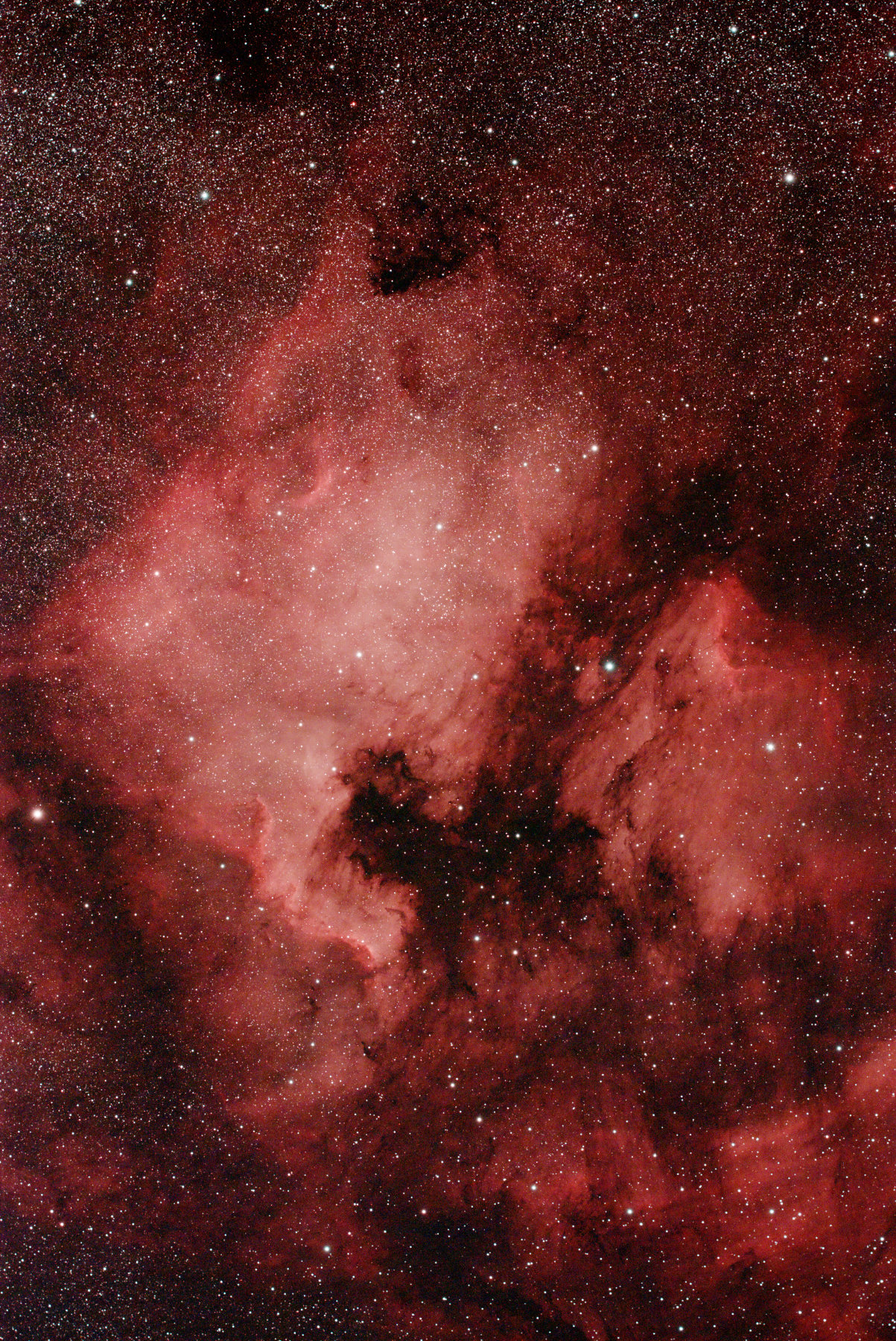
| Name | North American Nebula |
| Designation(s) | Sh2-117, NGC 7000, C20 |
| Object Type(s) | Emission Nebula |
| Relevant Catalog(s) | All (Chron), Caldwell, NGC, Sharpless |
| Obs. Lat/Long | 42° 17', 073° 57' |
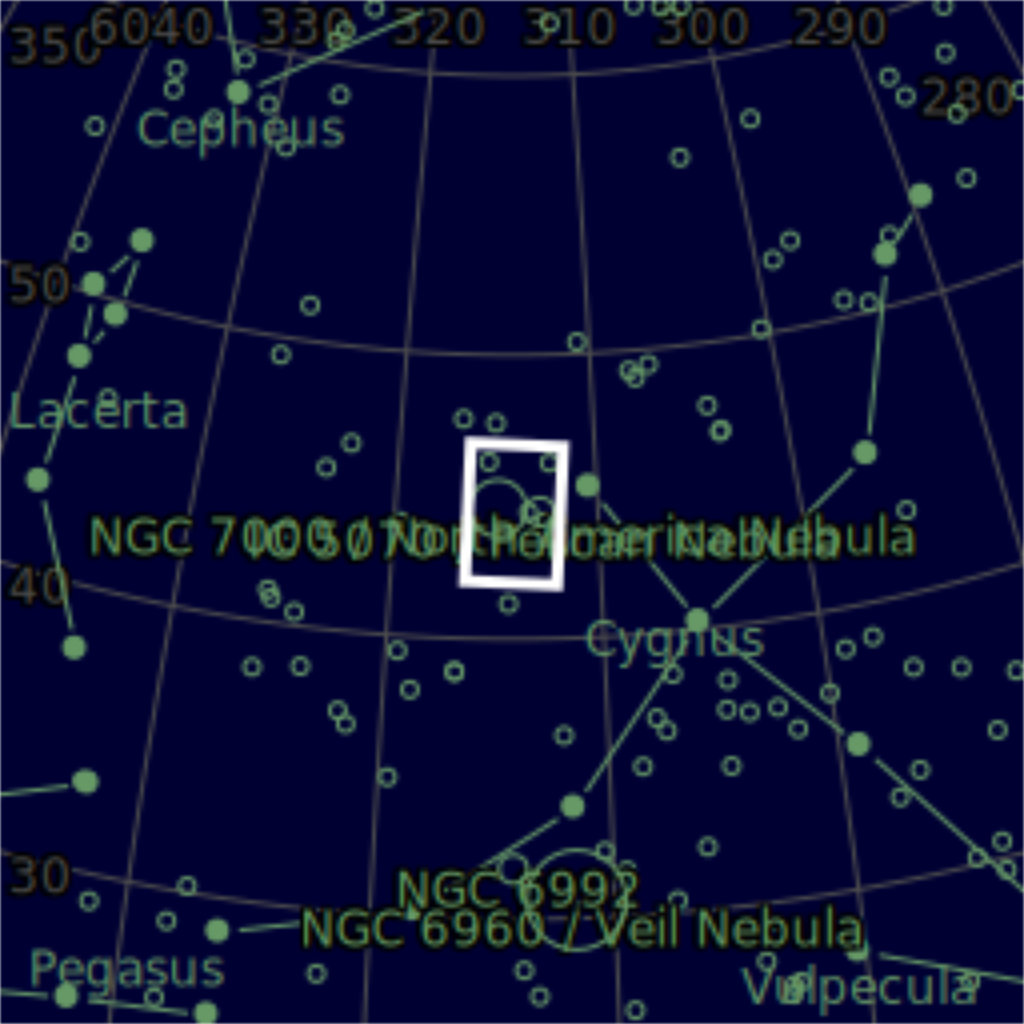
| Constellation | Cygnus |
| Date and Time Observed | 2025-09-03 22:32:00 |
| Instrument | Askar V 60mm w reducer f4.5-270mm FL |
| Camera | ASI2600MC-Pro |
| Image Details | Up is 2.7 degrees E of N. Transparency: Fair. Seeing: Fair. Total integration time was 50m. Exposures 20s@250g, L-eNhance Filter. Sharpcap Colour Calibration, Dithered and recentered in SharpCap. No guiding.. |
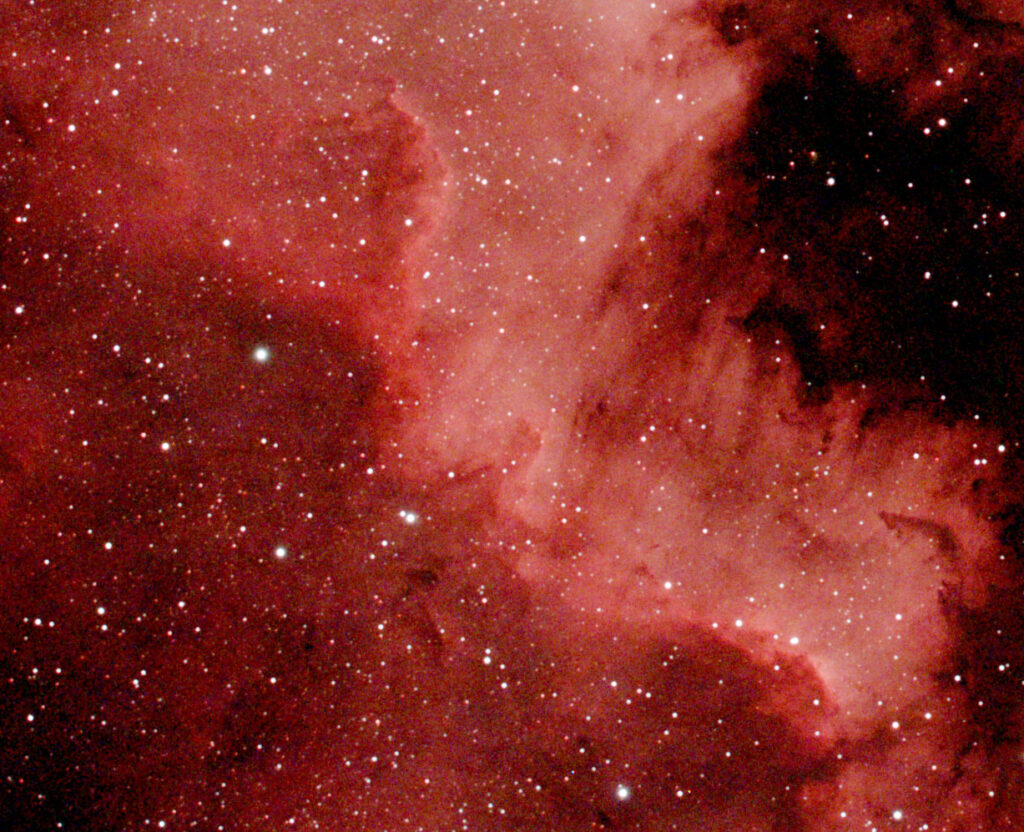
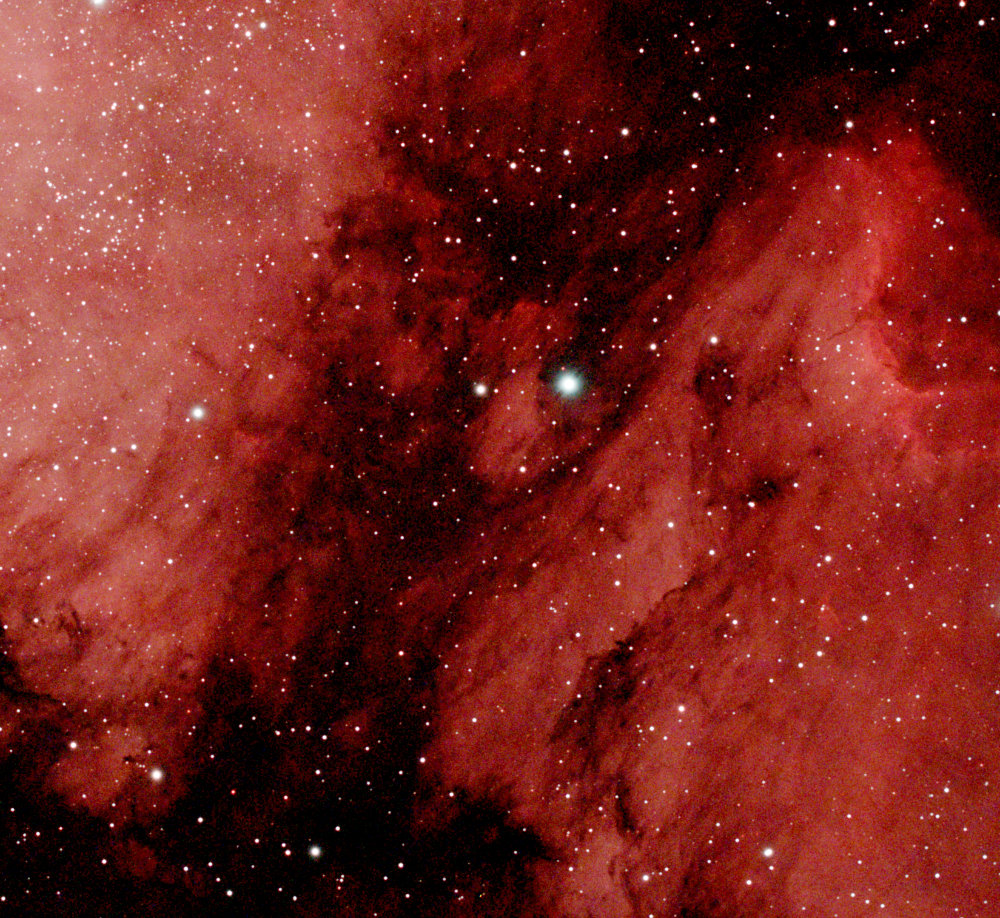
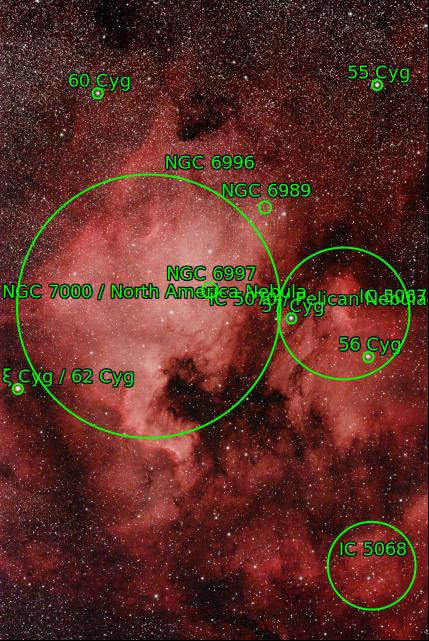
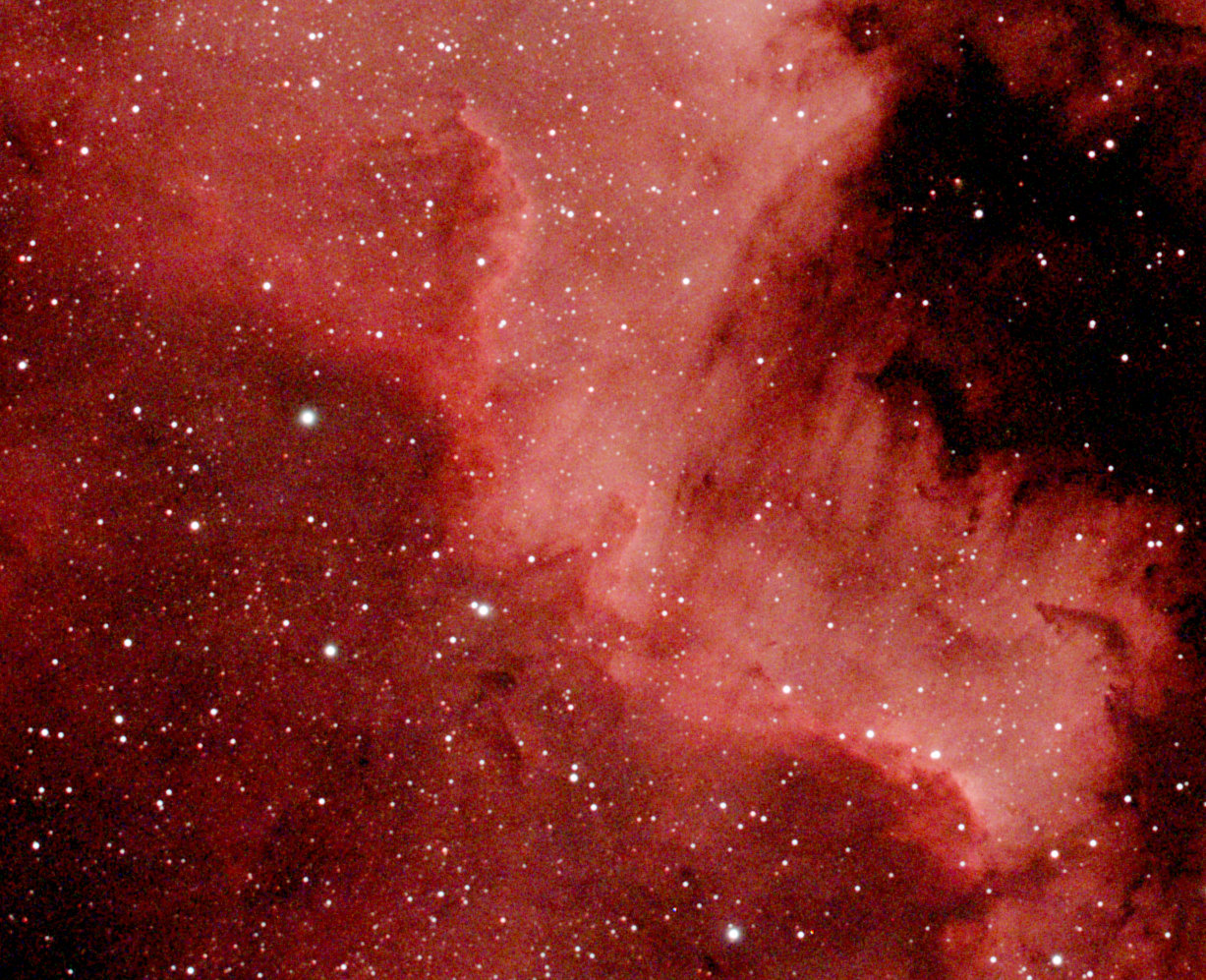
| Description | NGC 7000 was discovered by astronomer William Herschel in 1786, though he described it as a faint nebulosity. Its resemblance to the NA continent only becoming apparent through astrophotography by Max Wolf in the 1890s, who coined the "North America" nickname. The N.A. Nebula is just "west" of the Pelican... you can see the Pelican's snout as if it were a huge island off the east coast of the US; the gallery shows two details: a Ghoulish little pelican, and the Cygnus Wall. This is a relatively bright and easy target, especially if you use a filter like L-eNhance that greatly improves the Signal to Noise ratio. A great "star party" target for EAA. |
| Related Observations | C20 (2) NGC7000 (4) Sh2-117 (3) |
| Catalog Links | |