2024-05-11 14:17 UTC
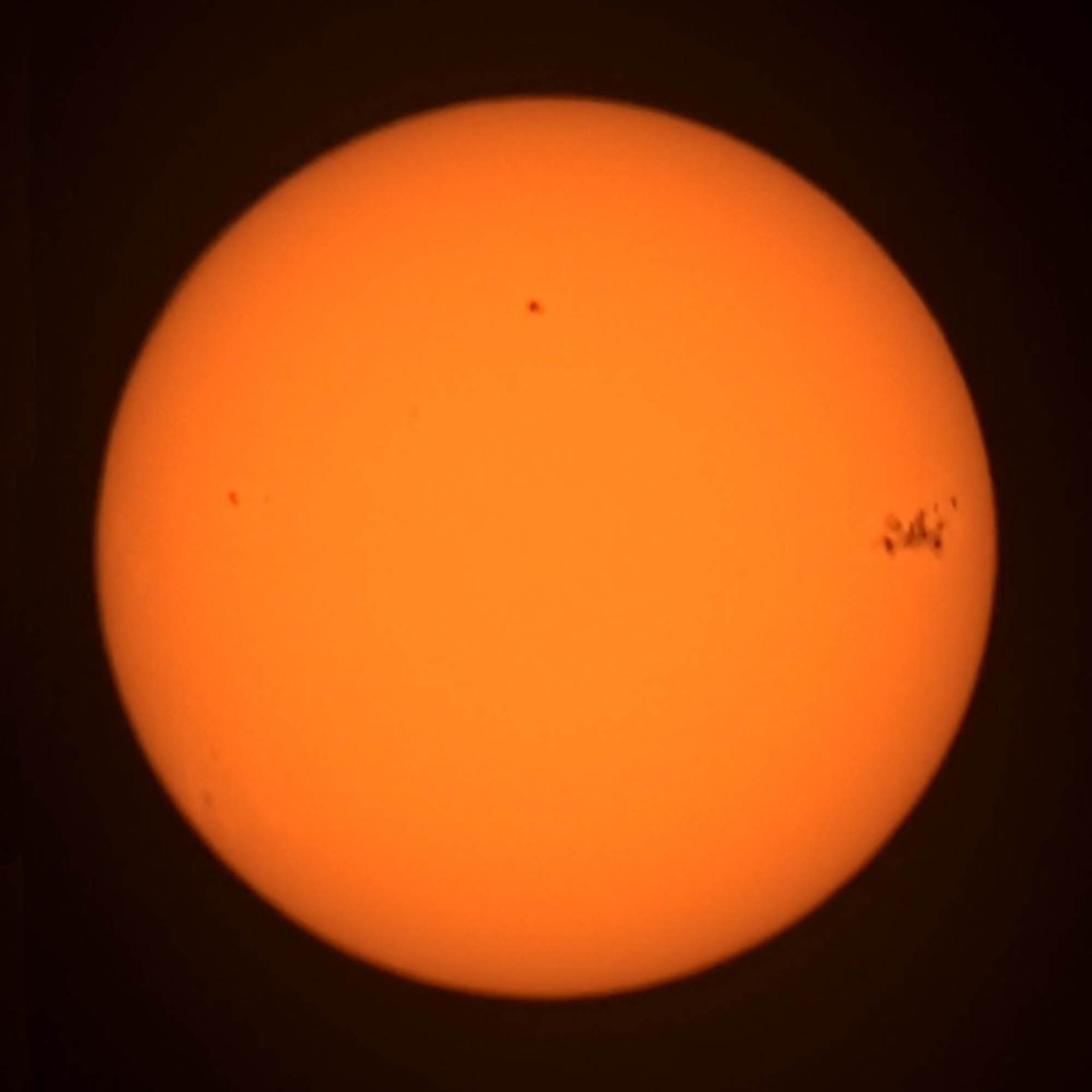
Massive sunspot activity on the morning following an Aurora Borealis evening.
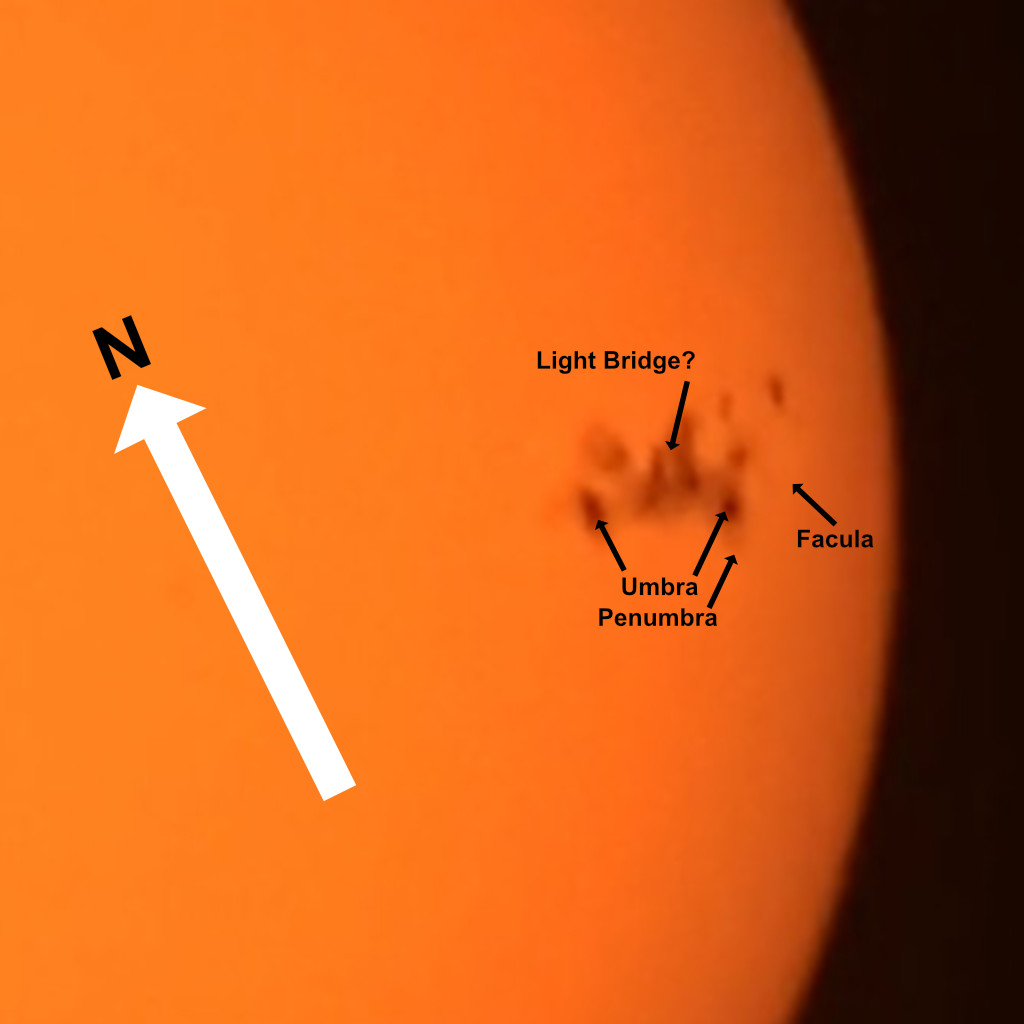
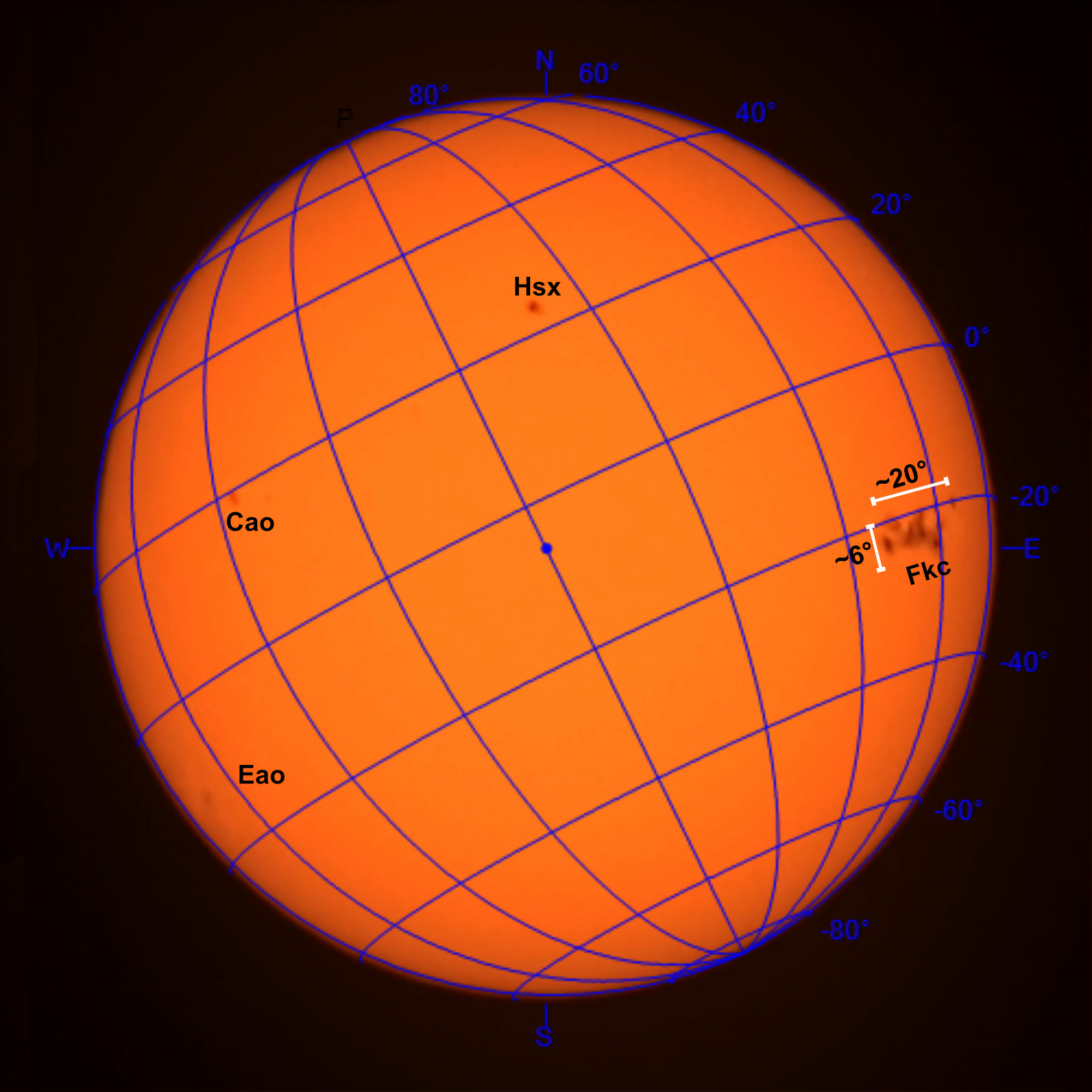
Classified Fkc, approx 20° E/W and 6° N/S 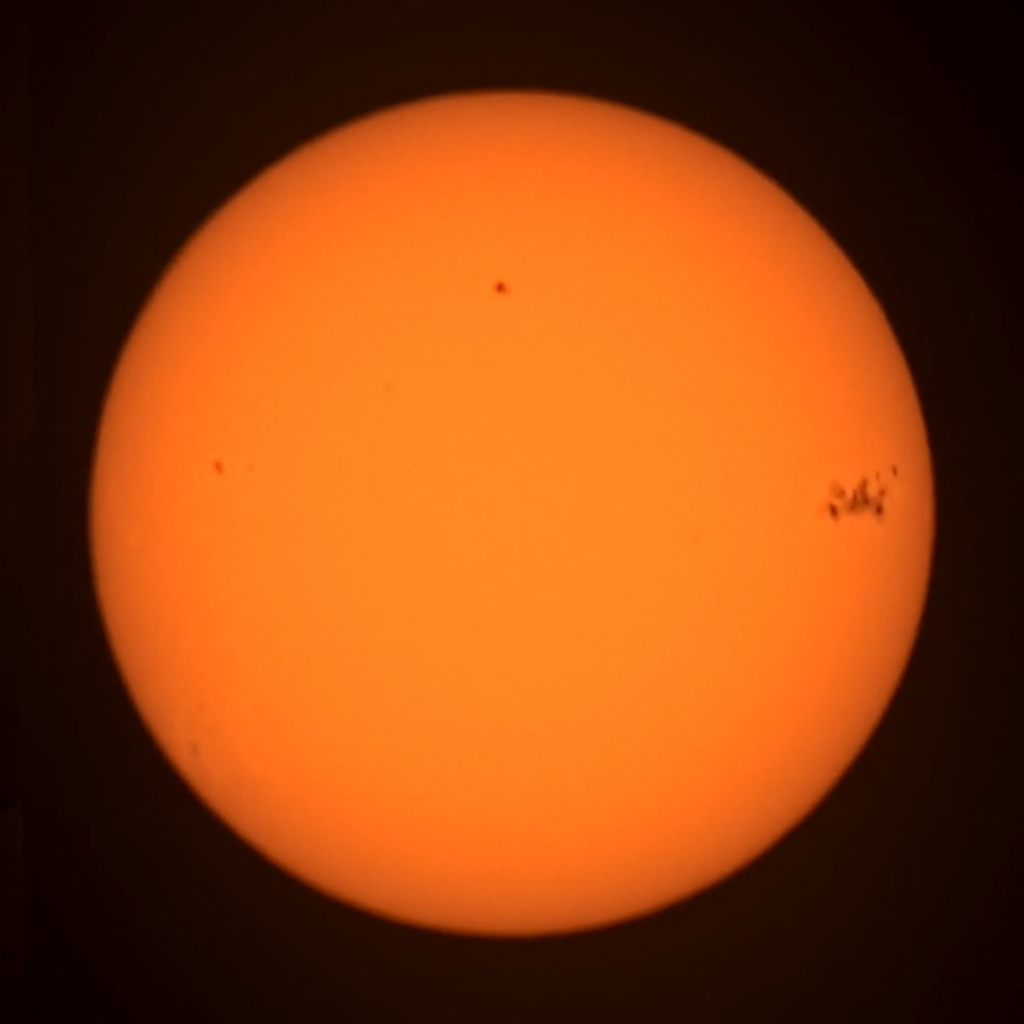
Full Disk 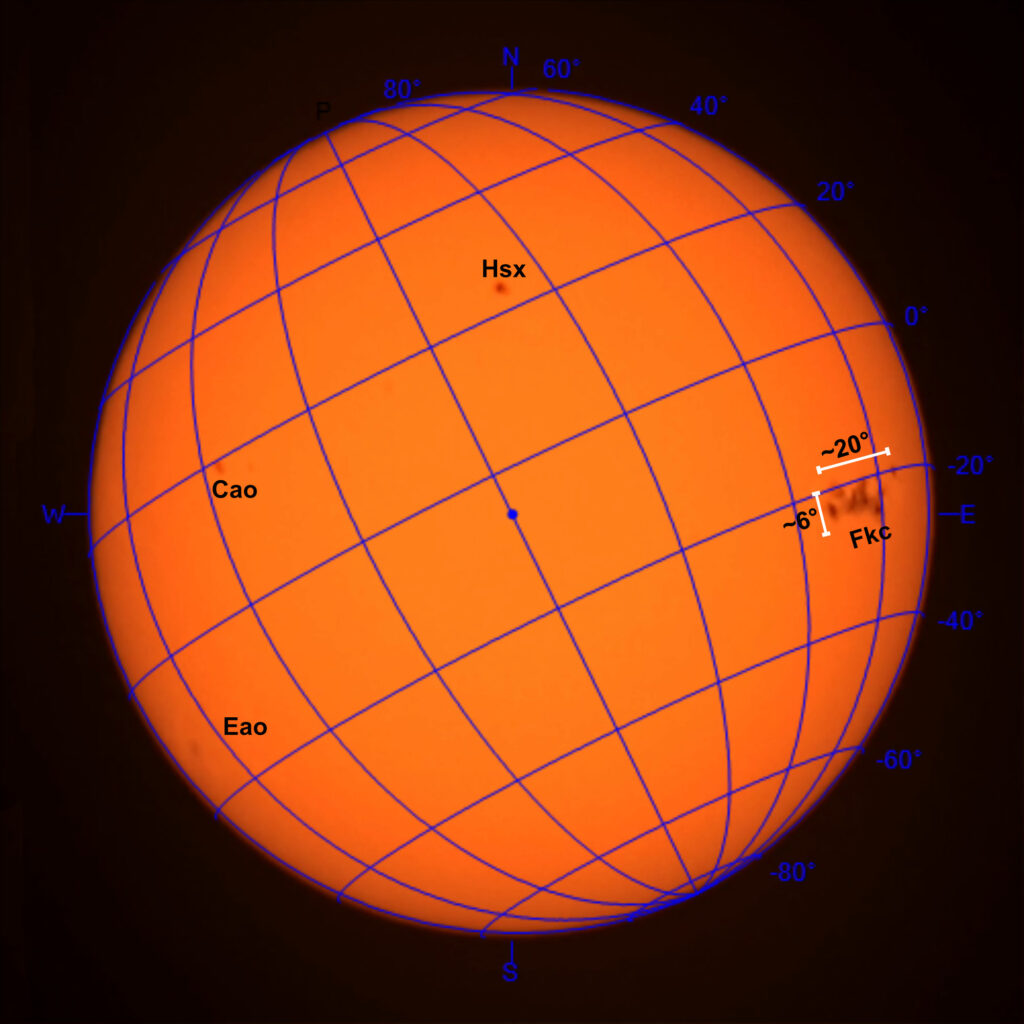
Long Lat lines generatied by Helio Viewer, size estimates based on Affinity Photo Measure tool calibrated against closest longitude or latitude division. 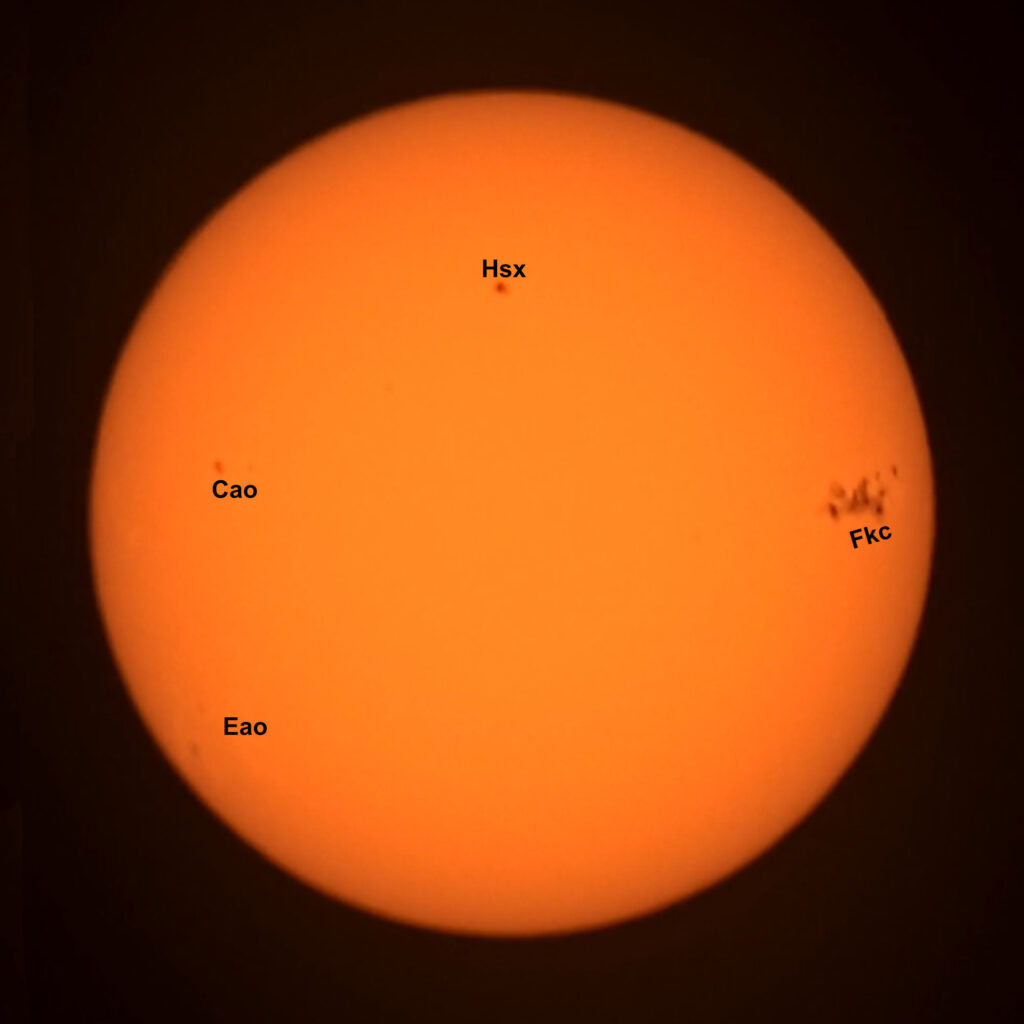
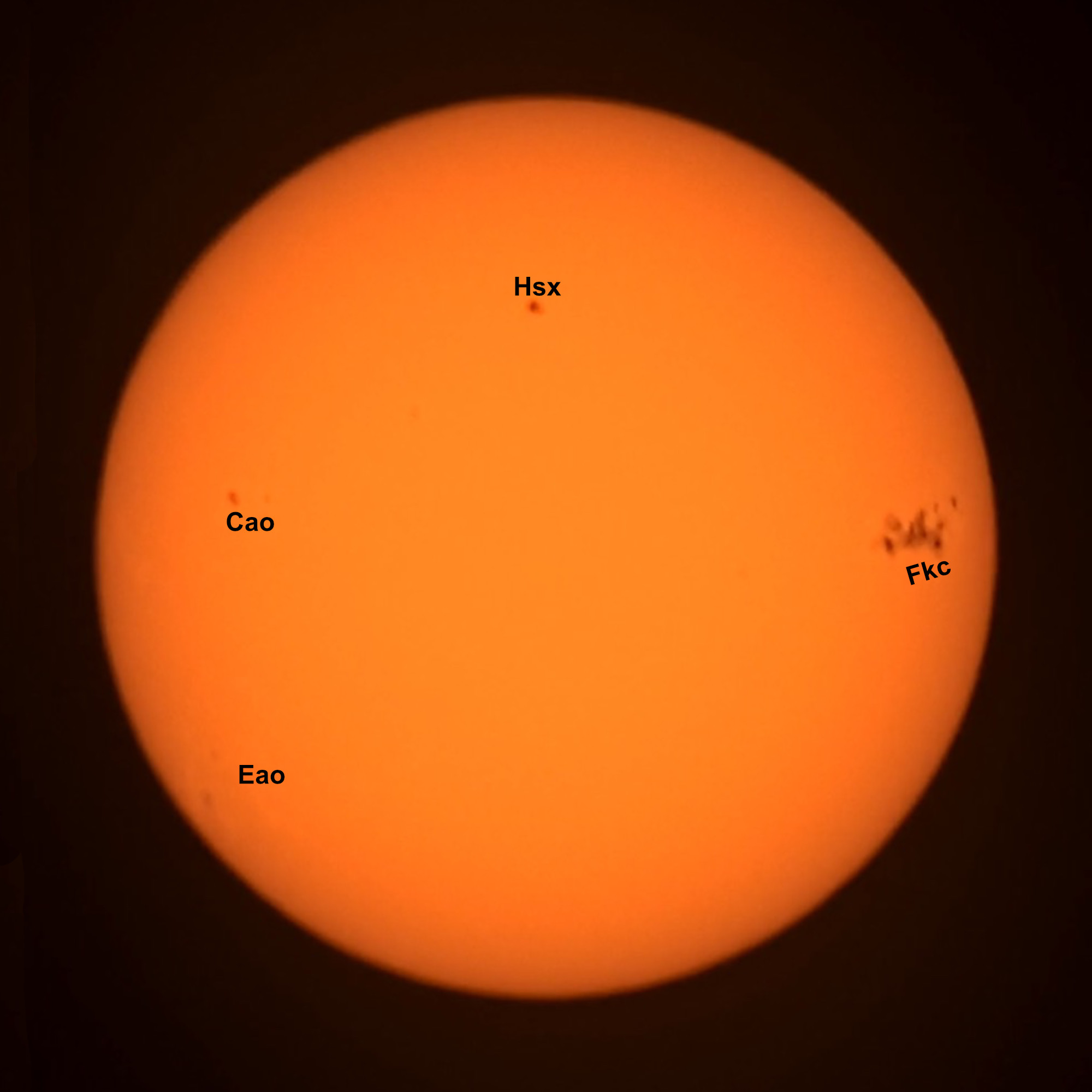
Full disk classifications
Observer Comments
| Target Description | This is the first solar image I ever captured other than a solitary test image with the Seestar a couple of months earlier. All of my prior solar observing experience was visual, setting up my Askar V telescope for public use at "sun parties". Because of the previous night's Aurora activity, I expected there would be exceptional sunspot activity, and was not disappointed. It was fun to find that enormous sunspot group on the right limb. |
| Image Capture Description | Captured from my back deck on the morning following an Aurora Borealis. Conditions were good with no clouds and relatively stable seeing. Seeing is easy to monitor in the Seestar during solar imaging because the camera sends a continually updated video stream to your phone. Especially if look at the limb, you can readily judge how steady it is. Longitude and latitude lines added by a Freeware Windows program called Helio Viewer. |
| Program Links | Sunspotter Program | Next> |
Capture Details & Sunspot Analysis
| Observer | MG |
| Date and Time Observed (UTC) | 2024-05-11 10:17:00 |
| Conditions | Sky Quality: Good Seeing: 2-Good (1"-2") |
| Obs. Lat/Long | 42° 17', 073° 57' |
| Instrument | Seestar S50 f5.0-250mm FL |
| Camera | Seestar Built-in SONY IMX462 Sensor |
| Solar Filter Used | Seestar Filter |
| Post Processing | Levels adjusted in Affinity Photo |
Sunspot Group Analysis (Image 1) | |
| McIntosh Sunspot Classification | Fkc |
| Answer the Following:
-- Is granulation visible? Yes -- Is penubral grain visible? No -- Does image show Wilson effect? No Faint granulation NE of group. I suspect sunspots are too far from limb to show strong Wilson Effect. | |
Disk Analysis | |
| Total Sunspot Count:
-- (G)roups: North=2 + South=2 = 4 (total=G) -- (S)unspots: North=2 + South=12 = 14 (total=S) Wilson Sunspot Number (R) = -- 10 x 4(G)+14(S)= 54 See Gallery for Macintosh Sunspot Classification for each group | |