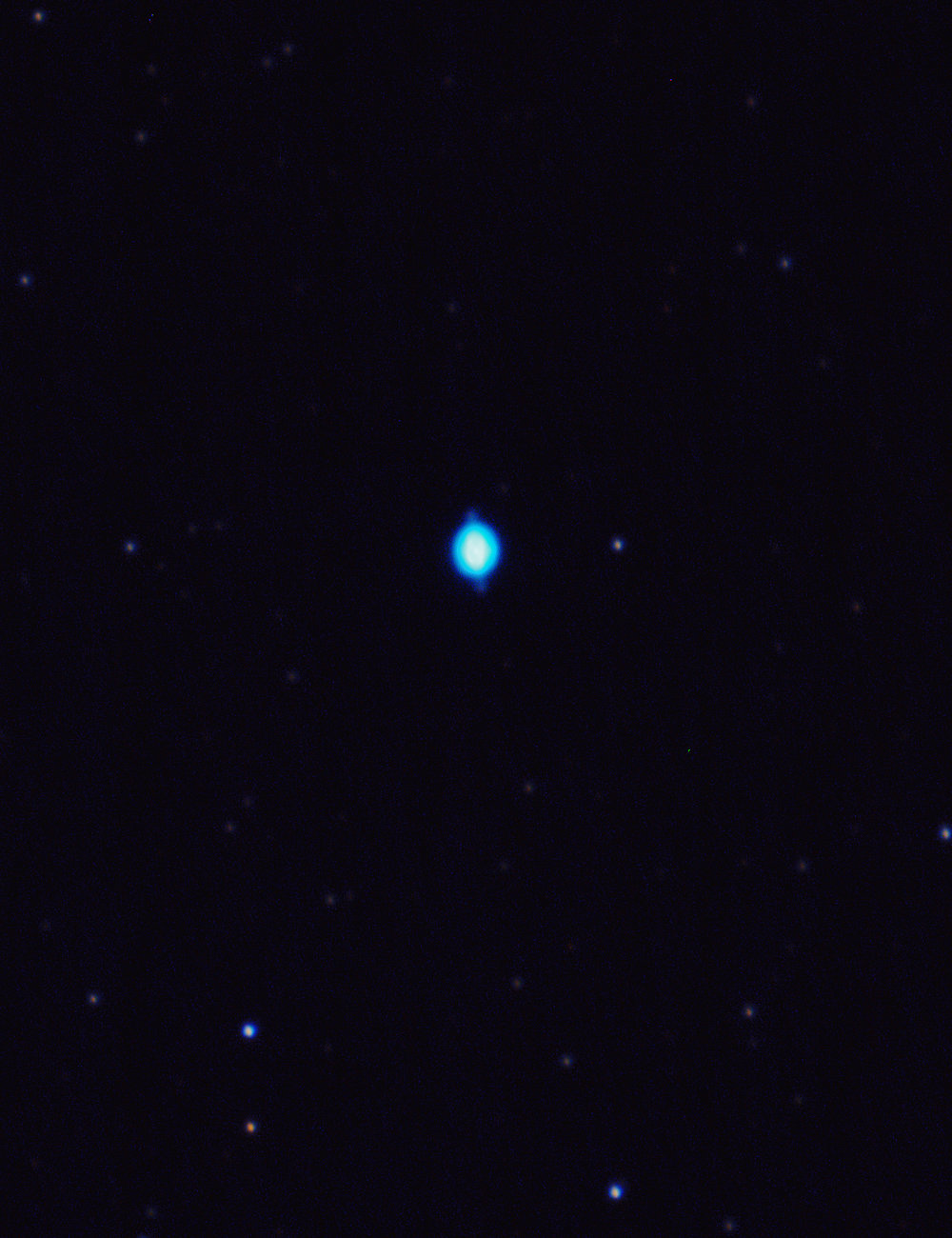
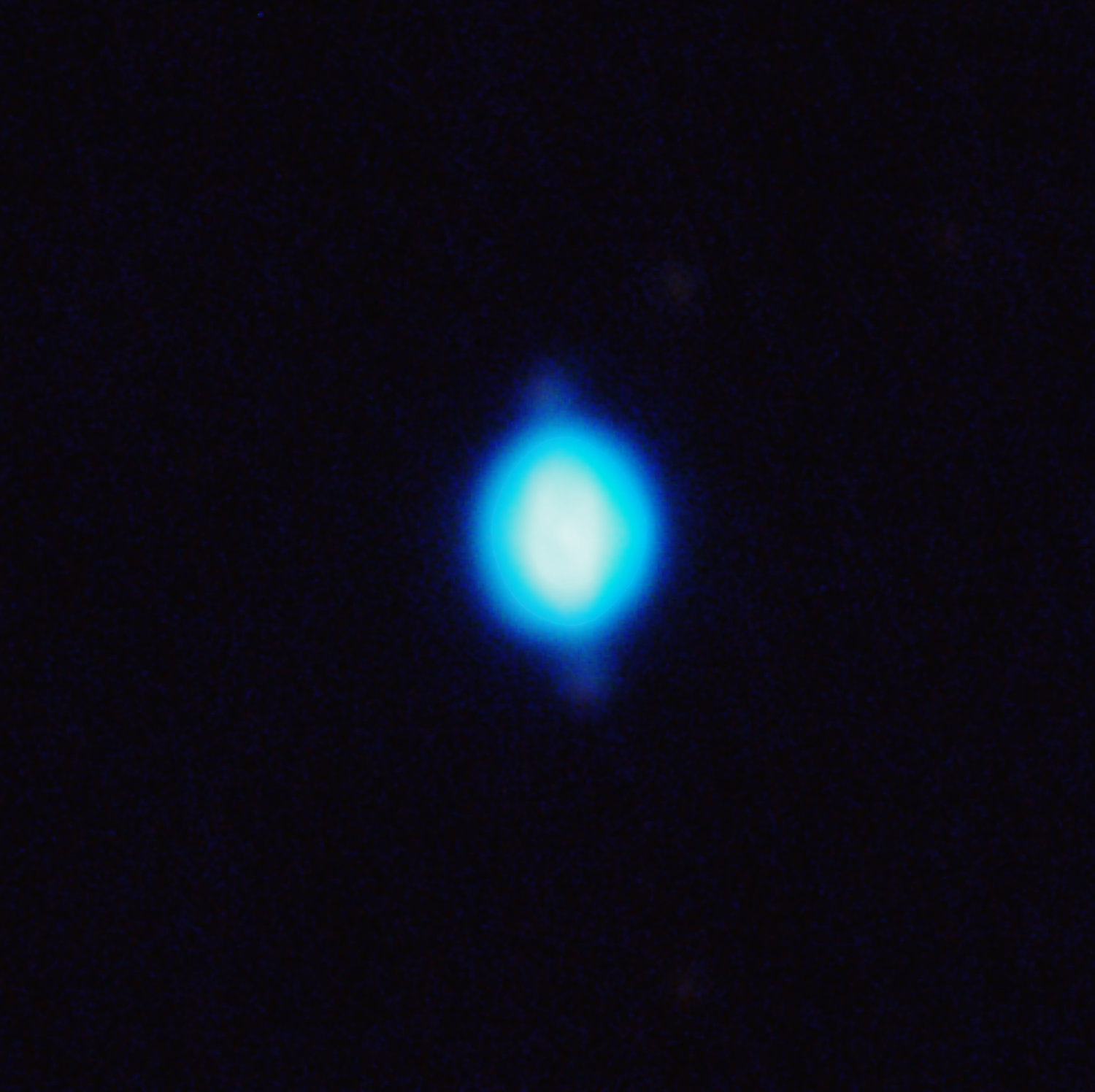
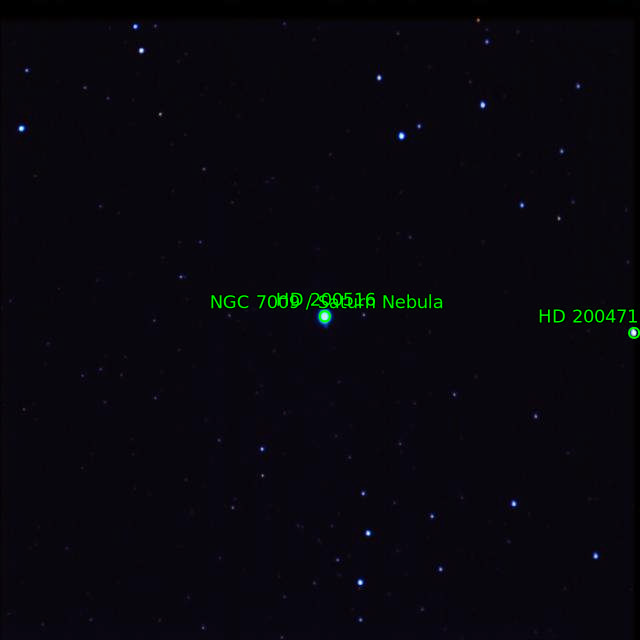
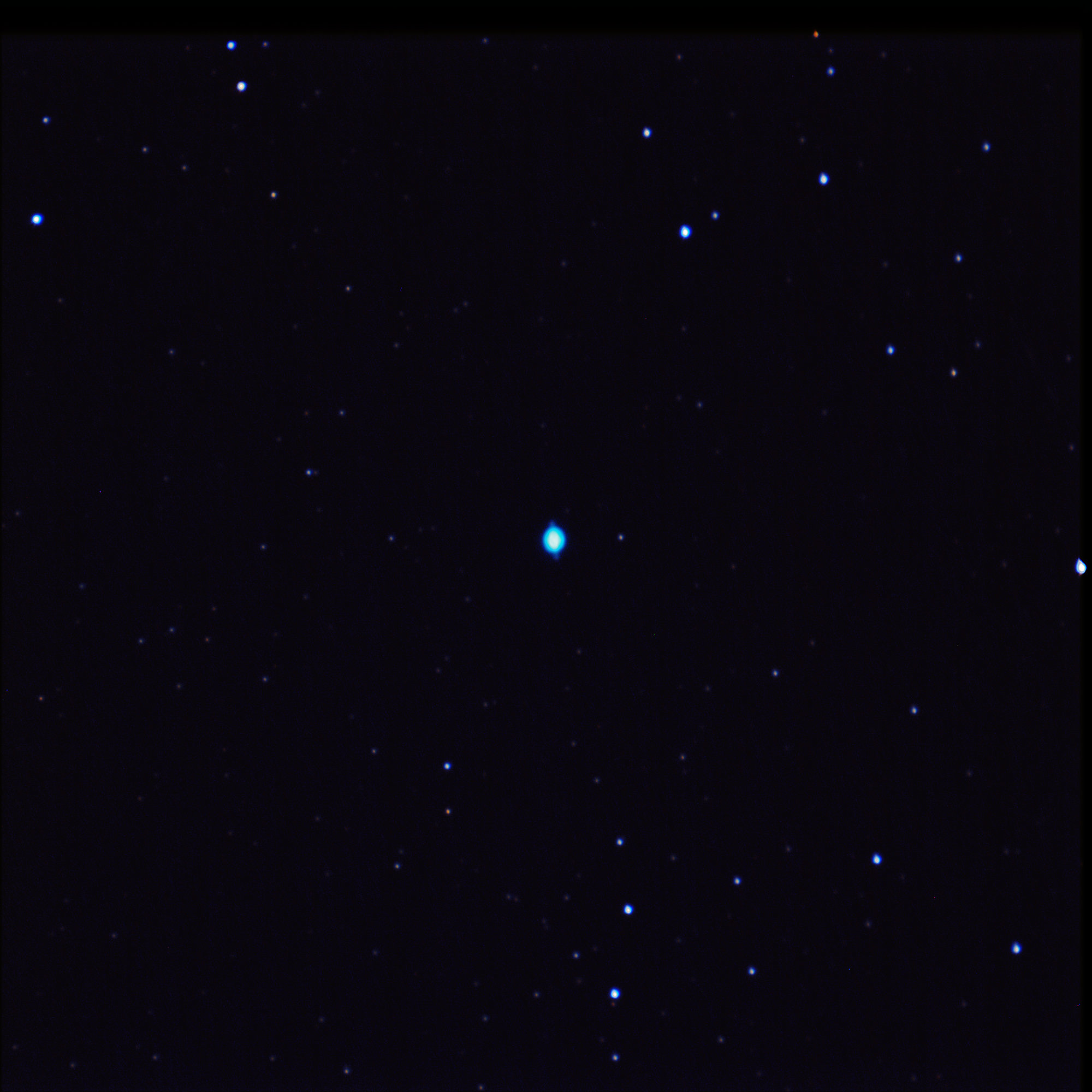
C55 / Saturn Nebula / NGC 7009
| Name | Saturn Nebula |
| Designation(s) | C55, NGC 7009 |
| Object Type(s) | Planetary Nebula |
| Relevant Catalog(s) | All (Chron), Caldwell, NGC |
| Obs. Lat/Long | 42° 17', 073° 57' |
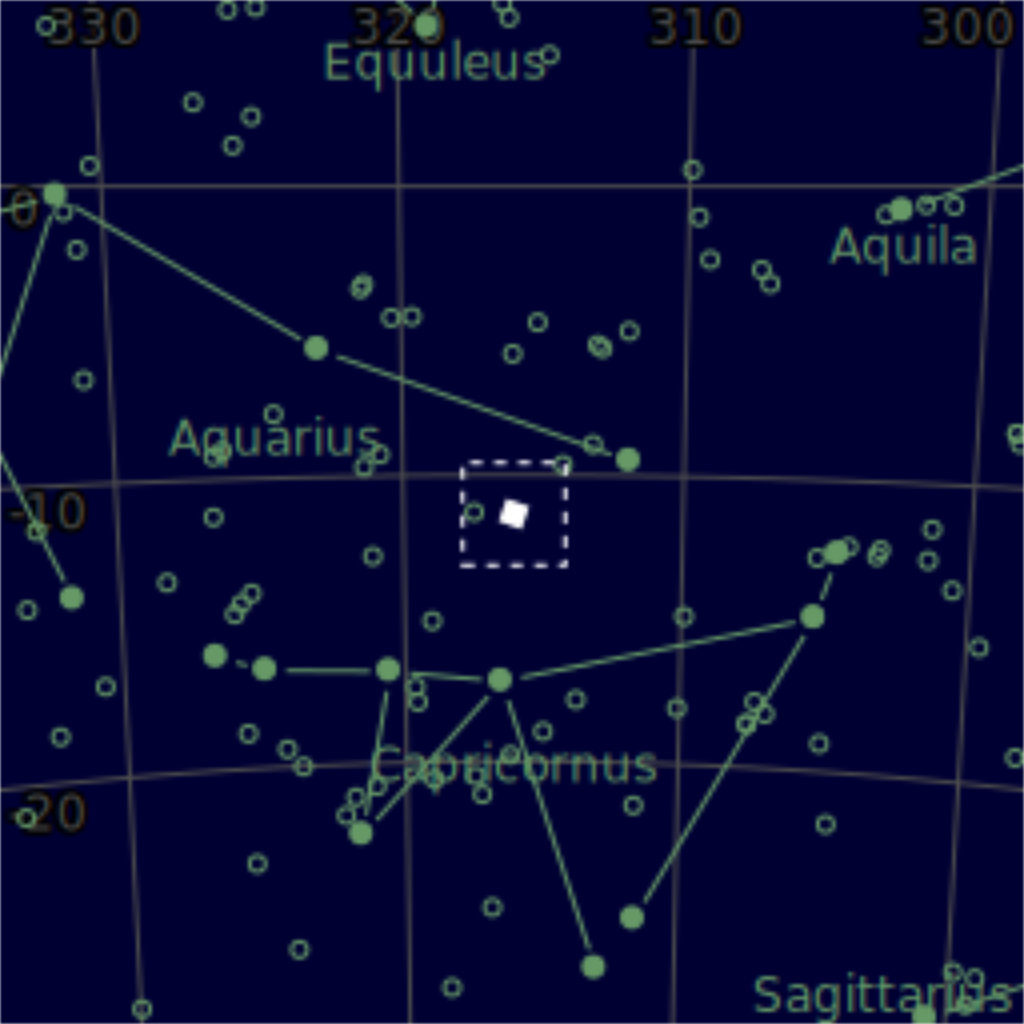
| Constellation | Aquarius |
| Date and Time Observed | 2025-08-31 23:55:00 |
| Instrument | EdgeHD 8" f10-2,032mm FL |
| Camera | ASI2600MC-Pro |
| Image Details | Up is 110.9 degrees E of N. Transparency: Fair. Seeing: Fair. Total integration time was 20m. Exposures 5s@101g, UV/IR Cut Filter. Dithered and recentered in SharpCap. No guiding. |
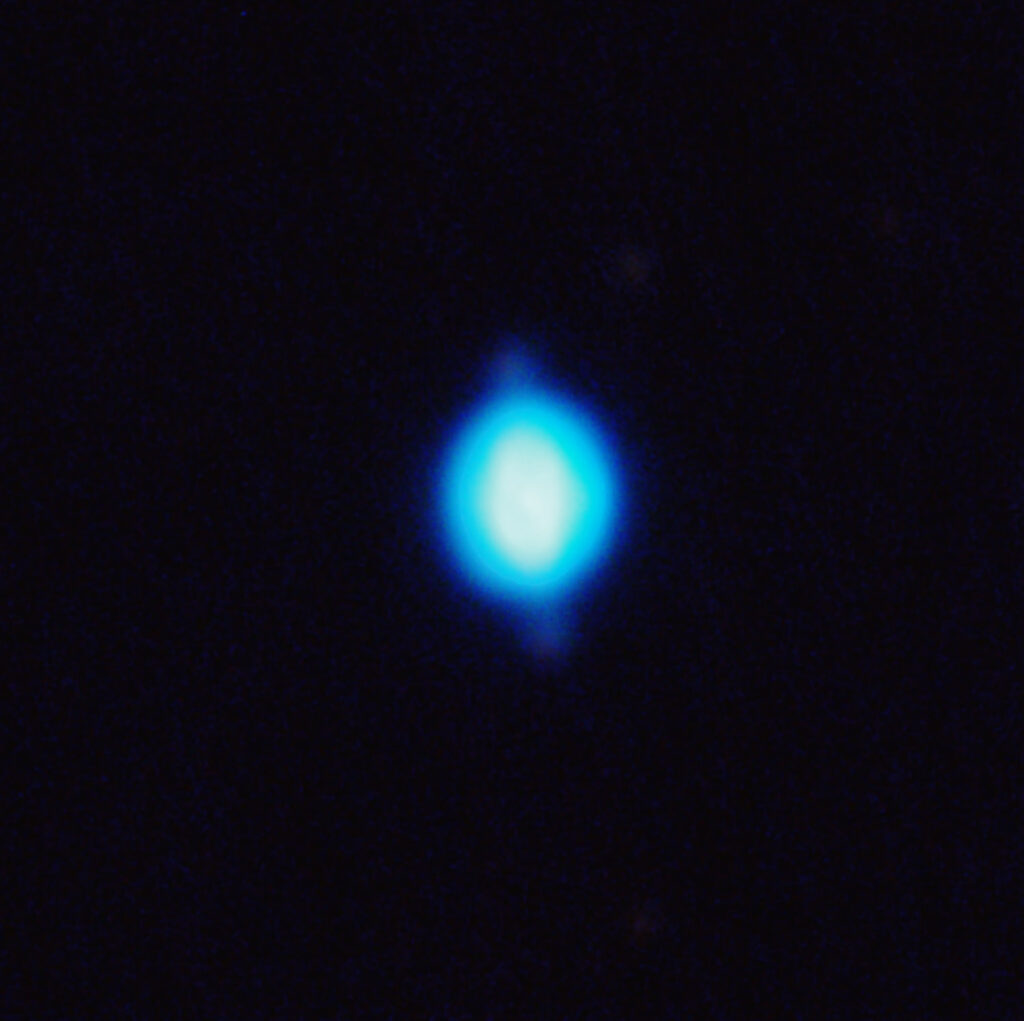
| Description | Discovered by William Herschel in 1782. Lord Rosse discovered the little wings that make this resemble Saturn viewed edge-on. Rosse was the same astronomer who first described spiral nebulae... with M51. Lord Rosse's telescope, nicknamed the Leviathan of Parsonstown, was a reflecting telescope completed in 1845 with a 72-inch mirror and a 54-foot (16.5 m) long tube. Wikipedia says it remained the largest telescope in the world until usurped by the 100" Lick Telescope on Mt. Wilson which opened in 1917. Well, the Hale-designed 60" on Mt Wilson opened in 1908 so that's probably a better telescope even if not bigger. I find small planetary nebula difficult to capture. These objects are so bright you have to really cut back on the exposure. Here 5s at 101g... where with most DSOs I'm shooting 20s@250g. Captured on the same observing session as the Blue Snowball Nebula, this was not a terribly good night with a quarter moon, and clouds coming in and out. I tried staying on this as long as I could, hoping for some center detail to emerge, but clouds ended this capture prematurely. Fortunately the Saturn "wings" were visible. |
| Catalog Links | <Previous | Caldwell Listings | Next> |