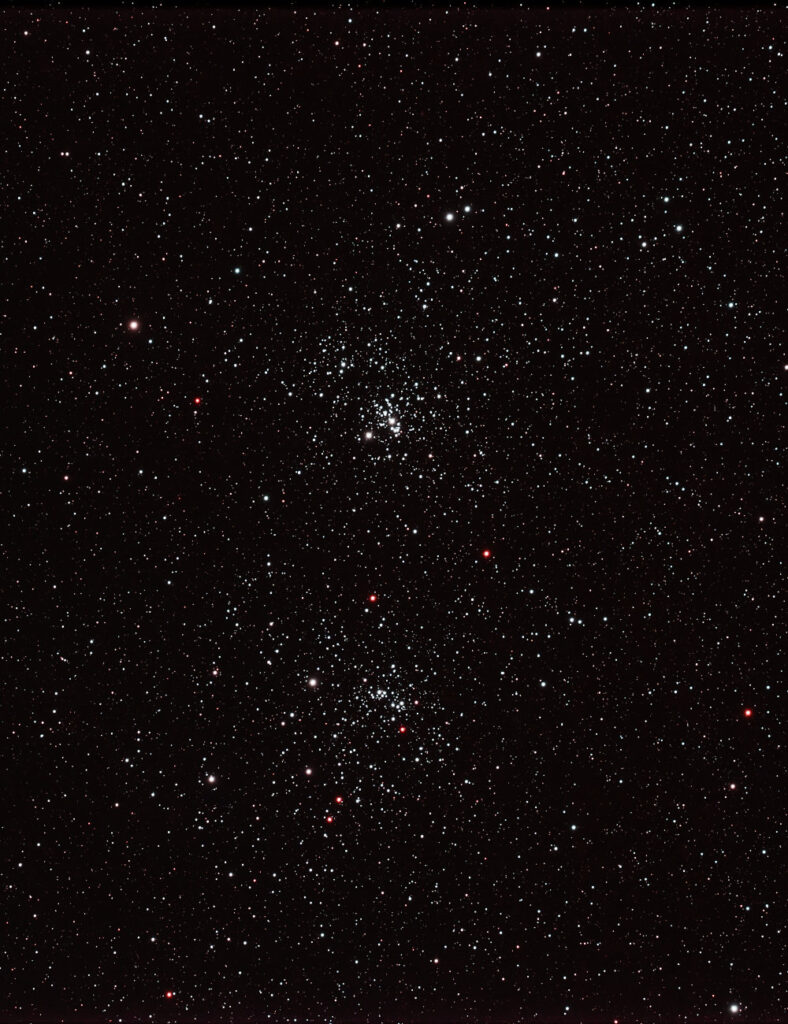
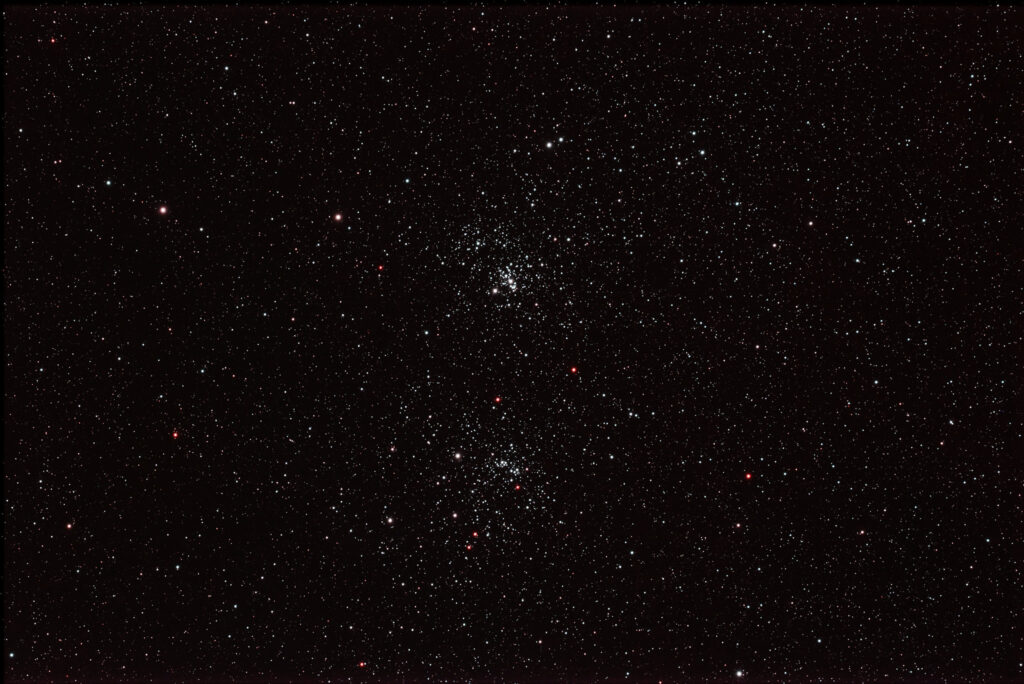
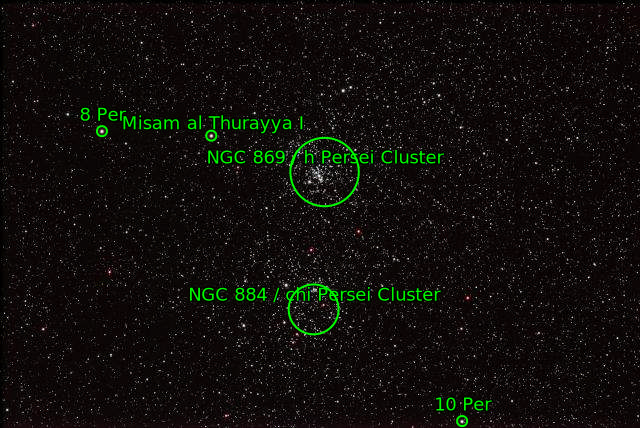
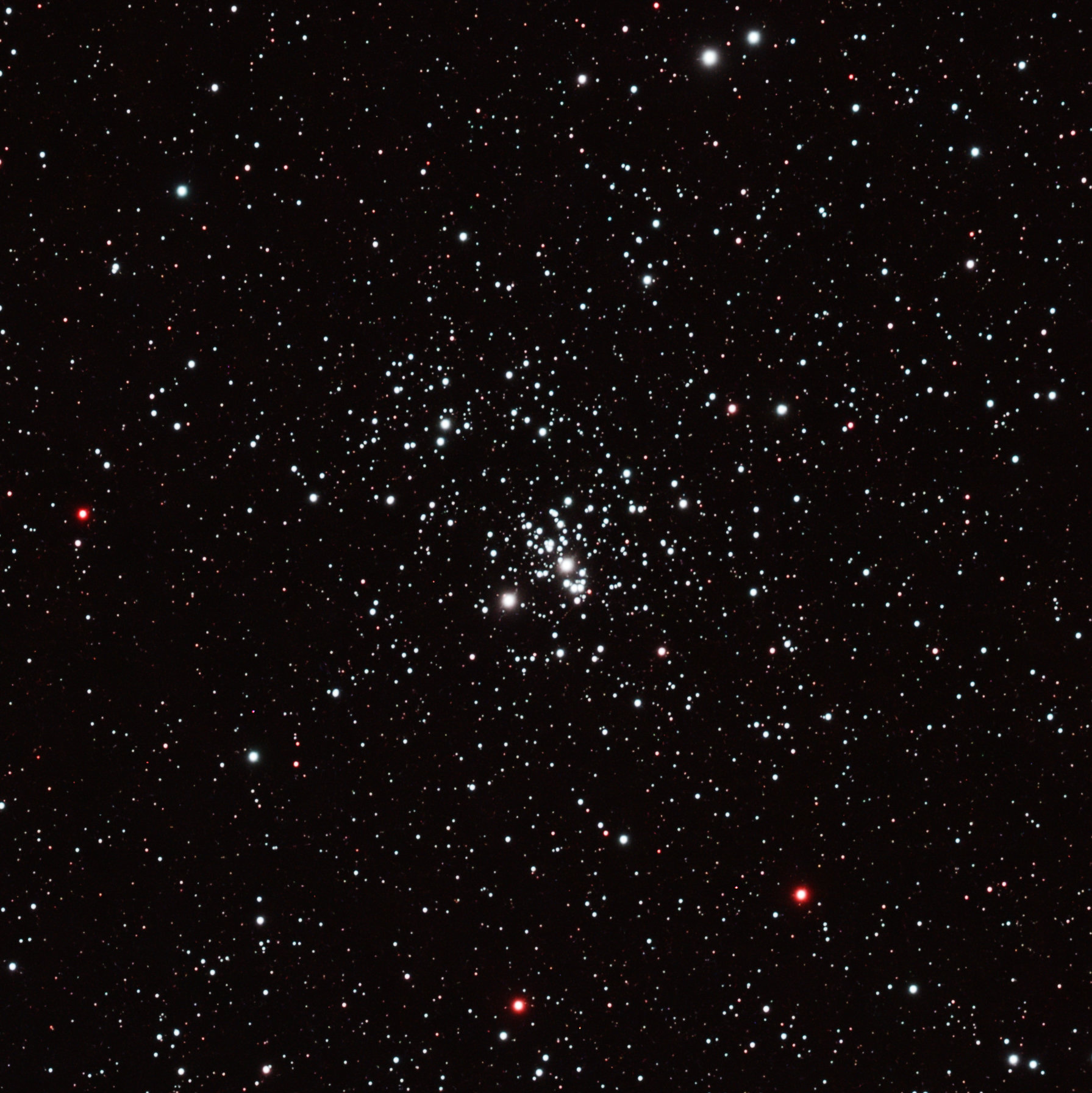
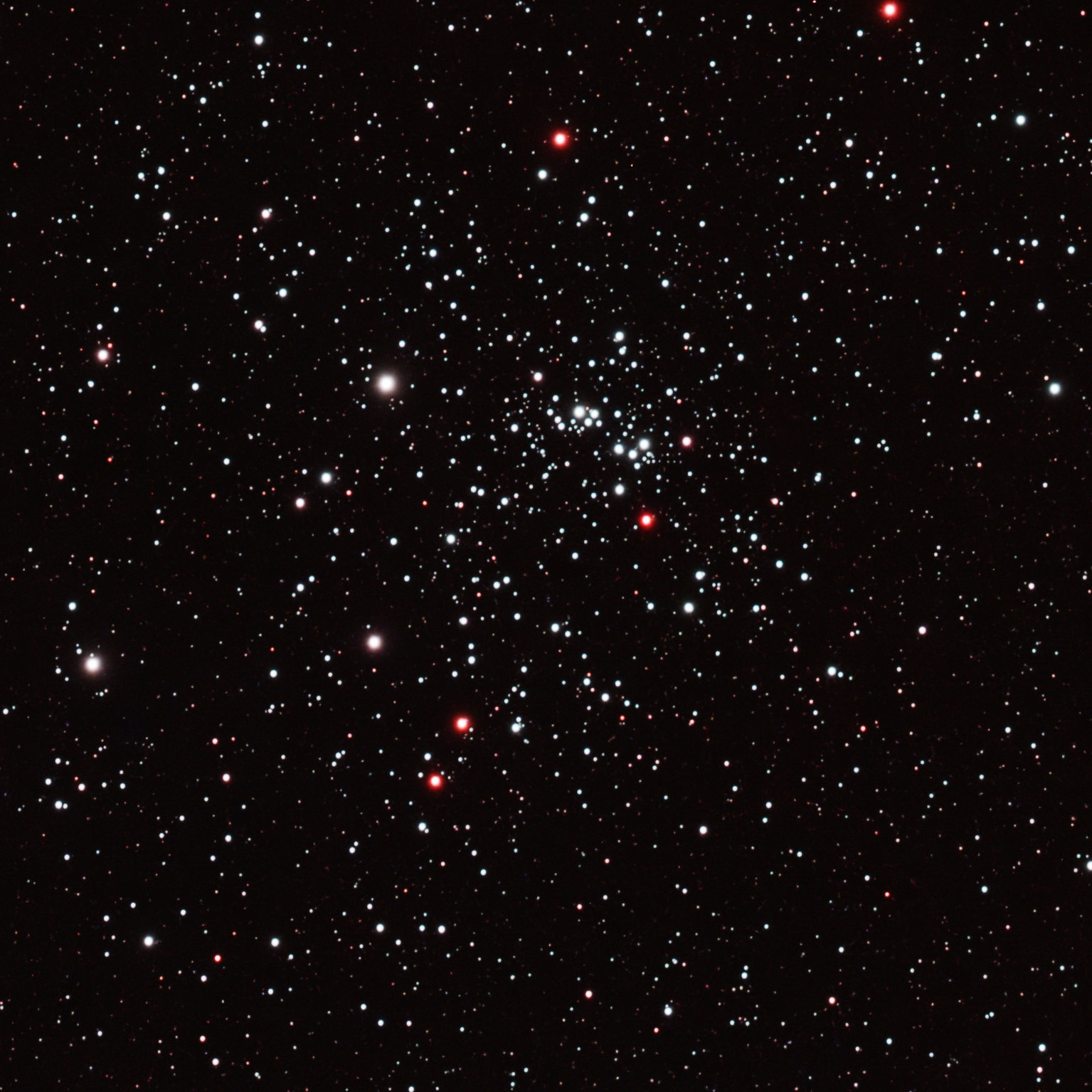
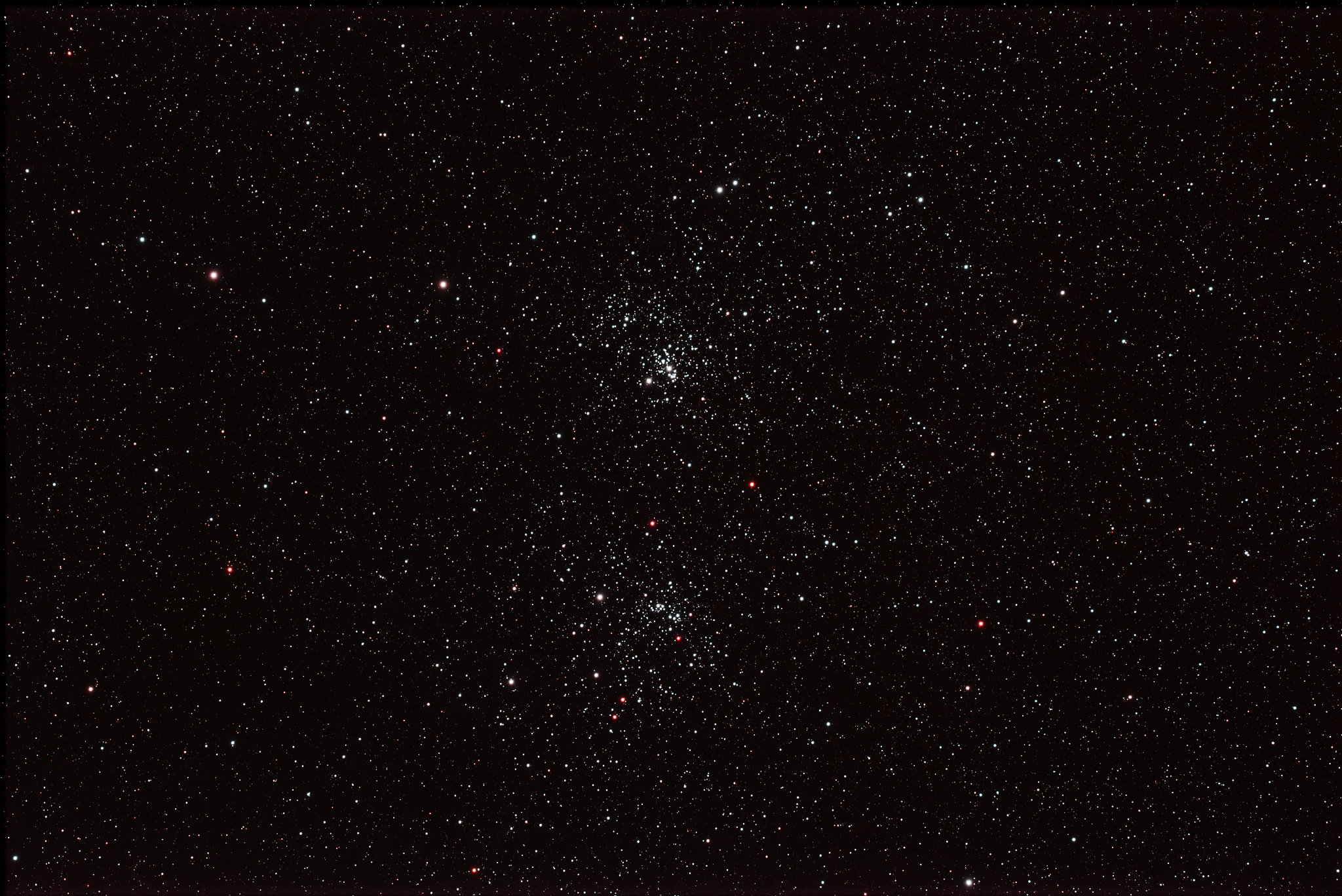
| Name | Double Cluster |
| Designation(s) | C14, Double Cluster, NGC 869, NGC 884 |
| Object Type(s) | Open Cluster |
| Relevant Catalog(s) | All (Chron), Caldwell, NGC |
| Obs. Lat/Long | 42° 17', 073° 57' |
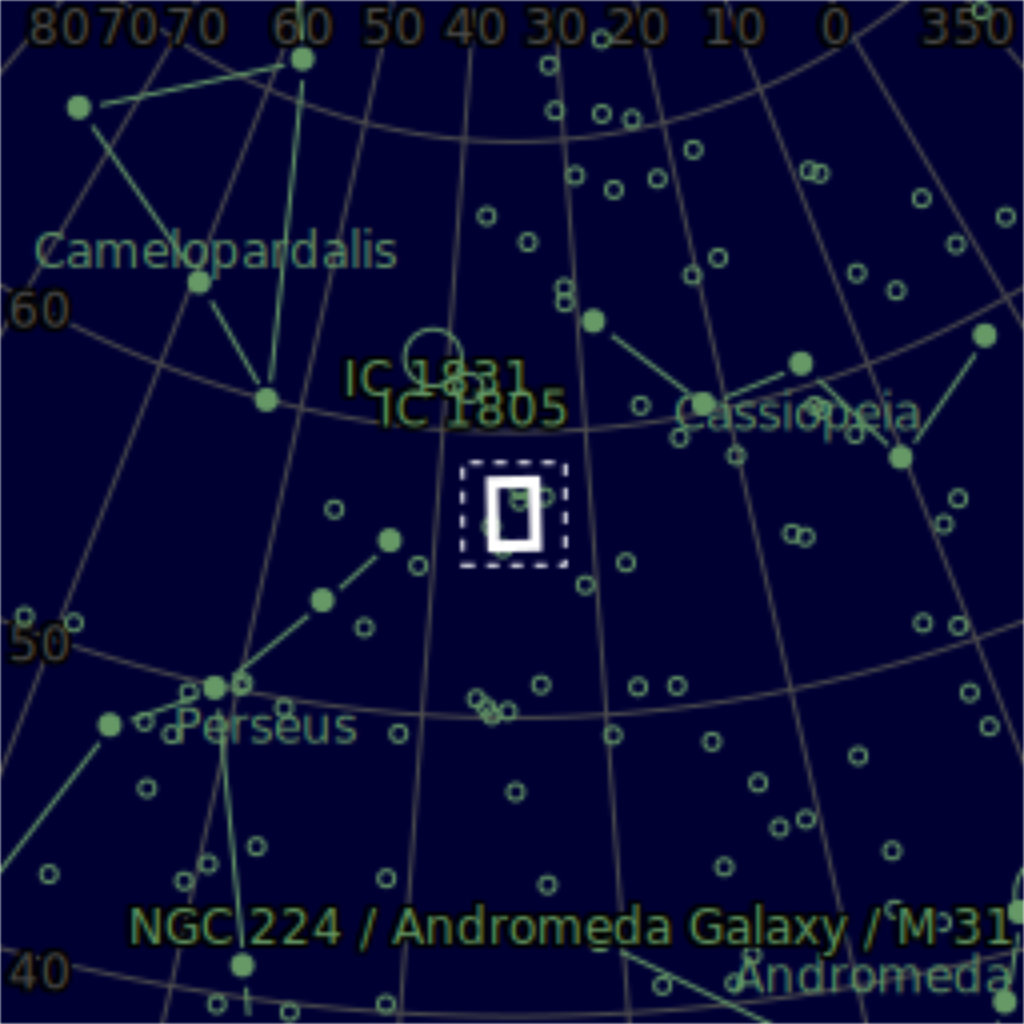
| Constellation | Perseus |
| Date and Time Observed | 2025-09-03 00:05:00 |
| Instrument | Askar V 80mm w extender f7.5-600mm FL |
| Camera | ASI2600MC-Pro |
| Image Details | Transparency: Good. Seeing: Good. Total integration time was 14m 20s. Exposures 20s@101g, L-eNhance Filter. Color calibration, dithering and recentering in SharpCap. No guiding. |
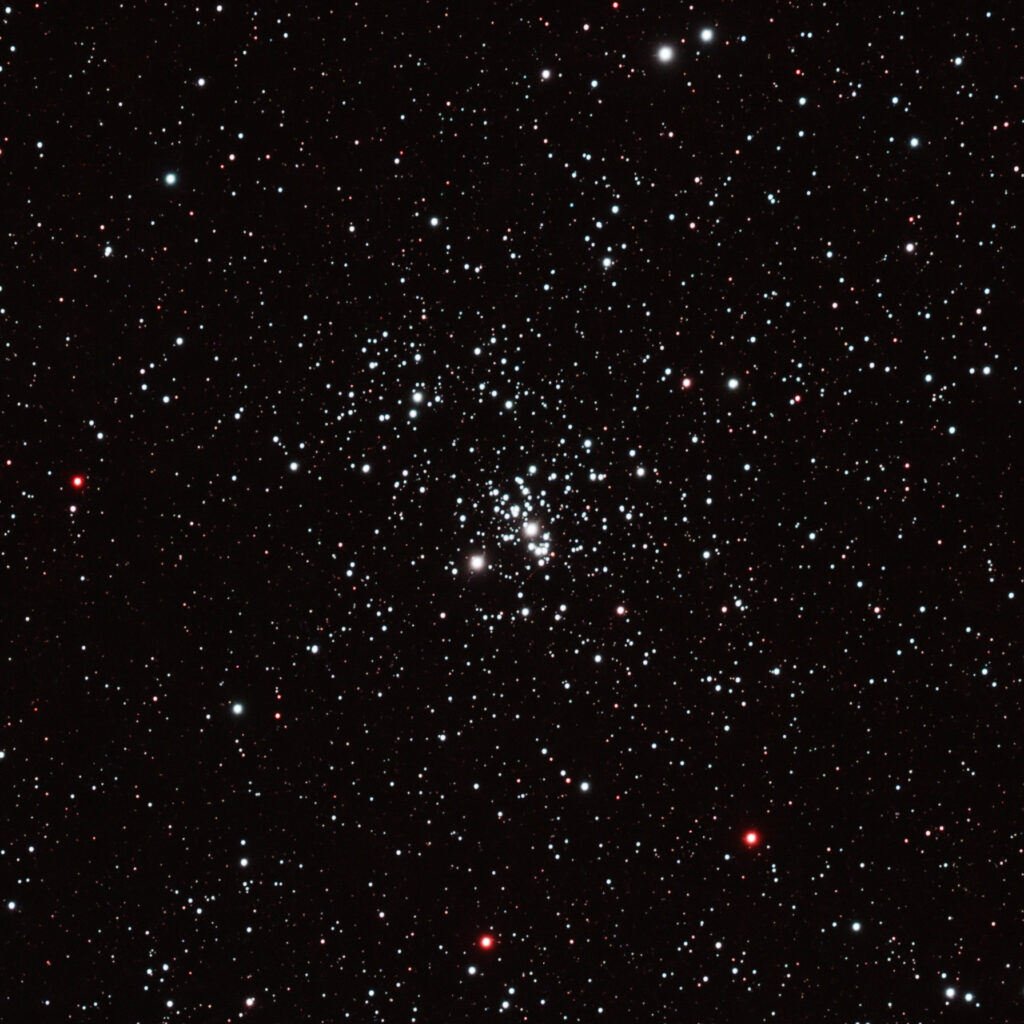
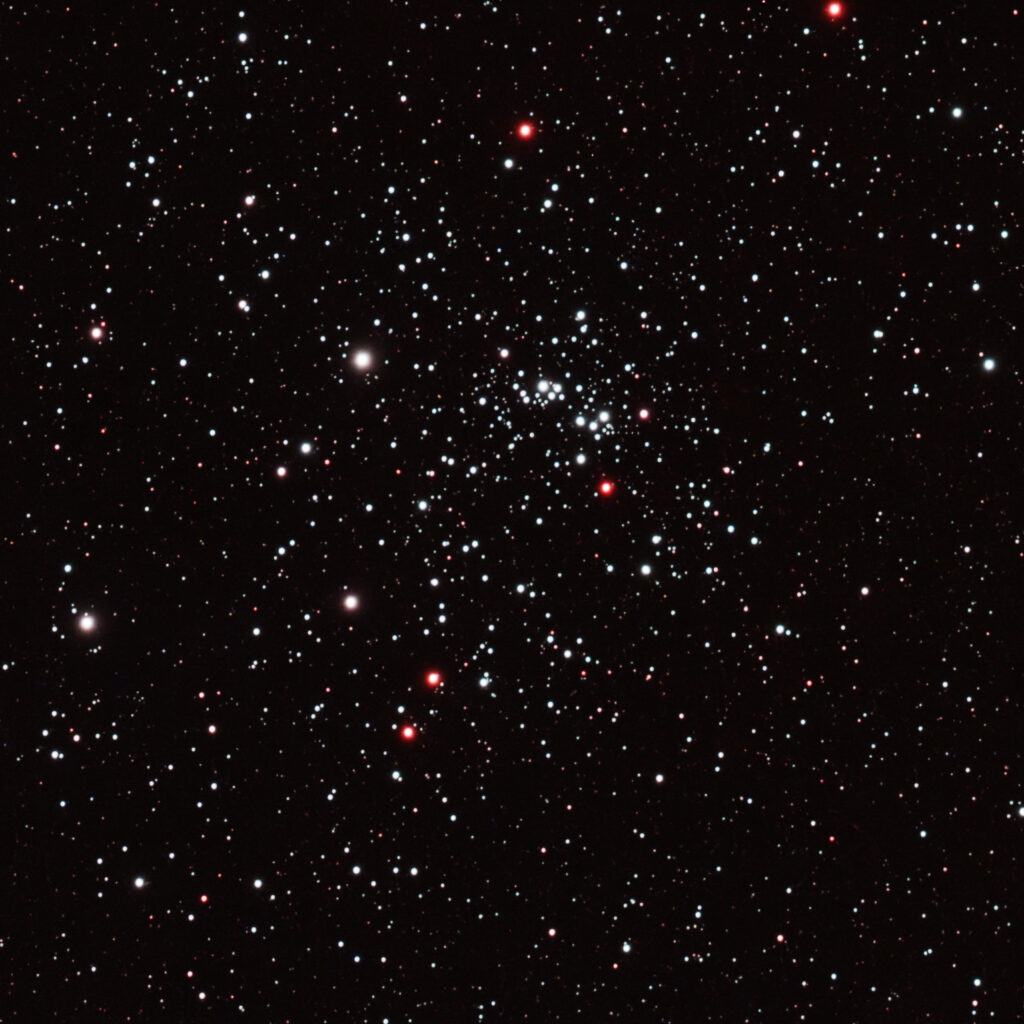
| Description | These objects were known to pre-telescope astronomers. Hipparchus cataloged them as a nebulosity in Perseus circa 130 BCE. Arab astronomers, building on earlier Bedouin traditions, viewed the Double Cluster in Perseus as a "cloudy spot" or a "dense mass" rather than as two distinct star clusters. These clusters were first catalogued by Johann Bayer (h Persei & chi Persei) in 1603, though he inconsistently labeled them as nebulae instead of clusters in some of his writing. However, the true nature of the Double Cluster was not discovered until William Herschel used his own, superb telescope to recognize these objects as two separate open clusters. For me, this capture is a revisit due to Sept '25 CN EAA Challenge. A nice chance to improve on my original capture using latest color calibration software in SharpCap and a new 2600 camera. It has become a favorite star party target in the fall. |
| Related Observations | C14 (3) NGC869 (2) NGC884 (3) |
| Catalog Links | |