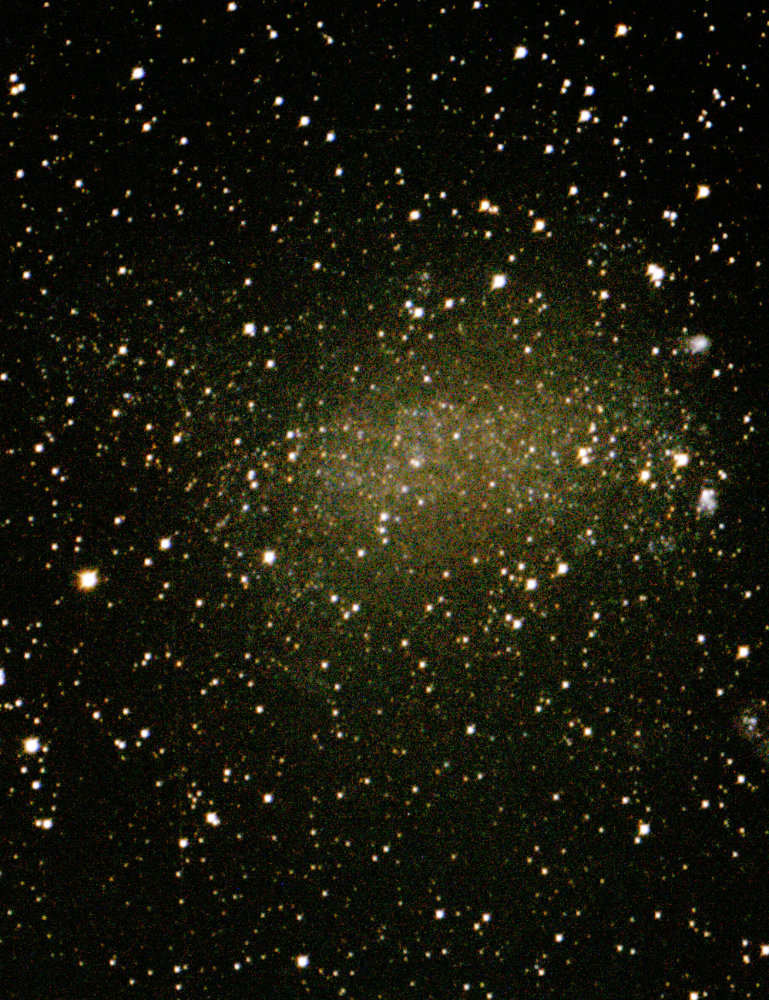
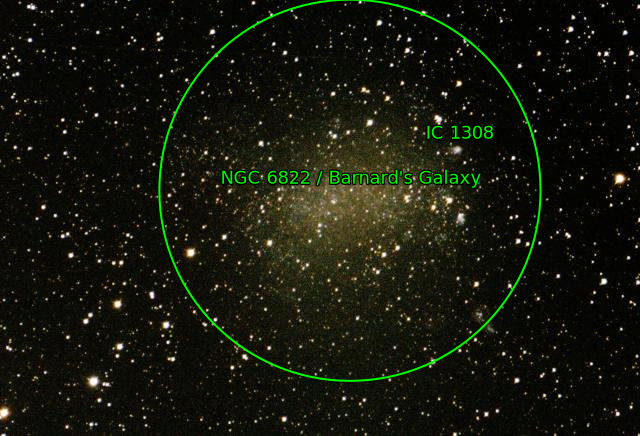
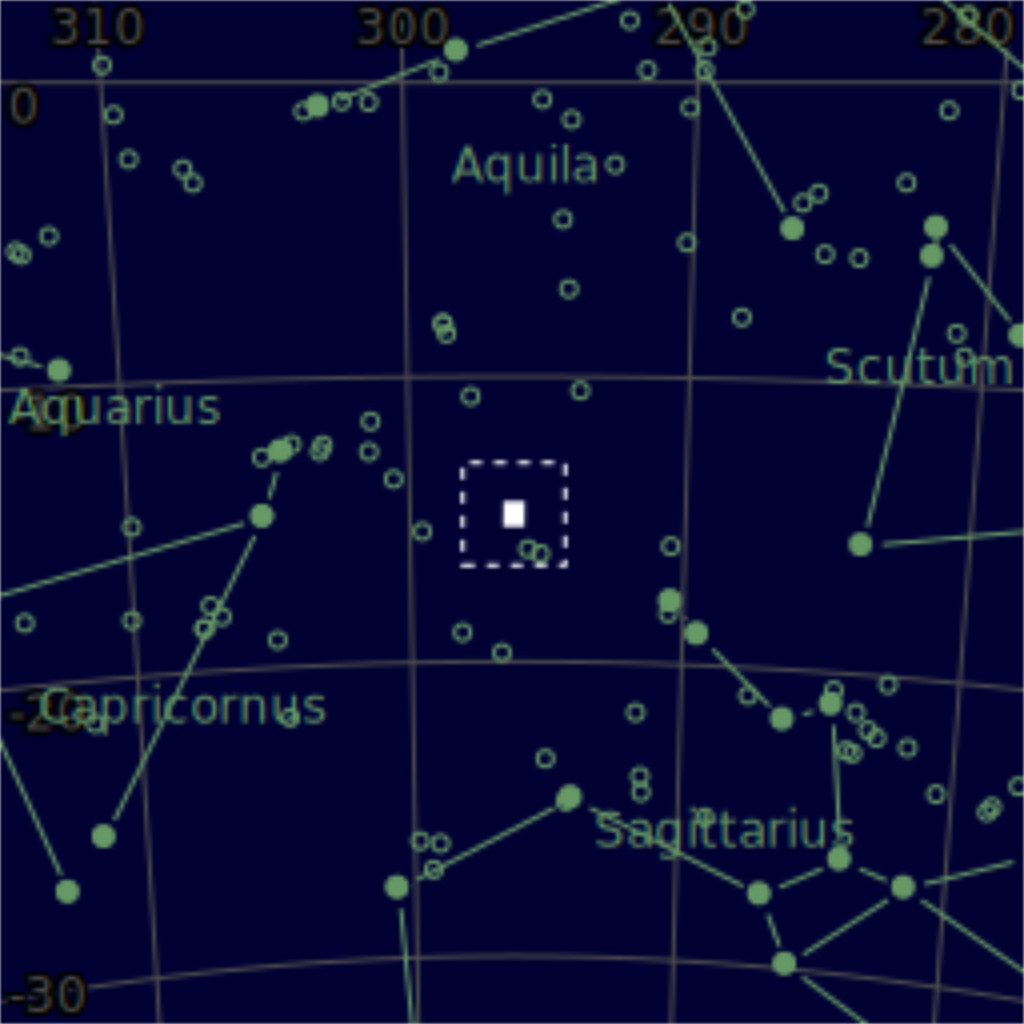
| Description | Discovered by Edward Emerson Barnard in 1884.. He first cataloged it as a faint nebula. This is a not very exciting-looking galaxy, but one extremely important in the history of astronomy, as it was the first galaxy where Hubble applied a Cepheid variable technique to measuring astronomical distance. His paper published in 1925 estimated the distance to Barnard's Galaxy at 698,000 light years. This was more than 2x the size of the "universe" -- still considered limited to the Milky Way -- estimated at 300,000 light years by Harlow Shapley. Hubble's 1929 paper measuring the distance to Andromeda, using the same technique, is considered the most important in the history of cosmology, but the techniques had been perfected on Barnard's Galaxy, and established that galaxies were separate "island universes" outside of the Milky Way. Personally, while this 9/23 observation was routine, my first attempt -- early in my EAA career -- to observe Barnard's had been a disaster, as I pointed at a blank spot but mistook uncorrected amp glow from my camera for an emerging galaxy and ended up spending an hour uselessly. |