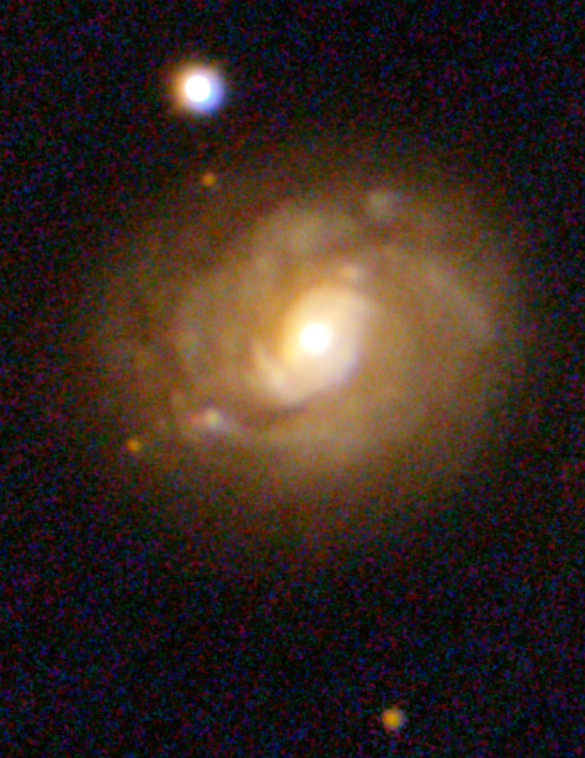
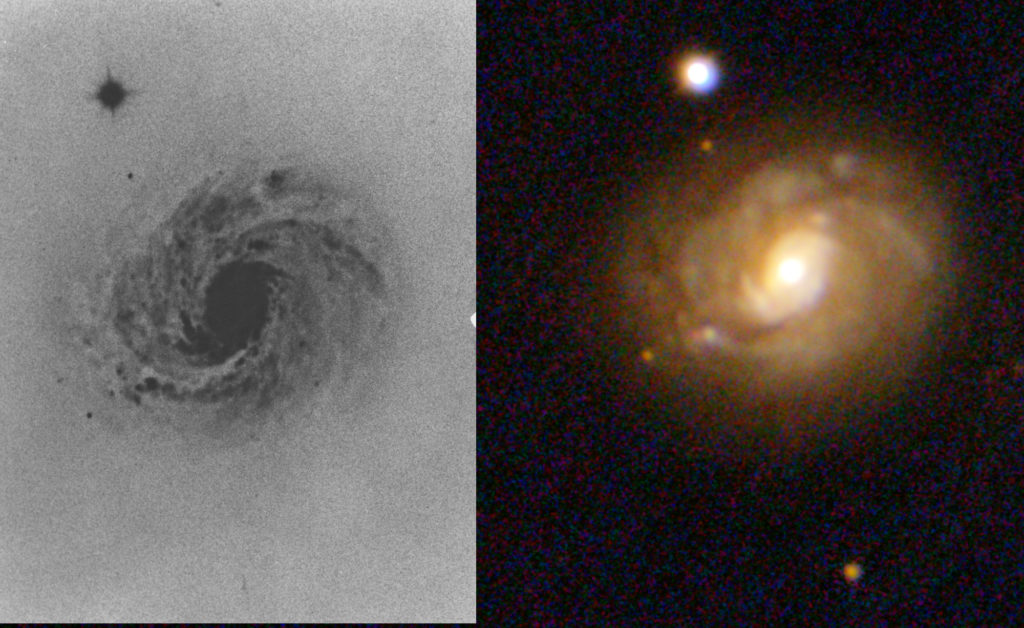
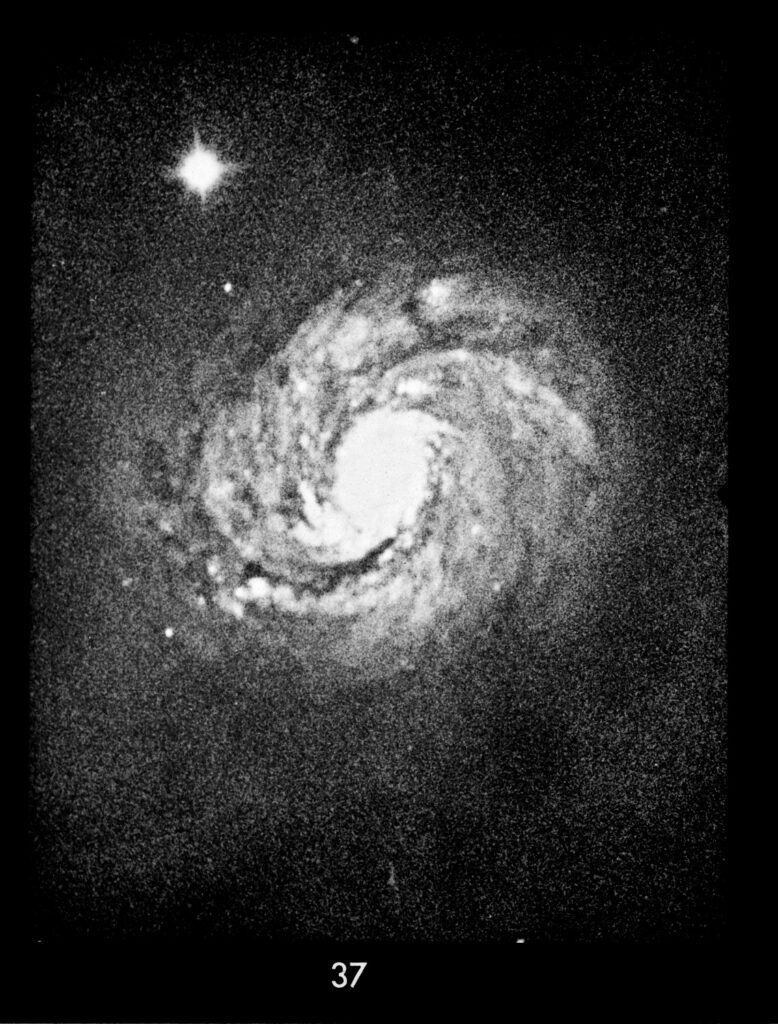
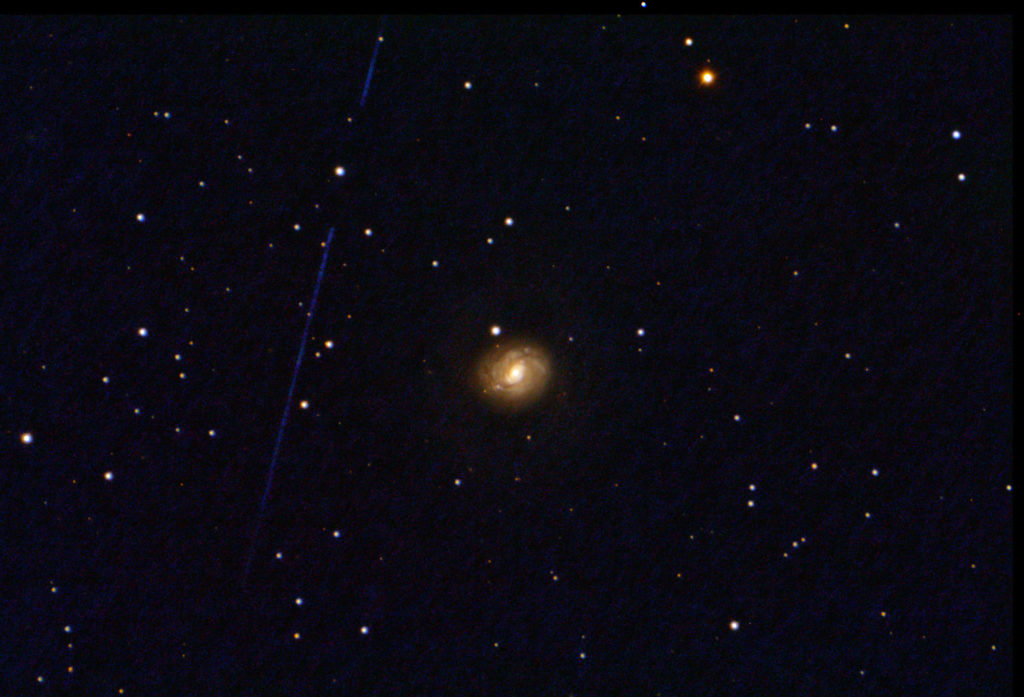
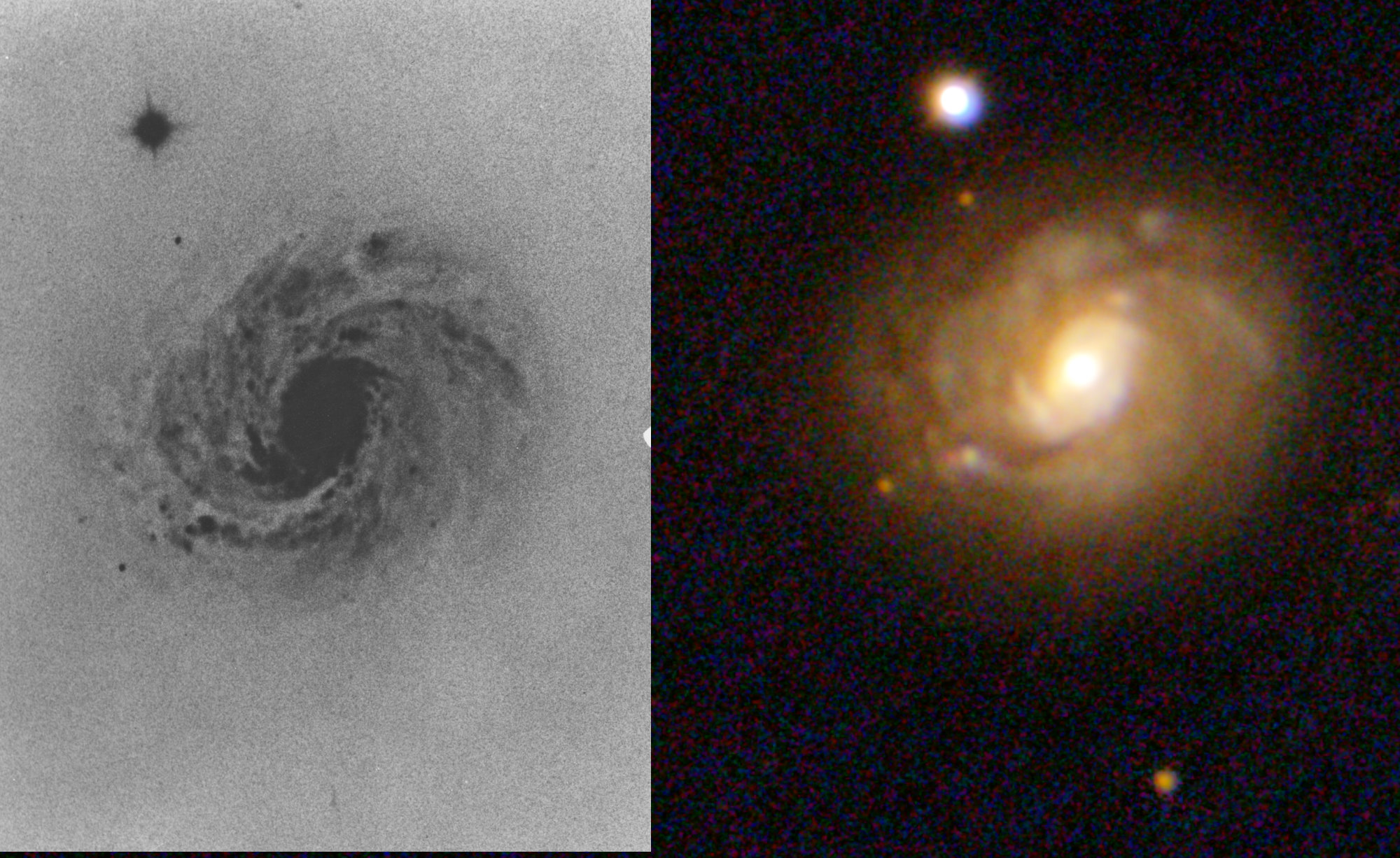
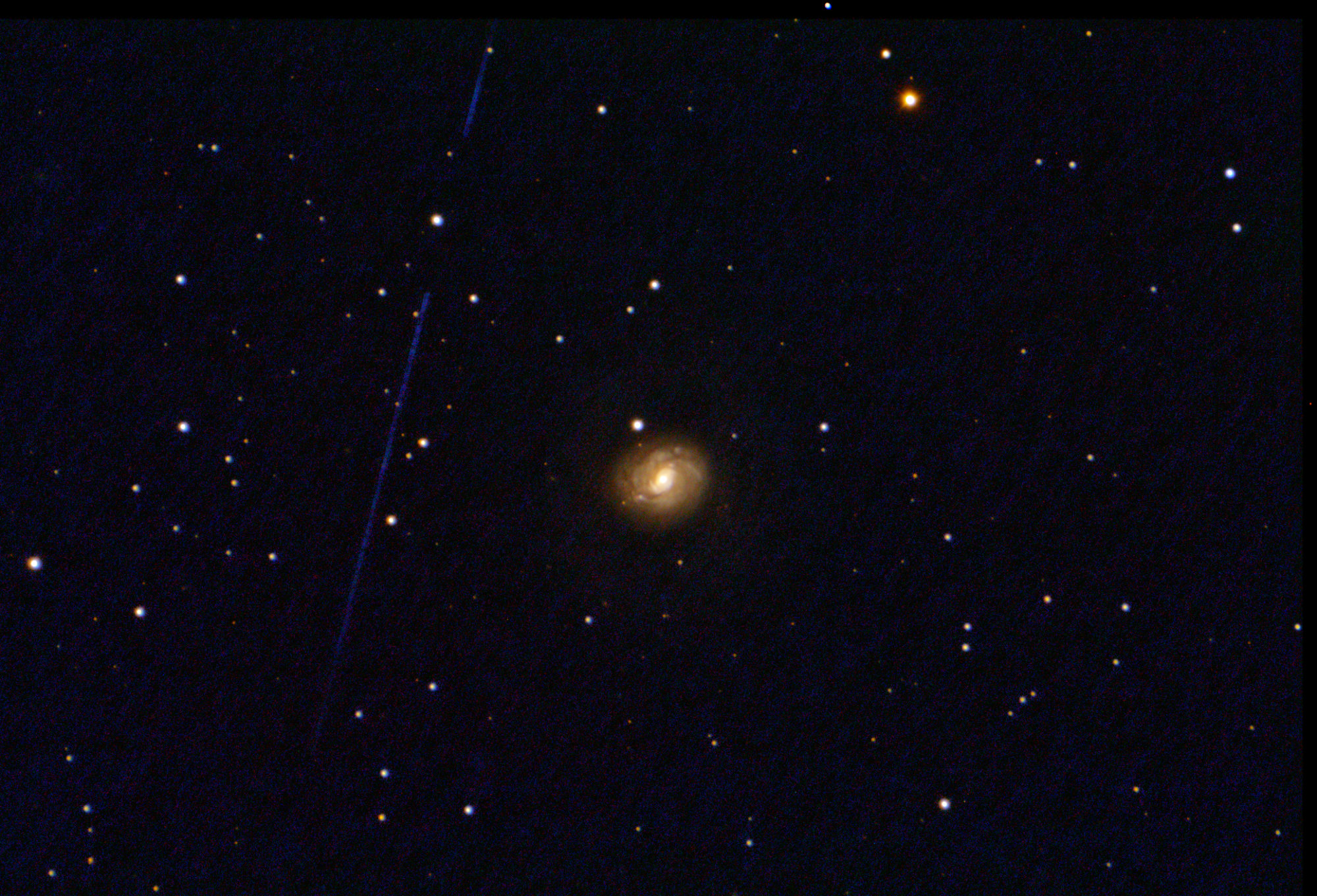
| Description | Recorded December 17, 1780: "Cluster of small stars, which contains some nebulosity, in Cetus & on the parallel of the star Delta, reported of the third magnitude, & which M. Messier estimated to be hardly of the fifth. M. Méchain saw this cluster on October 29, 1780 in the form of a nebula." Interesting... Messier didn't see the nebula. Just a cluster of stars on top? Was his eyesight starting to fail? <--> As a Messier galaxy, this is a pretty straight-forward spiral. Arp selected this as one of his peculiar galaxies, and I have a fundamental problem. I have basically NO IDEA what caused Arp to classify this as having a "low surface brightness companion". To try and figure it out, I studied Arp 38 to 48 which are all in the same classification. In almost all of them, the "companion" seems to be a galaxy. Usually smaller, often a dwarf by comparison. But a galaxy nonetheless. I also tried developing Arp's plate into a positive, and processed it as I do my own with sharpening and contrast enhancements. It's the second gallery image. I still don't see any companion galaxy. Arp's remarks, which can be found on the Caltech webiste comments: "Seyfert galaxy. Small knot in arm." Neither comment helps with this issue. I've looked at a half a dozen other images of this galaxy, including the Hubble image. I just don't see it. I searched the Internet. Most sources I found quote the Arp category and present it as if it's obvious. It's not. |