| Name | Southern Ring Nebula |
| Designation(s) | C74, NGC 3132 |
| Object Type(s) | Planetary Nebula |
| Relevant Catalog(s) | All (Chron), Caldwell, NGC |
| Obs. Lat/Long | 32.0156178, -80.8935526 |
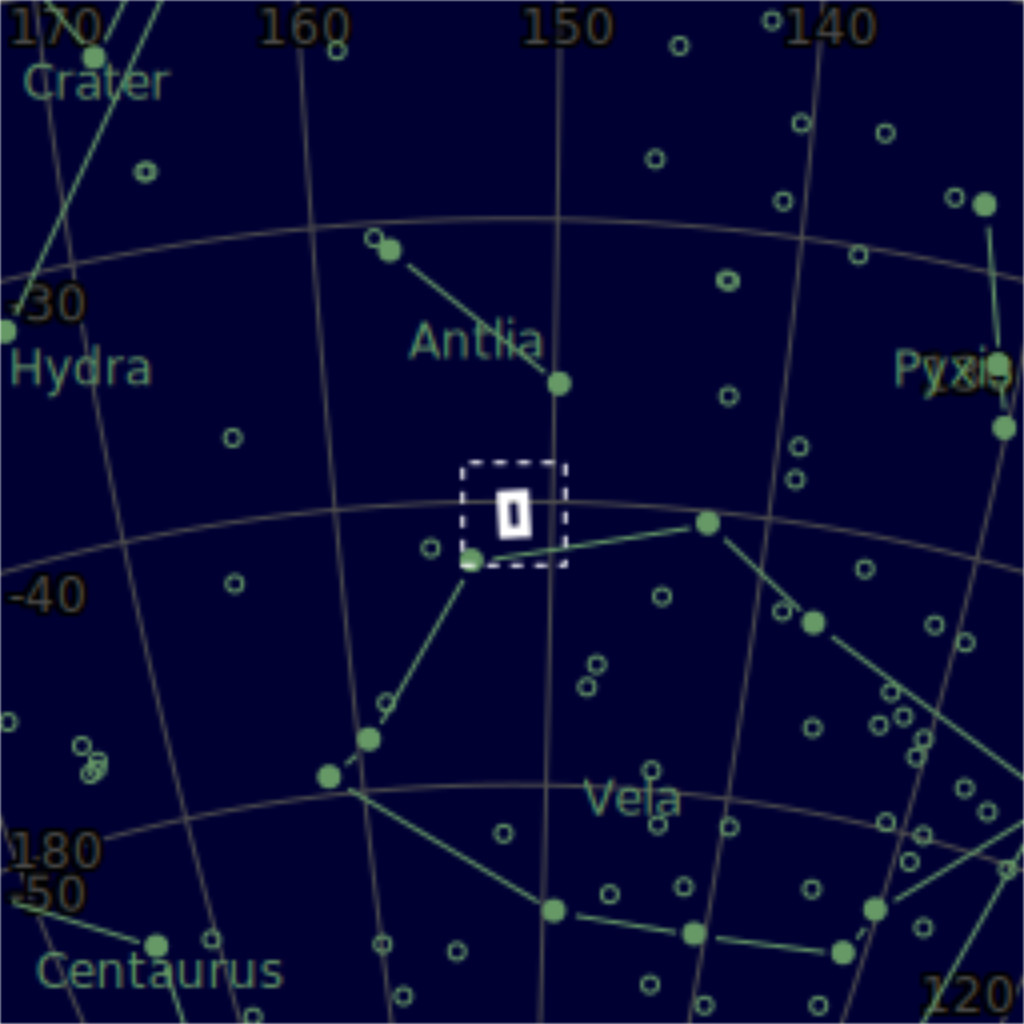
| Constellation | Vela |
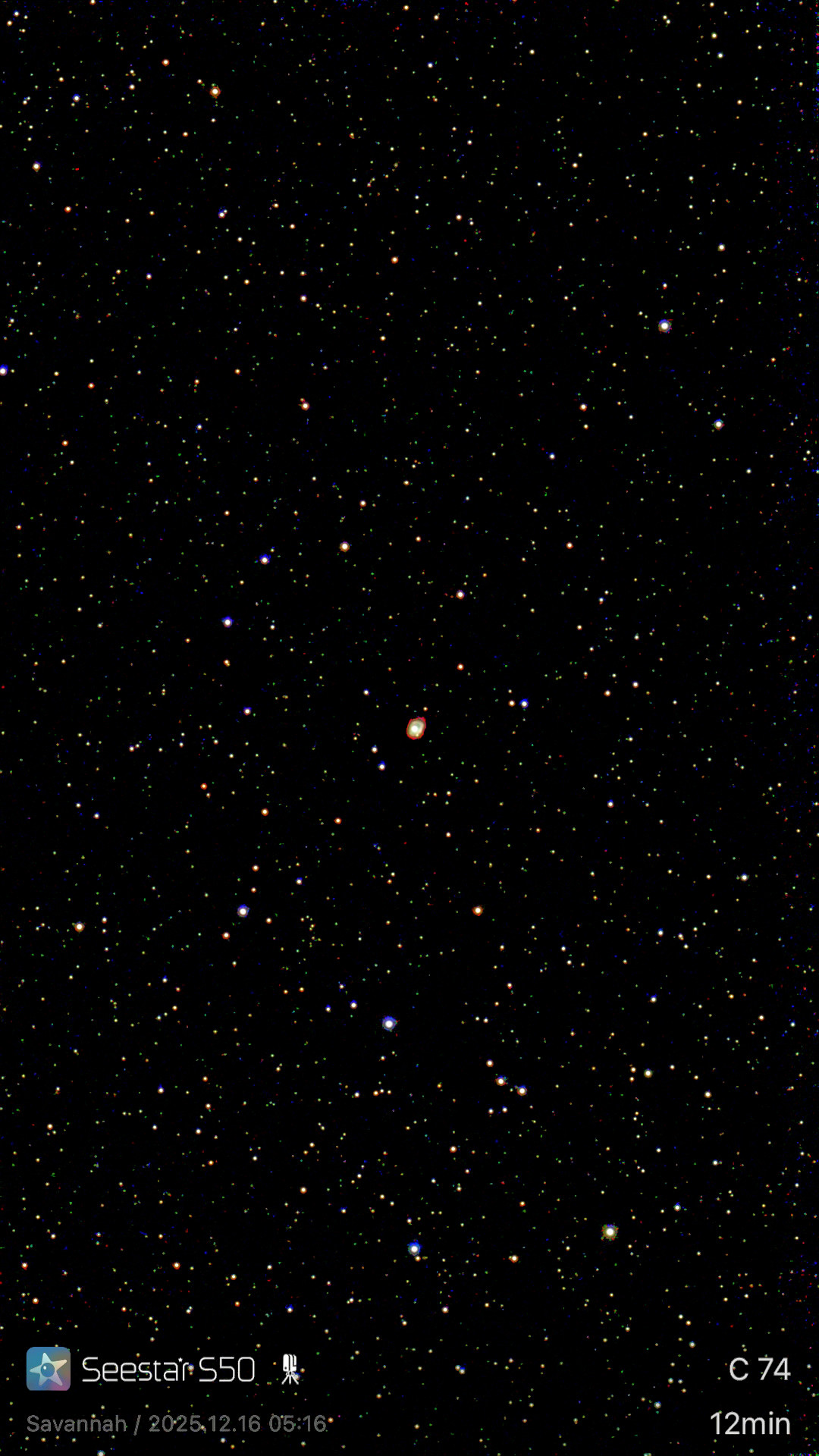
| Date and Time Observed | 2025-12-16 05:16:00 |
| Instrument | Seestar S50 f5.0-250mm FL |
| Camera | Seestar Built-in SONY IMX462 Sensor |
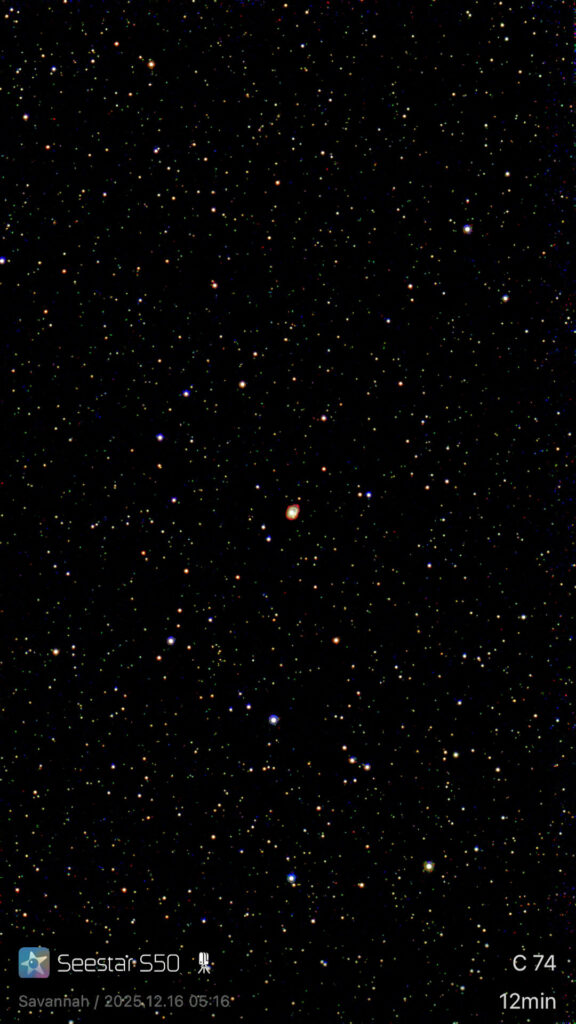
| Image Details | Up is 356.7 degrees E of N. Transparency: Good. Seeing: Good. Total integration time was 12m. Exposures 10s. Standard Seestar enhancement including darks. |
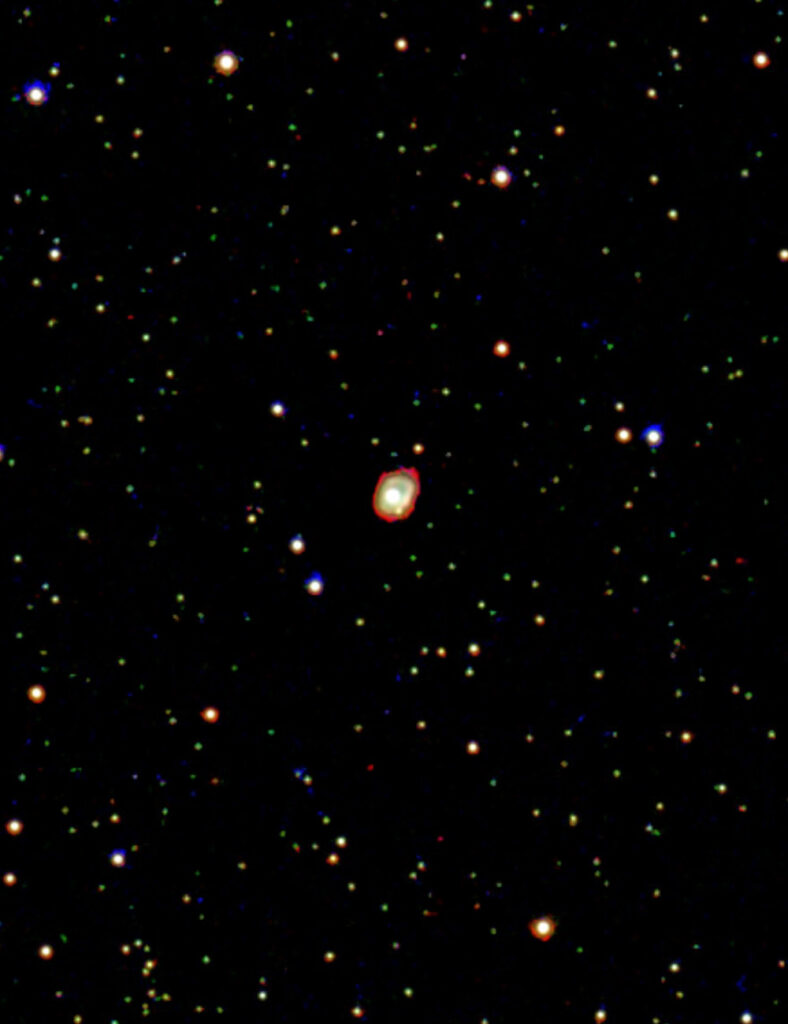
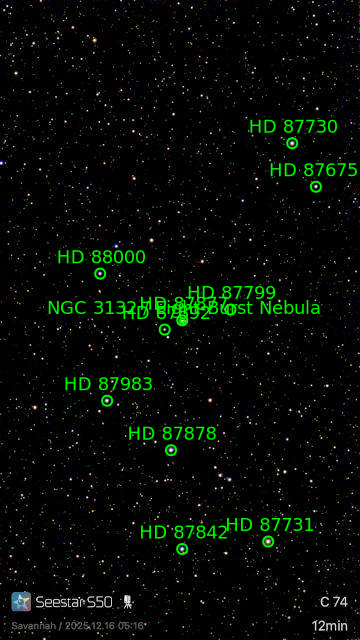
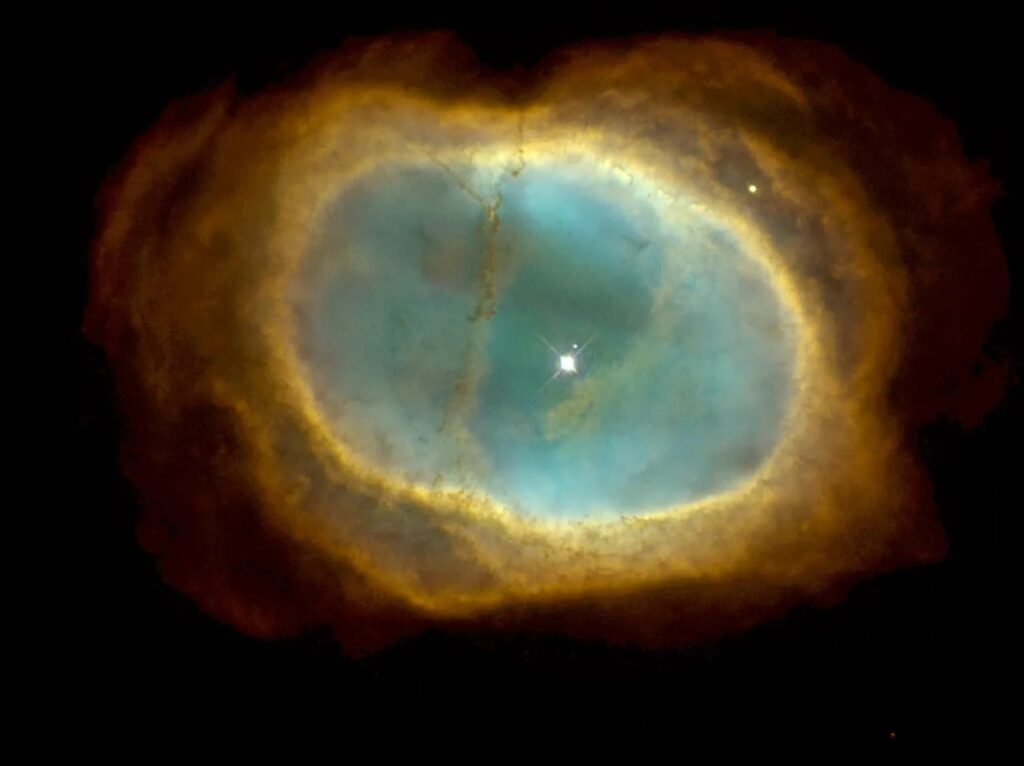
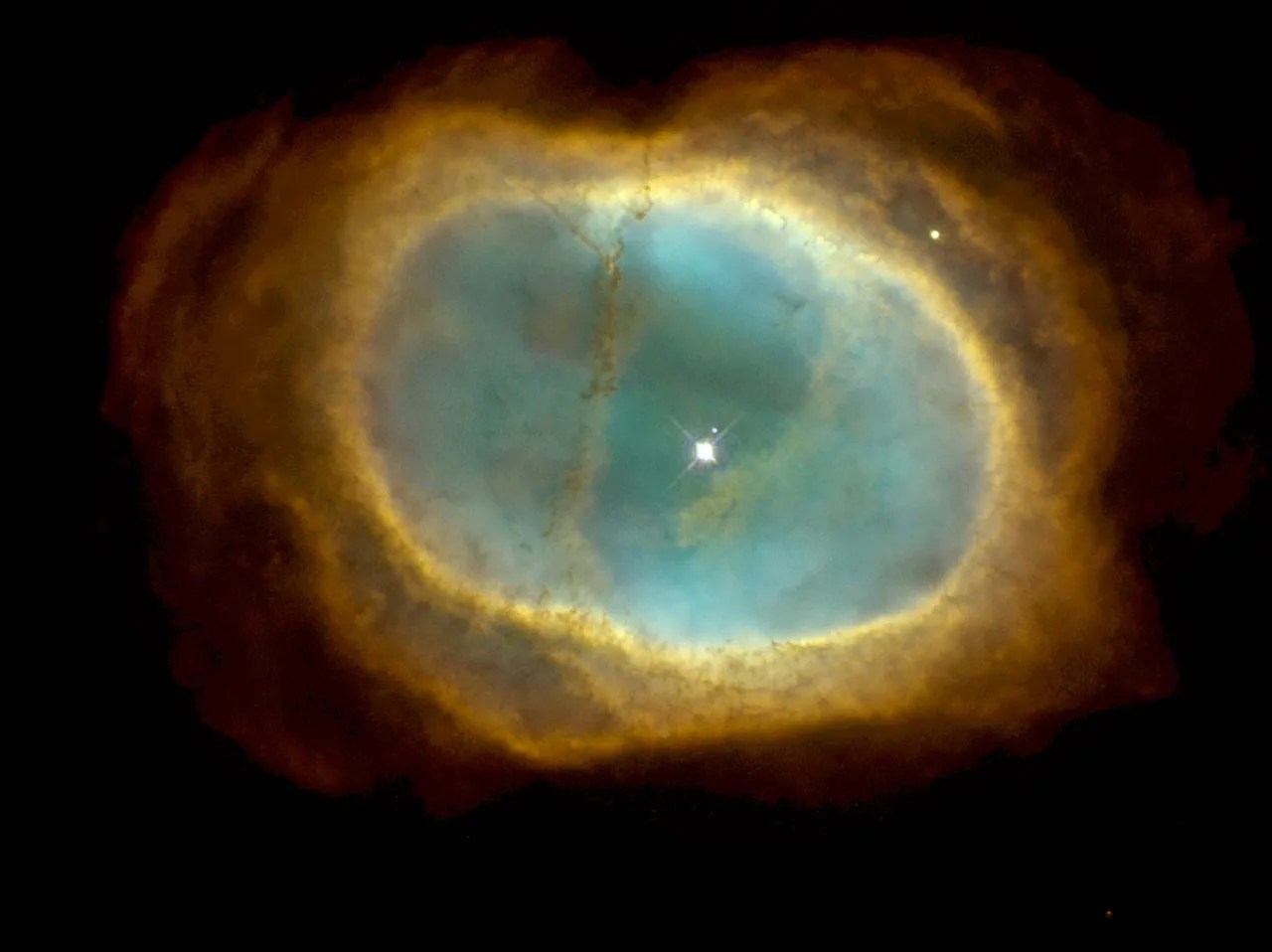
| Description | Discovered by John Herschel (William's son) in 1835 during his survey of the southern skies from Cape Town, South Africa. This is a classic PN with a twist. As usual, the nebula is the remnants of a medium sized sun turning into a red giant, sloughing off gases, then collapsing to a white dwarf. In this case the dying sun was part of a binary system. You can see it as a tiny dot in the Hubble image. In my image, the large central sun is the other half of the original binary pair, and has not yet collapsed. This image was captured from just outside of Savannah, GA on a recent visit designed to allow me to image a number of southern Caldwell targets (further south than C68). |
| Catalog Links | |